Since the 1940s, the party of the sitting U.S. president has lost an average of about 30 legislative seats in the House of Representatives in each midterm election. Currently, Republicans are likely to lose more than that threshold.
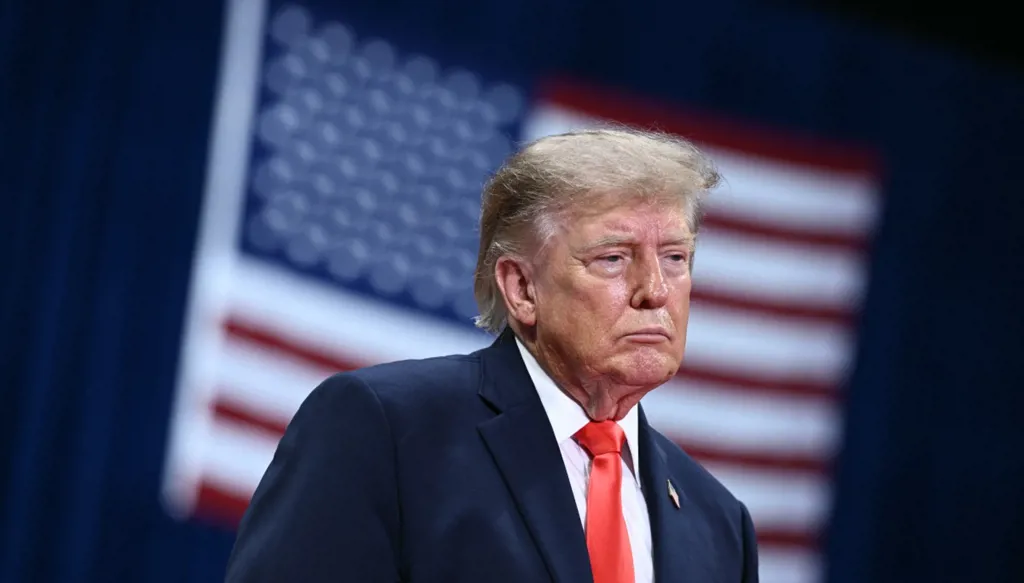
As of October 23, President Donald Trump's popularity had fallen to the same level as former President George W. Bush's at the same point in his second term, at 38.7 percent, and below that of former President Barack Obama, who stood at 41.3 percent at the same stage. The comparison with both periods is particularly relevant. In 2006, Republicans lost 36 seats, 30 of them in the House, allowing their Democratic opponents to take control of Congress. In 2014, Democrats lost a total of 22 seats, including control of the Senate.
The smallest midterm election loss in modern history occurred during the tenure of former President Joe Biden. Since he served only one term, the comparison should be approached with some caution, but it still provides a broader picture for analysis. In 2022, Democrats lost only nine seats in the House despite Biden's low popularity. They retained control of the Senate and even gained an additional seat.
So, Republicans are still theoretically capable of pulling off a surprise, but the winds appear to be against them. In 2022, several factors helped limit Democratic losses, including fears over the loss of abortion rights and the type of Republicans supported by Trump, many of whom were embroiled in debates surrounding the alleged "theft" of the 2020 presidential election. As of October 23, 2022, Biden's performance approval rating stood at 42.8 percent, about four percentage points higher than Trump's current popularity.
Furthermore, in 2022, the net Republican advantage in general partisan polls was less than 3 percent. Today, Democrats are ahead by more than 8 percent. In short, Democratic control of the House appears to be a matter of time. They need to gain only three seats. In the Senate, the challenge is more difficult, but not by much. Democrats need to gain four seats, and according to CNN election analyst Harry Enten, they could gain even more, potentially reaching 54 out of 100 seats. The midterm elections include one-third of Senate seats and all 435 seats in the House.
With an expected loss in both chambers, Trump will face growing obstacles on domestic issues. The House of Representatives is likely to open investigations into suspicions of corruption within the administration. Democratic minority leader Hakeem Jeffries has not ruled out a return to accountability measures, including impeachment.
Fortunately for Trump, if charges are brought against him, they would originate only in the House, where a simple majority of 51 percent is required. For a conviction in the Senate, however, a two-thirds majority is needed, a threshold Democrats are unlikely to reach even with Republican support, except in extreme and exceptional circumstances.
The Constitution imposes these strict constraints to preserve the sharp separation between the executive and legislative branches, preventing either from overpowering the other except in rare cases. Nonetheless, impeachment proceedings would consume a significant amount of the administration's and the president's energy, particularly because of the accompanying media coverage. Congressional committees can summon officials and ministers, require documents, and compel testimony under oath.
Consequently, Congress is capable of obstructing the president's agenda. At the same time, the president can block legislation passed by lawmakers, as Congress cannot override a presidential veto without a two-thirds majority, or 67 out of 100 votes in the Senate.
The House also retains the "power of the purse," allowing it to deny the president funding for policies he seeks to implement. The Senate confirms many administrative appointments, including ministers and hundreds of officials, by a simple majority, although it rarely opposes major presidential choices. Presidents usually change nominees when they believe the chances of securing confirmation are slim.
The Senate ratifies international treaties by a two-thirds majority, although presidents can sometimes maneuver around such definitions, as Obama did when he brokered the nuclear program agreement with Iran in 2015. At the time, his administration used various methods to advance the agreement, including presenting it as an international understanding rather than a treaty.
When presidents lose their legislative majority in midterm elections, they can turn to foreign agreements to compensate for domestic constraints. Yet even this form of compensation is limited. When an agreement does not go through Congress, it can be vulnerable to reversal by the next administration. Once again, the nuclear agreement with Iran and the Paris climate agreement provide clear examples.