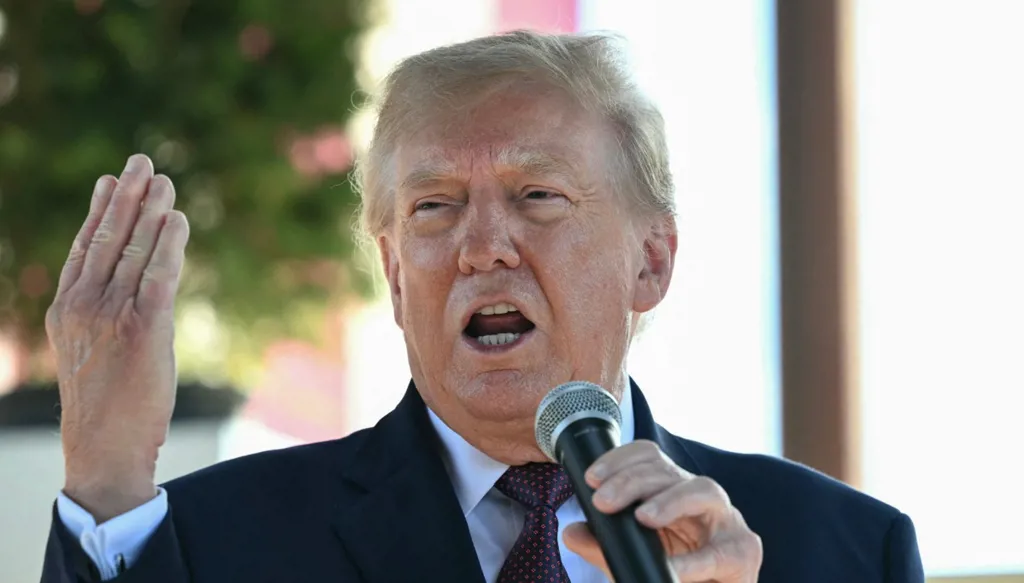
The defeat is harsh, but not fatal.
In the midterm elections, presidents’ parties have lost an average of about 30 seats in the House of Representatives since World War II. As of the morning of November 5, the Republican Party had lost 39 seats in the House.
In the Senate, the average losses range between three and four seats. As of the time of writing, Republicans had lost seven seats. Here, the Republican loss is particularly heavy, and the outcome may worsen further. All in all, President Donald Trump’s party performed worse than the historical average of electoral losses for presidents’ parties. Moreover, Republicans performed worse in this term than they did during Trump’s first term.
In 2018, Republicans lost 40 legislative seats in the House but gained two seats in the Senate. At the time, it had been nearly half a century since a party gained a seat in the Senate after losing in the House. The Democratic Party under President Joe Biden repeated this result in 2022, gaining an additional seat in the Senate after losing nine seats in the House.
Speaking of the Democrats, former President Barack Obama’s party suffered a historic loss in the midterm elections of his first term, losing 63 seats in the House and six in the Senate. The Democrats maintained their strength in the Senate due to their significant advantage from previous elections but lost control of the House.
Comparing the numbers from 2010 and 2026 shows that today’s poor Republican performance almost surpasses the Democrats’ performance a decade and a half ago. Nevertheless, few claimed back then that it marked the end of the Obama era. Two years later, the president won again, and his party gained eight seats in the House and two in the Senate.
The same could be said for the midterm elections during the first term of Democratic President Bill Clinton. In 1994, Republicans broke a decades-long Democratic hold on the House, gaining 54 additional seats. Democrats lost eight seats in the Senate. In those elections, Republicans took full control of Congress.
What became known as the “Republican Revolution” was a significant surprise, but it did not prevent Clinton from winning a second term two years later. Notably, in the 1996 elections, Republicans gained two additional Senate seats despite the Democratic president’s victory.
These examples make the issue of “decisiveness” in matters of “endings” premature. The problem with descriptions of “waves,” whether blue or red, is that they are appealing to the media but analytically weak.
A “wave” that defeats the president’s party does not necessarily mean it will defeat the president himself. And a wave that carries a candidate to the presidency will not necessarily carry his party to control Congress, or even one of its chambers. Richard Nixon’s presidential victory in 1968, while Democrats retained Congress, is merely one example.
There is no debate that Trump’s age and two terms mean his political future lies behind him rather than ahead of him, unlike the cases of Clinton and Obama.
Nonetheless, barring emergencies, Trump will remain a significant force capable of contributing to potentially bringing a Republican president to the White House in two years. This depends on several factors, some of which are beyond Trump’s and the Republicans’ control.
But in a country where tens of thousands of votes can swing the presidency one way or another, Trump’s political weight cannot be underestimated, not today at least, and certainly not based solely on the midterm elections.
After all, didn’t the whole world say Trump was finished after the Capitol attack in 2021?