Addis Abeba — Trump's adviser says Washington is working with "all countries across the Horn," while analysts say Egypt is steering an emerging regional alignment that increasingly shapes Red Sea and Horn security.
U.S. President Donald Trump's Senior Advisor for Arab and African Affairs, Massad Boulos, has dismissed reports portraying Washington's recent diplomacy in the Horn of Africa as an effort to build an "anti-Ethiopian alliance," following high-level meetings in Cairo that brought together senior officials from the United States, Egypt, Eritrea, and Somalia.
Discover morePoliticsCity & Local GuidesCorporate Events In a statement posted on X on 29 July, Boulos said recent reports had "mischaracterized U.S. diplomacy in the Horn of Africa as an attempt to court an 'anti-Ethiopian alliance,"' describing the narrative as "both inaccurate and needlessly inflammatory."
"The United States works with Ethiopia and all countries across the Horn of Africa and the wider Red Sea region to advance shared priorities," Boulos said, adding that, "Engagement with one regional partner should not be distorted into hostility toward another. U.S. diplomacy is not about creating rival blocs or deepening divisions - it is about working constructively with all partners to prevent conflict and promote lasting peace and security."
Keep up with the latest headlines on WhatsApp | LinkedIn
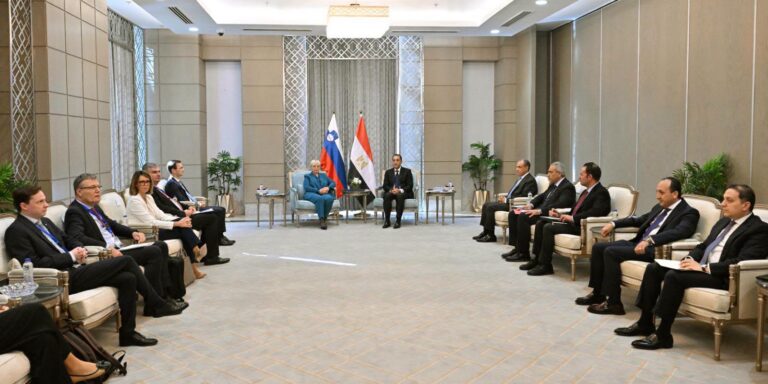
His remarks come ten days after a series of high-level diplomatic meetings in Cairo on 19 July, where Egyptian Foreign Minister Badr Abdelatty separately hosted Boulos, Eritrean Foreign Minister Osman Saleh, and Somali Foreign Minister Abdisalam Abdi Ali.
International Relations Although officially presented as bilateral engagements, Egyptian officials framed the meetings as coordinated consultations aimed at enhancing security in the Horn of Africa, strengthening Red Sea governance, supporting peace efforts, and addressing regional security challenges.
Separate readouts from Egypt, Eritrea, and Somalia also portrayed the Cairo meeting to reiterate the security and governance of the Red Sea, which Egypt and Eritrea insist should remain "the exclusive responsibility of the countries bordering it," a position widely seen as opposing Ethiopia's longstanding push for sovereign maritime access. The three countries have deepened their relations since Ethiopia's 2024 memorandum of understanding with Somaliland on maritime access. During the meetings, Cairo and Asmara
Discover moreLocal NewsInternational RelationsNewsHistoryExecutive BranchEmbassies & ConsulatesTravel Guides & TraveloguesPolitics (Right)Tourist DestinationsNewspapers The meetings also highlighted Washington's expanding engagement with the three regional partners. Following his discussions with Eritrean Foreign Minister Osman Saleh, Boulos described the talks as a "good and productive discussion" covering bilateral relations, trade, regional economic development, and security, while emphasizing cooperation "to address regional conflicts and advance lasting peace, stability, and prosperity in the Red Sea and the Horn of Africa."
Historical Sites & Buildings After meeting Abdelatty, Boulos described Egypt as "an essential partner in advancing peace, security, and prosperity across the Middle East and Africa," adding that Washington looked forward to "continuing close coordination with Egypt to address shared challenges."
Speaking to The Standard Signal podcast last week, former U.S. intelligence officer and Horn of Africa analyst Cameron Hudson said it was too early to describe the Cairo meetings as a fully-fledged regional security architecture but argued they reflected Egypt's long-term strategic ambitions.
"I think it would be premature to call it a new regional security architecture," Hudson said.
"Certainly from the Egyptian perspective that is the goal. The convening that happened on Sunday in Cairo is one step on the path towards achieving a more formalized regional security architecture among those countries."
Cameron noted that the meetings remained a series of bilateral engagements rather than a unified multilateral forum, suggesting that "to get to what you suggest would be a regional security architecture, it's going to require a kind of coming together of all of these parties."
Teleconferencing He also linked the Cairo meetings to Washington's gradually improving engagement with Eritrea, pointing to a series of contacts between Boulos and Eritrean officials dating back to the sidelines of the UN General Assembly last year.
"The throughline in all of these interactions and conversations is the role of the Egyptians," Hudson said. "I don't think it's a coincidence that these meetings are taking place in Cairo. Egypt clearly has a security interest in the Horn of Africa and the Red Sea. It has a strategy which it is acting on, and it is very clearly at this point trying to draw Washington into its strategy."
Hudson argued that while Egypt appears to be driving a broader geopolitical realignment in the Horn, Washington has yet to articulate an independent regional strategy.
"As I've argued previously, Washington needs to have its own strategy, not just be a player in Egypt's strategy for the region," he said. "We are seeing a broad realignment in the Horn of Africa right now. I think it is largely being engineered out of Cairo."
Get the latest in African news delivered straight to your inbox
By submitting above, you agree to our privacy policy.
To complete the process, please follow the instructions in the email we just sent you.
There was a problem processing your submission. Please try again later.
The official readouts from the Cairo meetings did not explicitly mention Ethiopia or the Grand Ethiopian Renaissance Dam (GERD), despite both issues remaining central to Egypt's Ethiopia policy.