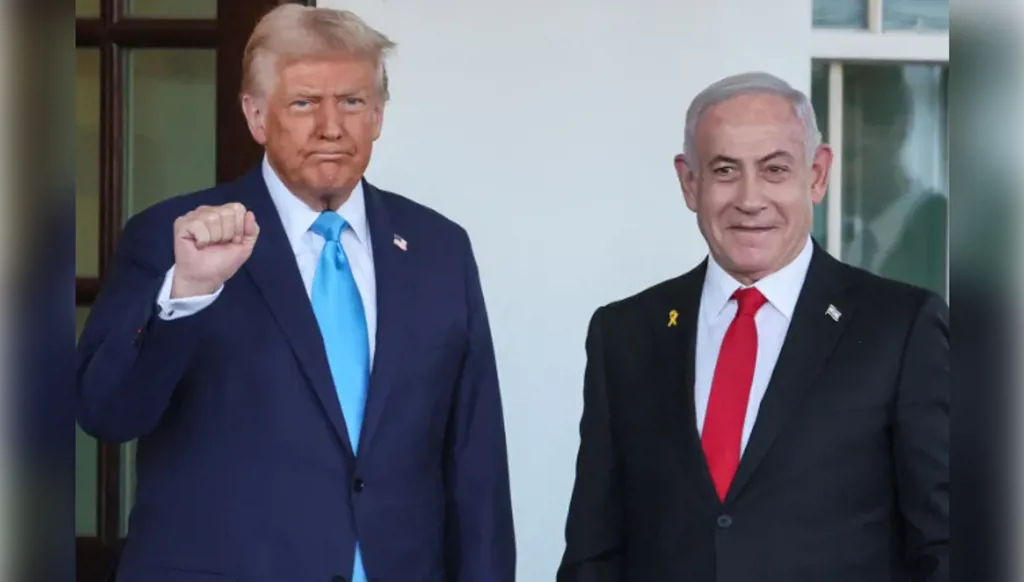
US President Donald Trump is considering launching a new round of large-scale military strikes against Iran, as Israeli Prime Minister Benjamin Netanyahu presses Washington to join an intensive air campaign lasting between four and seven days, according to The New York Times, citing US and Israeli officials familiar with the discussions.
Trump has yet to make a decision, as he reviews intelligence on Iran’s military capabilities, including Israeli assessments indicating that Tehran has rebuilt parts of its missile arsenal and drone capabilities and continues to develop its chemical and biological weapons programmes.
The proposals have exposed divisions within the Trump administration over the reliability of the intelligence and the risks of renewed military confrontation. Some US officials believe further strikes are unnecessary, arguing that economic pressure and the existing blockade are already inflicting damage on Iran’s economy.
Netanyahu, meanwhile, continues to press Washington, while senior Israeli security officials have held talks with their US counterparts. The head of Israel’s Mossad, Roman Gofman, recently visited Washington, where he held meetings that included one with CIA Director John Ratcliffe.
Meanwhile, Washington has strengthened its military presence in the Middle East, deploying additional naval and air assets. The US aircraft carrier Theodore Roosevelt has entered the US Central Command’s area of responsibility, joining the aircraft carrier George Bush.
The US Department of Defense has also kept its long-range B-1 and B-2 bombers on standby for potential operations.
The United States has withdrawn some personnel from military facilities across the region as a precautionary measure and transferred an additional Patriot air defence system battery to Israel.
What could be the potential Iranian targets of any US strikes?
Potential US targets include Iran’s missile and drone arsenals, Islamic Revolutionary Guard Corps command centres, and facilities linked to the energy sector.
Israel has also called for strikes on nuclear facilities and critical infrastructure, including electricity and energy systems. However, Trump has not approved all the proposed targets.
Israeli officials have also raised concerns about Iran’s alleged chemical and biological weapons capabilities. However, US intelligence assessments indicate that Tehran is developing these capabilities primarily as a deterrent against potential US or Israeli attacks, rather than in preparation for launching pre-emptive strikes, according to the report.
Trump is therefore weighing the possibility of the United States joining a new military campaign against Iran against the option of maintaining economic pressure, amid the risks that further escalation could develop into a broader regional confrontation.