ALBAWABA- US President Donald Trump has said that the American military presence in the Middle East is aimed at protecting Israel and other countries in the region, insisting that Washington does not need the region's oil but remains committed to ensuring peace and security.
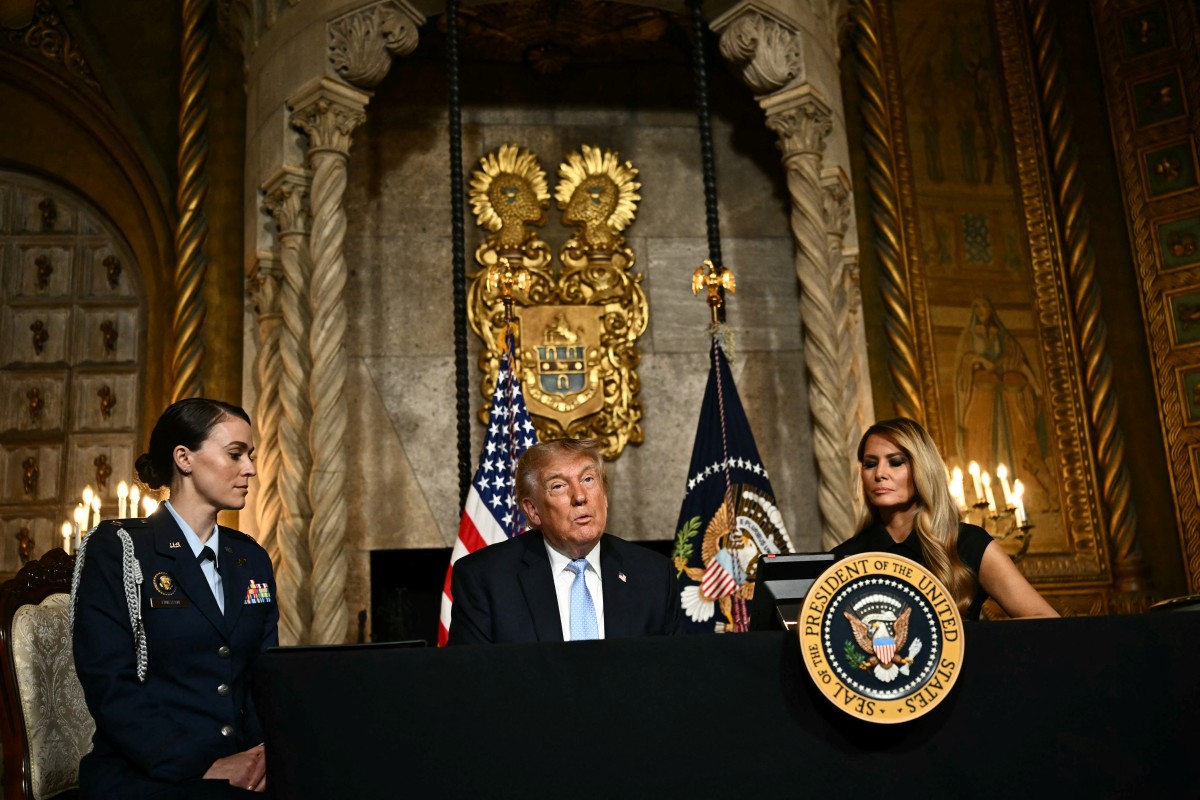
Trump made the remarks on Thursday during a Thanksgiving call with US Army air-defense troops deployed across the Middle East. He praised the personnel for what he described as their success in intercepting 560 enemy missiles and drones, commending their role in defending US forces and regional partners against aerial threats.
"We don't need Middle Eastern oil. Our presence in the region for years has been aimed at protecting Israel and the countries of the region," Trump said. He added that the United States, together with Venezuela, accounts for approximately 50% of the world's oil, arguing that Washington does not need Middle Eastern supplies but wants peace in the region.
The president reiterated that the United States would not allow Iran to acquire nuclear weapons, warning that Tehran could use them against Israel, other countries in the region and potentially American cities. He also said Iran possessed missiles capable of reaching Europe but not the United States.
President Trump and First Lady Melania just called U.S. Army air defense troops deployed in the Middle East on Thanksgiving, praising them for shooting down 560 enemy missiles and drones.
"Iran will never have a nuclear weapon. They will never have a nuclear weapon. That I can tell you."
Trump highlighted efforts to expand American military production, saying his administration was accelerating the manufacture of Patriot air-defence systems, Terminal High Altitude Area Defense (THAAD) interceptors and Tomahawk cruise missiles to meet military requirements. He said defence companies were building 21 large factories across the United States that would open soon.
Turning to the confrontation with Iran, Trump described the US naval blockade as the greatest in history. He claimed that American forces had launched 150 missiles to prevent hostile missiles and drones from targeting commercial vessels in the Strait of Hormuz. He also confirmed that US Marine forces would continue their deployment in the Middle East.
Despite his military warnings, Trump said Washington was giving Tehran every opportunity to reach an agreement and avoid further bloodshed. He described the US approach as conciliatory, saying the administration wanted to secure a deal that could prevent further military escalation and save lives.
Dr. Mansour Al-Maswari is Postdoctoral Fellow at Columbia University-Global Center, Amman. A Yemeni academician with a Ph.D. in English "Comparative Literature" and two MA degrees, one in political science and the other in English, Dr. Al-Maswari possesses more than 17 years of extensive experience in university-level teaching, research, research reviewing, bilingual translation, and copy-writing...
Subscribe to our newsletter for exclusive updates and enhanced content