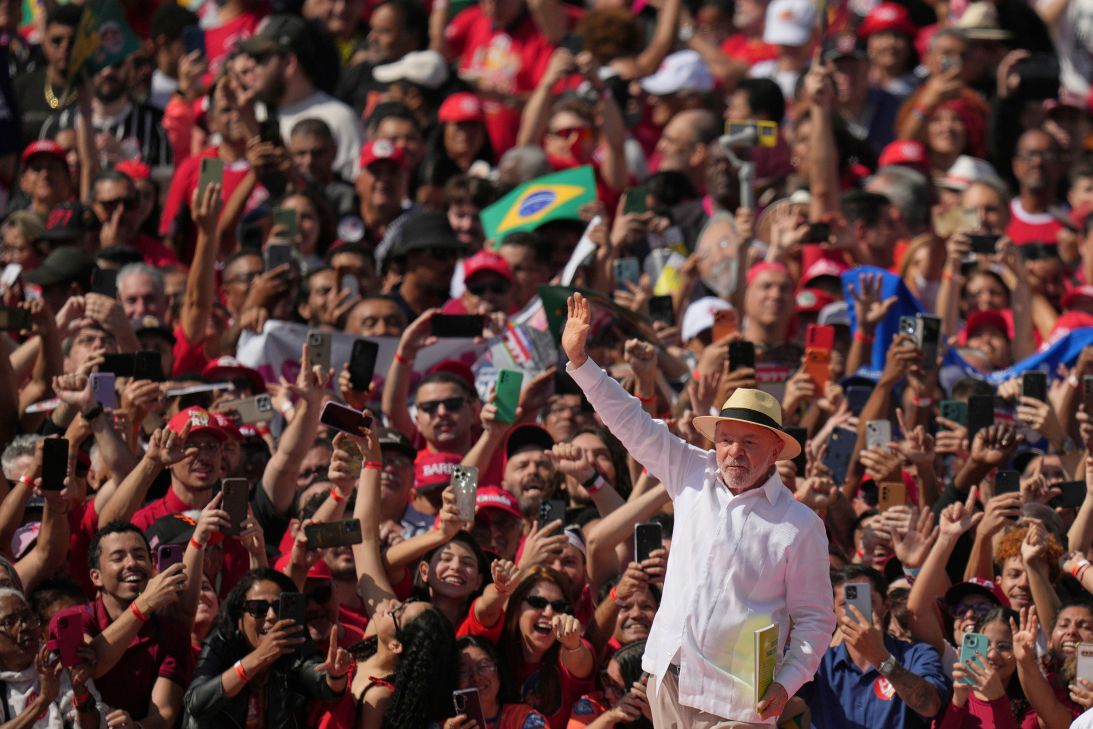
Millions of Brazilians will vote in a general election on Sunday that will choose the country’s president against a backdrop of corruption scandals, deep political polarization and growing voter fatigue, with two familiar political camps once again dominating the race. Among the frontrunners are the country’s leftist President Luiz Inácio Lula da Silva and right-wing Senator Flávio Bolsonaro, son of imprisoned former President Jair Bolsonaro, who are championing different paths for Brazil. “It’s two competing visions of what the country should look like and what Latin America should look like,” Brian Winter, editor-in-chief of Americas Quarterly and vice president of policy at Americas Society/Council of the Americas, told CNN. Voting is compulsory for most adults in the world’s fifth largest country, and turnout is typically among the highest in the Americas. The choice facing Brazilians extends well beyond domestic politics and could reshape how Brazil positions itself on the global stage. The vote would determine whether the region’s largest country tilts toward a growing conservative bloc aligned with US President Donald Trump or continues Lula’s pursuit of a multipolar foreign policy. Brazilian President Luiz Inacio Lula da Silva waves to supporters during a presidential election campaign rally in São Bernardo do Campo, São Paulo, Brazil, on Aug. 16. Andre Penner/AP Lula, 80, is seeking a fourth and likely last term. He governed Brazil from 2003 to 2010 and returned to the presidency in 2023 after a remarkable political comeback: Lula spent 580 days in prison on corruption convictions that Brazil’s Supreme Court later annulled in 2021, restoring his political rights, before he defeated then-president Jair Bolsonaro in the 2022 election. Lula is neck and neck with Flávio, who is trying to carry forward the political movement built around his father. Jair Bolsonaro, now under humanitarian house arrest for health reasons, is barred from running and is serving a 27-year sentence after being convicted of attempting a coup to overturn his 2022 election loss. Four other presidential hopefuls trail behind Lula and the younger Bolsanaro in the polls. They include centrist psychiatrist and best-selling author Augusto Cury; right-wing former Goiás governor Ronaldo Caiado; Renan Santos, a right-wing founder of the Movimento Brasil Livre now running under the Missão party; and Romeu Zema, the economically liberal, right-leaning former governor of the state of Minas Gerais. If no candidate wins more than half of valid votes on Sunday, the two with the most votes advance to an October 25 runoff. Two visions of Brazil’s place in the world