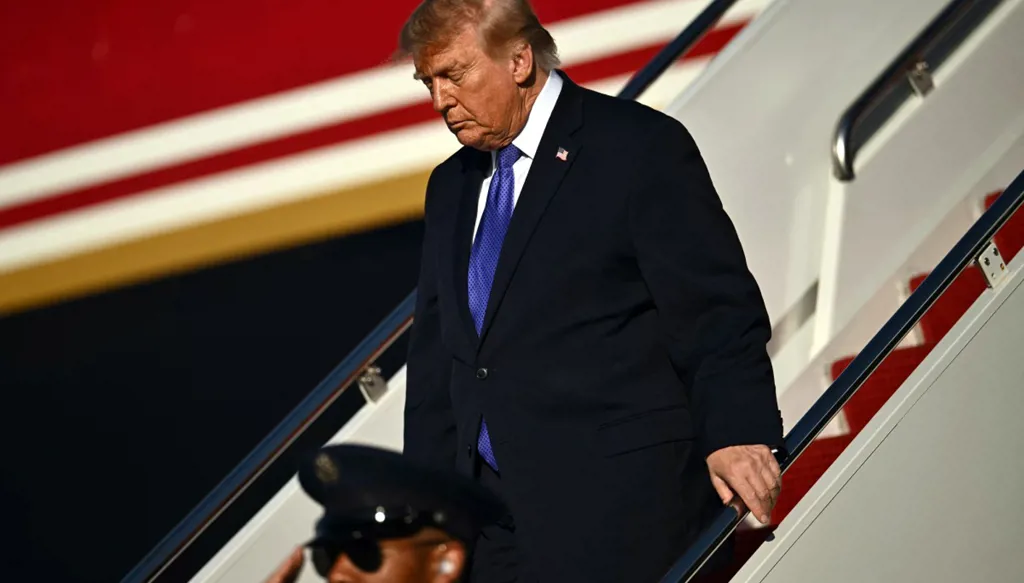
On Thursday, U.S. President Donald Trump canceled his planned weekend rallies in Iowa and Kansas.
Instead, Trump chose to support Republican candidates through phone events, which his party explained allow reaching a broader audience across about twenty states in the final days of the midterm elections, which threaten the Republican Party's control of Congress.
The president traveled to South Carolina on Thursday for the second time this month, signaling Republican concern about Darlene Graham's ability to fend off a strong challenge from Democrat Annie Andrews for a crucial U.S. Senate seat.
Voters in South Carolina have not sent a Democrat to the Senate in nearly three decades. However, Andrews, a pediatrician who previously ran unsuccessfully for Congress, urges voters seeking change to "try something new for once."
This message has resonated in an election year marked by voter frustration over the economy, gas prices, and the war in Iran, positioning Trump's Republican Party on the defensive in areas they have rarely had to compete in recent years.
Trump attacked a journalist on Thursday who asked if he canceled the scheduled Saturday rally in Kansas because he was "tired of traveling" upon returning to Washington from South Carolina, to which the octogenarian president replied, "You're sick to ask that question."
He added, "I feel great. You're disgusting. Get yourself in shape, you look terrible."
Besides South Carolina, Republicans are entering the final days of this year's midterms running close races in Texas, Kansas, Ohio, Iowa, and Alaska. Both parties are also closely watching developments in the Mississippi Senate race.
The president expressed confidence upon returning to the White House, saying, "We'll have a strong Tuesday night."
Trump had planned to hold two rallies; one in Kansas on Saturday, and another in Iowa on Sunday. However, the Republican National Committee announced Thursday evening the cancellation of in-person attendance in favor of a "72-hour sprint" via phone events, a step the committee explained is aimed at enhancing his ability to communicate with voters nationwide.
These virtual events are planned across about 20 states, with the potential for more to be announced later.