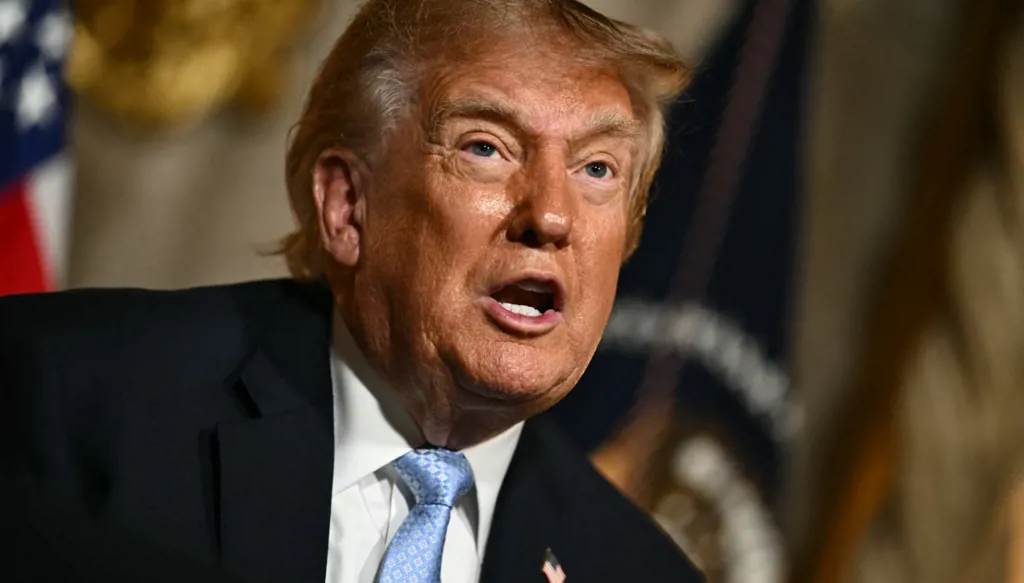
U.S. President Donald Trump announced that the United States supports Iraqi Prime Minister Ali al-Zaidi’s efforts to assert state authority across Iraq, stop oil smuggling, combat corruption, and place all weapons under the exclusive control of the state.
Trump said Washington supports al-Zaidi’s efforts to build a unified, prosperous and strong Iraq that makes its own political decisions.
The U.S. position comes as al-Zaidi pushes to strengthen federal government authority, crack down on oil-smuggling networks, and bring weapons under the control of official institutions, in an effort to reinforce the state’s sovereignty over its territory.
On Tuesday, al-Zaidi issued directives to close unofficial border crossings with neighboring countries, including those located in the Kurdistan Region. He also asked the federal Ministry of Oil to take over the management of oil fields in the provinces of Kirkuk, Nineveh, Salah al-Din and Diyala, which are currently under Kurdish security control.
These measures followed a review of an investigation into suspected oil smuggling linked to the state-owned North Oil Company, which identified routes used to smuggle oil from Kirkuk and Sulaymaniyah to Iran and from there to Afghanistan.
In a notable development, Iraq’s Federal Supreme Court issued a ruling affirming the federal government’s authority to secure international borders, including those within the Kurdistan Region, and oversee border crossings and the oil and gas sector.
The Kurdistan Regional Government rejected Baghdad’s measures, saying they infringed on the region’s constitutional rights, while Iraq’s top authorities agreed to hold a national dialogue on December 1 to discuss the differences between the federal government and the region.
Al-Zaidi’s moves are not limited to the oil and border files, as he is also seeking to bring armed factions under state authority. His recent actions included a confrontation with Iraq’s “Kataib Hezbollah” over allegations of its involvement in an oil-smuggling network, before a settlement was reached that allowed government forces to enter the city of Jurf al-Sakhar, considered a stronghold of the faction.
These moves place the Iraqi government before challenges related to asserting Baghdad’s authority over centers of armed and economic influence, amid the complexities of its relationship with armed factions and the Kurdistan Region.