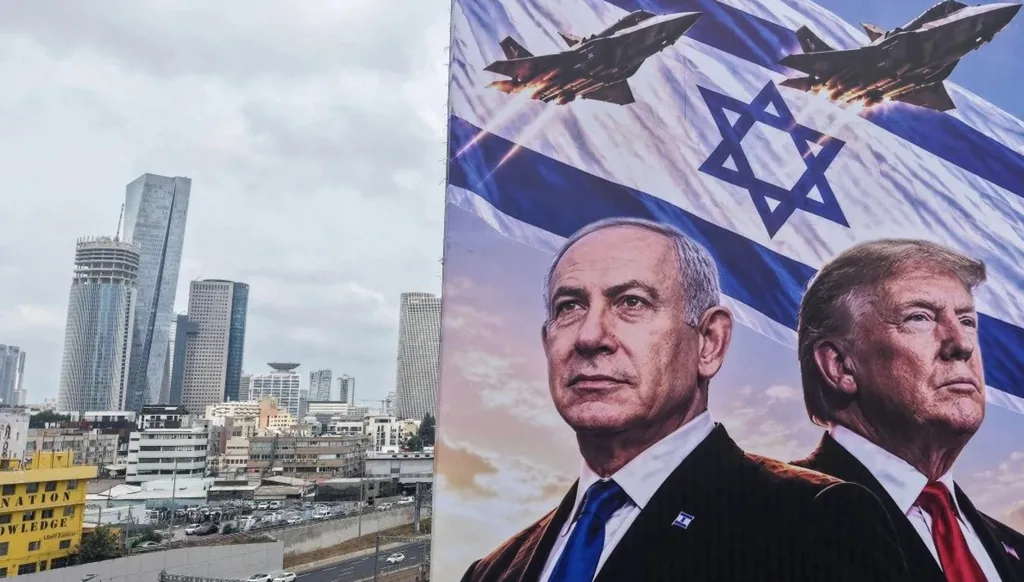
Benjamin Netanyahu emerged from the October 27 elections weaker than he was in 2022, but he remained ahead of his competitors: 27 seats for Likud, down from 32, and 53 for his political camp, falling short of the 61-seat threshold required for a parliamentary majority. He is more capable of blocking alternatives than of forming a government. In Washington, Donald Trump awaits the November 3 vote and the possibility of losing control of the House of Representatives, while the Senate race remains open. Both leaders face domestic political constraints, and the Middle East could become the arena in which they seek to expand their room for manoeuvre through military escalation.
From now until next March, the potential date of a new Israeli election, although one that is far from certain, the question goes beyond which of the two men needs the other. The real issue is who can impose the cost of his choices on his partner. The United States holds military superiority, funding, supplies, and diplomatic cover, while Israel has the ability to initiate military operations on the ground and maintains relationships within the American political system that make any attempt to restrain it politically costly. Power is distributed unevenly, but possessing leverage does not guarantee its use. Washington therefore remains better positioned to determine the direction of the war, while Tel Aviv can complicate efforts to bring it to an end.
For those who remember, the experience of the "Lavi" fighter jet illustrates these limits. In 1980, Israel launched the "Lavi" project to develop a domestically produced multirole fighter jet. Washington financed approximately $1.3 billion of the $1.5 billion spent on its development until 1986. After the first prototype flew on December 31, 1986, Washington pressured Israel to cancel the project entirely, fearing that the "Lavi" would compete with American fighter jets in export markets. Israel was unable to object.
In the case of Israeli spy Jonathan Pollard, the Bill Clinton administration rejected Israeli demands for his release, even one day before he completed his sentence. These included Netanyahu's request during the 1998 Wye River negotiations. Such incidents demonstrate Washington's ability to enforce its limits. However, cancelling a project and refusing to release a spy are easier than controlling a war once it has begun, when protecting an ally can itself become a justification for continuing the conflict.
On the other hand, Netanyahu excels at navigating the multiple centres of American power. His 2015 speech to Congress, delivered at the invitation of Republicans and in opposition to the nuclear deal, was an attempt to use one American institution against another's policy. Obama proceeded with the agreement, only for Trump to withdraw from it in 2018. Israeli influence, therefore, cannot be reduced to the image of an American president taking orders. Instead, it operates through intersecting interests and partisan alliances, succeeding when it finds an American political project that aligns with its own.
The most dangerous form of influence lies in shaping the options available before a decision is made. An Israeli strike could trigger a response that threatens American forces or international navigation, placing the president in a crisis in which the cost of staying out changes. Protecting soldiers and allies could then become a justification for intervention. This is one possible mechanism through which Washington could be drawn into the conflict, but it does not absolve it of responsibility: the president who chooses to participate remains the one making that decision, even when an ally has narrowed the available alternatives.
The current circumstances do not support portraying Trump as a dove pursued by an Israeli hawk. On the eve of the Israeli elections, he called for Netanyahu to be elected and for them to "complete the mission" they had started against Iran. Meanwhile, the White House stressed that it would not attack Iran before the midterm elections. The timing calculation is crucial: a commitment not to attack before the vote does not rule out an attack afterward.
Losing the House of Representatives, or both chambers, to the Democrats would increase investigations, intensify negotiations over spending, and create legislative obstacles, but it would not strip Trump of his broad executive powers. Moreover, the new Congress does not begin its work until January, leaving a window between the election and the transfer of legislative power that could tempt the administration to impose a different reality. Conversely, Trump could use the new opposition as an argument in discussions with Netanyahu, pointing to domestic constraints on American support. Assuming that a Democratic majority would automatically lead to a peace-oriented policy confuses opposition to Trump with opposition to Israel.
Netanyahu also faces a dual calculation. An external confrontation could help him pressure his opponents into joining a unity government, but it could also deepen opposition to his leadership. It might offer him a U.S.-guaranteed respite in which to rearrange his coalition. Moreover, his competitors have not all presented a clear strategic alternative to the existing wars. Replacing the prime minister, or forcing him to share power, does not necessarily mean changing Israel's security doctrine.
Washington has a stronger incentive to impose a technical truce until March: easing pressure on energy markets, protecting troops and trade, and securing a foreign policy achievement amid domestic difficulties. The exchange of a draft agreement through Qatari mediation, as reported by Reuters on November 2, indicates that a negotiating channel exists, not that it will necessarily succeed.
However, this possibility diminishes if Trump sees a new strike as a quick victory that could compensate for a political setback, or if an Iranian response disrupts the calculations of both leaders. Tehran, the Gulf states, and Europe all have their own interests and influence. The region is not an empty stage occupied by just two men.
The practical test is whether Washington will tie military and political support to a specific Israeli commitment and accept the cost of enforcing it. If it does, it can push Israel towards de-escalation. If it merely calls for restraint while guaranteeing continued support, it leaves Netanyahu room to set the pace. At that point, saying that "Israel dragged America" becomes an incomplete description: Washington may have agreed to move forward, even if the two sides differed over the pace.
As for Lebanon and the Palestinians, knowing who holds the reins is not enough. Negotiations could produce a ceasefire that leaves occupation and displacement unresolved, granting both sides a political respite. Washington could remain the stronger power, Netanyahu could remain the beneficiary, and the region could pay the price. The decisive question is what conditions will be imposed to end the war, and who will actually be compelled to respect them.