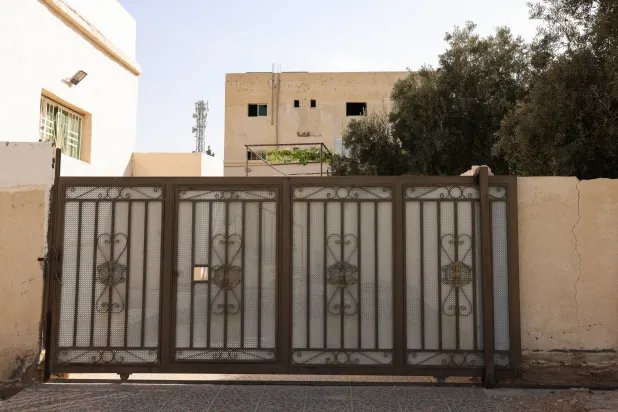
Three years after Storm Daniel devastated Libya’s Derna, sweeping reconstruction projects are reshaping the city. But some families are still waiting for housing and compensation, while court proceedings have yet to settle responsibility for the collapse of its two dams. Authorities have begun handing new homes to survivors, but families left off beneficiary lists are renewing their appeals. Dilapidated houses still bear witness to the disaster, which killed or left missing thousands of people and destroyed large parts of the city. Residents of the Al-Akwakh neighborhood in Derna’s eastern coastal area of Al-Istallat have repeatedly issued statements and video appeals demanding inclusion in housing and compensation projects. They say their homes are crumbling and the infrastructure has deteriorated further since Storm Daniel. A committee had previously surveyed and numbered the houses, raising hopes that residents would receive new homes. Civil society activist Nouh Oweiyan said the plight of Al-Akwakh residents should be reconsidered. “The Libya Development and Reconstruction Fund has become a source of hope for many Libyans seeking solutions to long-standing housing and living problems,” he told Asharq Al-Awsat. Storm Daniel struck Derna and several other areas of eastern Libya on Sept. 11, 2023. The collapse of the city’s two dams sent huge volumes of water surging into residential neighborhoods. Authorities issued varying figures for the dead and missing as the disaster response unfolded. The Libya Development and Reconstruction Fund, headed by Belqasim Haftar, launched a sweeping rebuilding drive in Derna two years ago. Since the spring, it has distributed 2,500 fully equipped homes to survivors free of charge. Last month, it announced plans to build another 552 units under the “Mountain Apartment Blocks” project. Among those still living with the disaster is the family of Marajea al-Ghazizi, whose brother Walid died inside the family home during the floods. Al-Ghazizi said reconstruction had made visible progress outside the house, but his family was still living with the tragedy inside. In a Facebook post, he shared a video showing the home’s dilapidated interior. He said court rulings issued in favor of some survivors had not been enforced and called for justice for families who had lost their homes. “Appreciating the reconstruction effort does not diminish affected families’ right to receive their full entitlements,” he said. In another account posted on a Facebook page under the name Abdelhalim Haf, a survivor said he received a message telling him his family was entitled to a new home, bringing joy to his children. He later discovered that his name was missing from the beneficiary lists. The survey and compensation committee told him the message had been sent by mistake, he said, turning the family’s joy into shock. He questioned what would become of the property he had bought with his own money. Abu Bakr al-Zawi, director of the fund’s Survey and Compensation Department, said in a video that a formal committee comprising Derna’s chief prosecutor and security director had opened a complaints process for anyone who believed they had suffered losses. Official figures put reconstruction work in Derna at 80% complete. In a statement on Friday, Belqasem Haftar said: “An even bigger surprise is coming to the city as it opens a new chapter in its history, with a major inauguration worthy of its achievements.” The rebuilding drive has not closed the question of legal accountability, with victims’ families growing increasingly frustrated, according to local media reports. A court convicted 12 officials and acquitted four others in July 2024, but the Supreme Court overturned the rulings. The convicted officials have been retried before the Benghazi Court of Appeal since October 2025. At its latest public hearing on Aug. 9, the court adjourned the case until Oct. 4, leaving the proceedings without a final ruling. Derna lawyer and activist Mohammed al-Lafi said the disaster was caused by “errors and negligence” under successive governments and political systems. He told Asharq Al-Awsat that he had represented victims seeking financial compensation for the harm suffered by their families. The courts rejected those claims, al-Lafi said. He added that the interim Government of National Unity in western Libya, which controls the country’s financial decisions, had yet to propose an initiative to compensate victims’ families. He praised the General Command of the Libyan National Army, however, for providing assistance and building homes for families whose houses were destroyed. With compensation claims still unresolved, the disaster’s third anniversary was marked prominently at both official and public levels on Friday. Presidential Council head Mohammed al-Menfi commemorated the victims of Storm Daniel, saying on Friday that “the tragedy united Libyans.” He praised the rebuilding effort and the restoration of normal life in Derna and other affected areas. House of Representatives Speaker Aguila Saleh said Derna’s reconstruction represented “a qualitative transformation that astonished everyone,” according to a statement issued on Friday. Osama Hammad, the prime minister of the government appointed by parliament, said the city was moving toward recovery and reclaiming its role. Residents and local institutions also marked the anniversary by sharing photographs and memories of victims on social media.