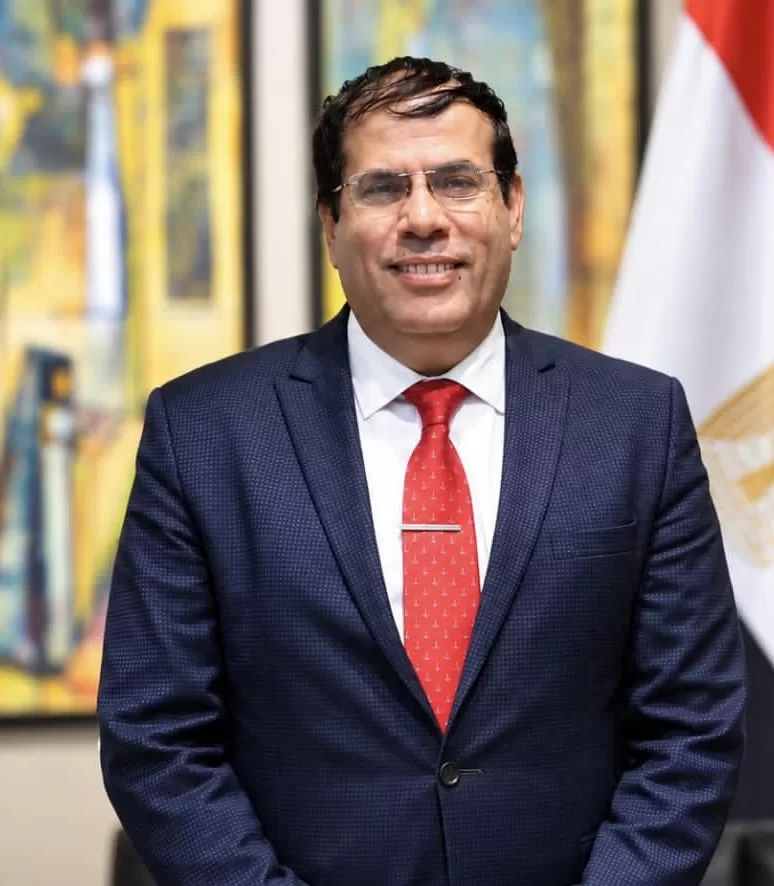
This day in 1822, French scholar Jean-François Champollion succeeded in deciphering Egyptian hieroglyphs. His breakthrough opened the door for reading ancient Egyptian inscriptions and helped establish Egyptology as a distinct field of study. Almost 204 years later, AI is emerging as a similar game-changer. This is why World Tourism Day, usually celebrated on September 27, adopts this year the theme: “Digital Agenda and Artificial Intelligence to Redesign Tourism”. It highlights the transformation happening, namely of how AI is reshaping the way visitors and researchers encounter, interpret and engage with Egypt’s ancient past. Renowned archaeologist Hussein Bassir said Champollion’s importance laid in his ability to understand the nature of the ancient Egyptian writing system. “He demonstrated that hieroglyphic signs could carry phonetic as well as symbolic meanings, while others functioned as determinatives, signs that clarified the meaning of a word,” he told The Egyptian Gazette. The Rosetta Stone, inscribed in hieroglyphic, Demotic and Greek, was crucial to Champollion’s work, though it was not the only key. European researchers, including Thomas Young, Silvestre de Sacy and Johan David Åkerblad, had already laid important foundations. Champollion’s achievement was to bring those scattered discoveries together into a coherent system for reading ancient Egyptian. “His moment marked a huge transition from silence to speech,” Bassir said. Before hieroglyphs were deciphered, Egyptian temples and tombs appeared to much of the world as magnificent but largely incomprehensible collections of images and symbols. Once the scripts could be read, their walls began revealing the names of kings and gods, royal titles, prayers, spells, historical accounts, administrative records and literary and religious texts. Bassir said a temple wall became a historical document. “A tomb also became an archive of an entire life, while a papyrus became the voice of a person who lived thousands of years ago,” he added. He noted that Champollion moved Egyptian heritage from seeing to reading, from image to text, and from admiration of stone to entry into the intellectual and linguistic world that created it. Almost two centuries later, AI is offering new tools for extending that work, with researchers testing systems capable of identifying signs, enhancing faded inscriptions and suggesting possible restorations for damaged or missing passages. “AI cannot replace Egyptology, but it can assist scholars by examining images and inscriptions from different angles and by helping reconstruct sections damaged by time,” Bassir said. Nevertheless, the final judgment remains human. This is why Bassir called on Egyptologists to review and evaluate the results scientifically. “A mistake in reading a single sign can sometimes change the meaning of an entire sentence,” he warned. That transformation changed not only Egyptology but also tourism, other specialists said. Tourism expert Mohamed Karem said for many visitors in the past, a temple was simply a place to visit and then leave. “Today, visitors can understand the story of the temple’s builders, usually written on its walls,” Karem told The Gazette. “They can also understand the rituals performed by those builders, usually inscribed on the same walls,” he added. Decipherment, he said, gave monuments meaning, showing that the stones do not carry mysterious symbols anymore, but speak about rulers, gods, ceremonies, wars, beliefs and everyday life. “This is the essence of Champollion’s achievement,” Karem said. The same technology is increasingly being used to transform the tourist experience. A visitor having a smartphone, virtual-reality headset or augmented-reality application can view a reconstruction of a temple, see missing sections digitally restored and learn how the site may have looked thousands of years ago. Such tools, Karem said, can help visitors form a more complete picture of the place. They also raise questions, however, about whether technology risks reducing heritage to short-form digital content. “Algorithms show tourists what they decide to show them,” Karem said. “They can compress a historical story into 30 seconds, but that isn’t the same experience as seeing the site itself,” he added. A real visit includes architecture, scale, atmosphere, smell and the physical sensation of being present in a place shaped by thousands of years of history. Karem believes AI can offer an interpretation, but not the site itself. Technology, he said, should serve as a gateway rather than a substitute. “A traveller may use AI to learn about a monument before visiting Egypt, but the encounter with the actual temple remains fundamentally different,” Karem said. “Visitors must see the site with their own eyes and discover its real history,” he recommended. The post The new key to Egypt’s ancient secrets appeared first on Egyptian Gazette.