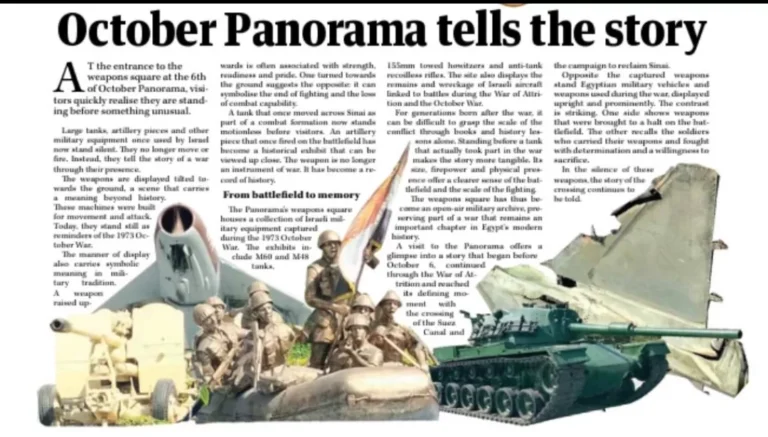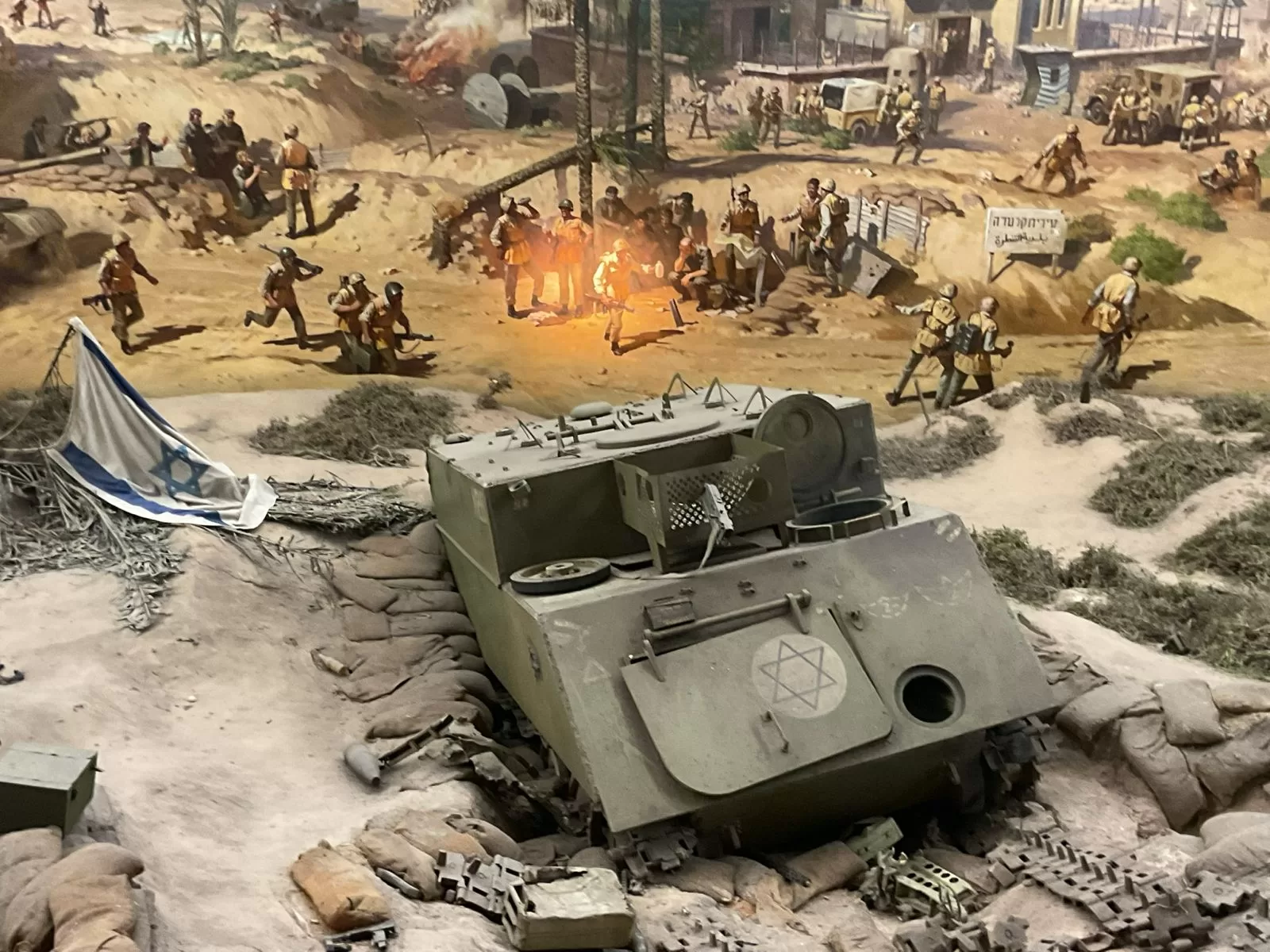
The lights dim, the floor begins to turn, and the crossing of the Suez Canal unfolds in a slow, 180-degree sweep around the seated audience. Egypt has transformed one of its most celebrated battles into a theatrical experience in one of Cairo’s suburbs. The show is part of the October War Panorama in Nasr City, one of several sites preserving the memory of the war that began on October 6, 1973. Each year, as Egypt marks the anniversary, museums, memorials and historic sites introduce new generations to the war which is remembered as a turning point in the country’s modern history and a symbol of its determination to reclaim its land and dignity. Sites dedicated to it also offer an opportunity to develop cultural and military heritage tourism, introducing Egyptian visitors and international travellers to a defining chapter of the country’s past. At the centre of that effort is the October War Panorama in Cairo. It opened on October 5, 1989, and reopened in 2019 after a comprehensive renovation. Its displays tell the story of the war before, during and after the fighting, with activities designed for different age groups. A virtual guide explains the complex events of this seminal development in Arabic, English and French. Visitors begin in a reception hall featuring a model of the museum, murals depicting major battles fought by the Egyptian army from ancient times to 1973, and digital screens displaying holograms of weapons. The Steadfastness and Challenge Hall screens a film about the rebuilding of the armed forces and the War of Attrition after 1967. The 3D cinema uses sound, smoke and water effects. In the Crossing Hall, a large-screen film depicts the canal crossing, the course of the war and the peace negotiations. A digital hall, titled Army and People, uses a circular screen, lasers and advanced sound to cover the June 30 Revolution and what the exhibition presents as the bond between the army and the public. It concludes with displays on development projects. Outside, an open-air courtyard displays Egyptian weapons and equipment alongside arms captured from the opposing forces during the war. At night, projection mapping, a fountain and a light-and-sound show bring the circular structure to life. At the Cairo Citadel, the National Military Museum recounts military history chronologically. It begins in ancient Egypt, moves through the Islamic era and the rebuilding of the army under Mohamed Ali, and continues to the July 1952 Revolution and the Arab-Israeli wars, including the 1956 Suez War and the October 1973 War. The museum’s galleries also cover the 1948 war, the Yemen war, the 1967 war and the War of Attrition. The Long Live Egypt hall rolls out state achievements since 2011, while the Culturama hall screens an interactive film on Egyptian military history. Holograms add a 3D element to the displays. The route ends in the Victory Hall which documents the October 1973 War. It includes models of weapons and equipment used in the conflict, as well as a model of the operations room. The Port Said Military Museum focuses on the city’s resistance to the 1956 Tripartite Aggression, the British-French-Israeli attack that followed Egypt’s nationalisation of the Suez Canal. It displays weapons and equipment used or captured in 1956 and during the 1973 war. The open-air courtyard contains heavy weapons, reconnaissance aircraft captured during the conflicts and older guns dating back to the era of Mohamed Ali. Inside, the main hall traces the history of the city and region, from ancient Egypt through the Islamic era to modern times, using works of art. The Suez Canal hall tells the story of the waterway, from its planning and construction to its completion. Historical documents and dioramas depict the canal’s digging and opening, alongside a more recent diorama of the New Suez Canal project. The hall also explores the canal’s political, military and economic role and the 1956 nationalisation decision. The 1956 hall features artworks depicting the city’s defiance, portraits of popular resistance fighters, weapons, soldiers’ personal belongings and dioramas of battles. An October 1973 hall, added when the museum was developed in 1978, presents artworks on the armed forces’ achievements, captured Israeli light weapons and dioramas depicting battles. Back in Nasr City, the Unknown Soldier Memorial takes the form of a pyramid, chosen as a symbol of eternity in ancient Egyptian civilisation. Designed by Egyptian artist Sami Rafie and built on the orders of President Anwar Sadat, it honours Egyptians who died in the War of Attrition and the 1973 war. It opened in October 1975. The hollow concrete structure houses a cube of solid basalt marking the tomb. Sadat himself was buried at the site after his assassination on October 6, 1981. The post The museums that keep 1973 alive appeared first on Egyptian Gazette.