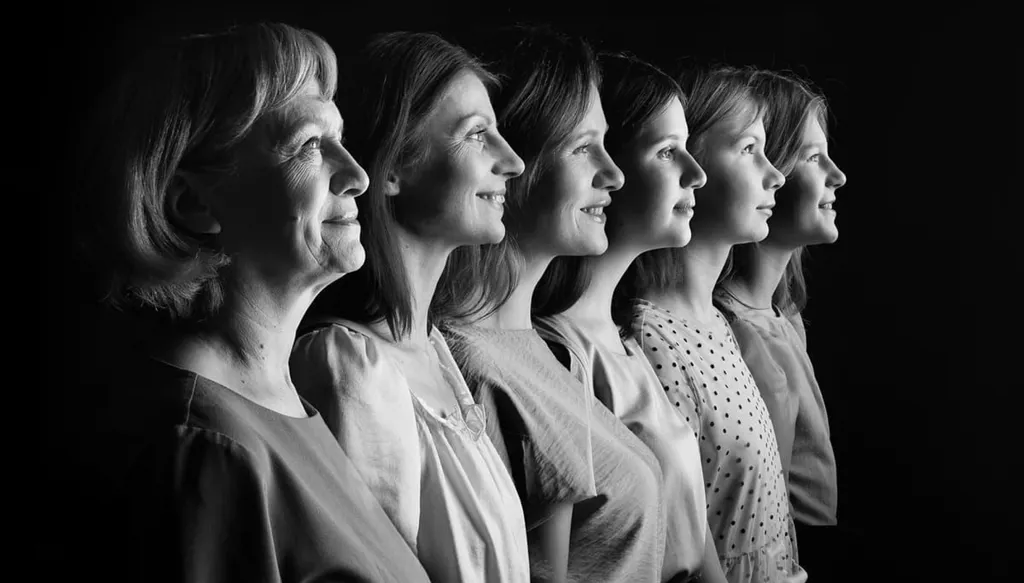
Sometimes I feel like a hundred women in one. One was the woman I was in my twenties, with her dreams, fears, and convictions that seemed so final at the time. Another came afterward and discovered that some of the things she once considered life-defining could lose their importance over time. Between them and beyond them, there have been many women I have been. Some I miss, while others I am glad to have outgrown. With every stage, I carry something of who I once was and leave something behind.
And in a fleeting moment, standing before an old photograph or a mirror, we become aware of how far we have come, and of that strange contradiction between our inner sense that we are still the same people and the image reflected in the mirror, which tells the story of the passing years through its smallest details.
Today, as interest in longevity grows and research advances toward extending the number of years we live in good health, a question emerges that laboratories cannot answer: If we live longer, how will we live with all those successive versions of ourselves? And do we fear growing older, or do we fear drifting away from the people we have grown accustomed to being?
The years take on different meanings depending on the stage of life we are experiencing. In our youth, we often measure time by what lies ahead: education, work, relationships, and dreams yet to be fulfilled. As the years pass and the milestones we once eagerly anticipated become part of our past, we begin to feel ourselves growing older. It is as though the distance separating us from what we have lived through, rather than the number of years itself, makes us realize that we are aging.
But age is not measured by memory alone. Some people feel the weight of the years early in life, while others see turning sixty as the beginning of a long-postponed adventure. Society's expectations also play a role: When are we supposed to succeed, settle down, or retire? And who decided that passion, love, or a career change should have an expiration date?
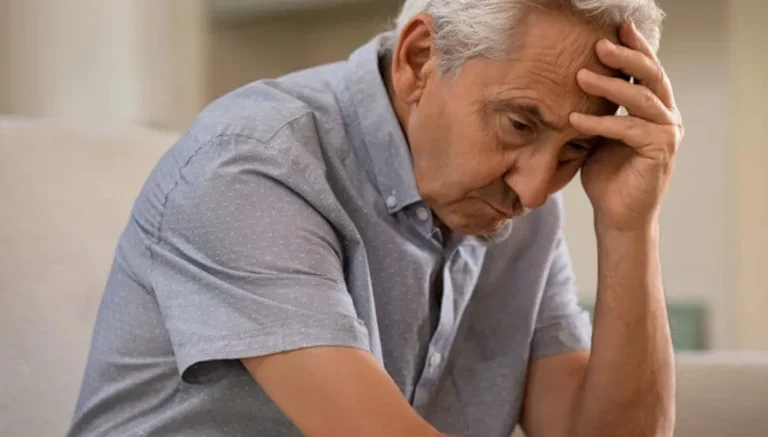
French philosopher Simone de Beauvoir explored this paradox in her 1970 book The Coming of Age, examining the distance between our inner experience of ourselves and the image imposed upon us by others. We may feel that our identity remains unchanged despite the transformations of our bodies, only to discover that society has begun treating us according to our chronological age. Aging, therefore, is not merely a biological process; it is also a social experience that may be accompanied by prejudice and isolation.
While de Beauvoir warned of what society does to people as they age, the Roman thinker Cicero raised a different question centuries earlier in his work On Old Age: Does physical decline mean that life itself loses value? He believed that intellectual activity, experience, and participation remain possible even as our abilities change. This perspective is not a universal formula, since aging differs from one person to another. Yet it reminds us that every stage of life has its possibilities, and that losing certain roles does not mean losing the ability to create new ones.
Psychology offers a compelling explanation for this transformation. According to socioemotional selectivity theory, developed by psychologist Laura Carstensen at Stanford University, our priorities change depending on how we perceive the time remaining in our lives.
When the future seems open-ended, we devote more attention to exploration and building new relationships. When we become aware that time is limited, we may gravitate toward people and experiences that offer deeper emotional meaning.
Perhaps this is why saying "no" becomes easier as the years go by. We spend less energy on social obligations that drain us and become more selective about whom we give our time to.
Yet maturity does not guarantee happiness, just as old age does not automatically bring wisdom. Illness, loss, loneliness, and financial pressures can make some years far more difficult than others.
The World Health Organization projects that the number of people aged sixty and over will reach approximately 2.1 billion by 2050. These figures invite us to reconsider the traditional model of life we have inherited: learning in its early years, working through its middle stages, and then gradually withdrawing from active participation.
The Stanford Center on Longevity, through its New Map of Life initiative, calls for redesigning these stages so that learning, work, and participation remain possible at different ages. Someone might begin a new course of study at fifty, another might change careers at sixty, while a third might discover opportunities for social or creative fulfillment that earlier responsibilities had prevented them from pursuing.
But these opportunities are not equally available to everyone. We cannot speak of aging with dignity without considering health, financial security, care, and the fight against age discrimination.
The contradiction also becomes increasingly apparent in a culture that celebrates longer lives while sometimes treating wrinkles and gray hair as flaws to be erased. We want to live longer, provided we do not look as though we have lived.
Perhaps the greatest philosophical challenge of the longevity era is not learning to resist time, but reconsidering our relationship with it. It means acknowledging what has changed without defining ourselves solely by what we have lost, and leaving room for new discoveries, however late they may come.
If we live many lives within a single lifetime, perhaps the gift of living longer is that it gives us another opportunity to discover a new version of ourselves, one we did not yet know we could become.
Another contradiction accompanies today's growing interest in longevity. We aspire to live longer, while beauty culture, advertising, and anti-aging narratives continue to portray the visible signs of aging as problems to be concealed or delayed.
The pursuit of youth can become a psychological burden when it shifts from caring for our health and appearance to feeling a constant obligation to fight the passage of time.
This anxiety is closely connected to ageism. In a global report published in 2021, the World Health Organization estimated that approximately one in two people worldwide holds ageist attitudes toward older adults.
Such perceptions do more than influence how society treats its members. They can also become internalized, leading individuals to see their advancing age as a reason to abandon a new experience, a relationship, or an ambition.
Coming to terms with aging does not necessarily mean giving up the desire to care for our bodies or maintain our vitality. Perhaps it begins when looking young is no longer a condition for feeling valuable, and when the years we have lived become part of our identity without becoming limits on what we can achieve.
There is an aspect of growing older that numbers cannot explain: our relationship with the person we once were and the person we are becoming.
We are constantly changing, even when we insist that we have not changed at all. Some of our old dreams lose their importance, some of our fears become less intense, and new desires emerge that we never anticipated.
These transformations do not always happen smoothly. They may be accompanied by disappointment, nostalgia, and regret, but they can also bring the relief of freeing ourselves from expectations we no longer believe in.
Perhaps one of the hardest tasks of growing older is accepting these transformations without viewing every change as a loss, and acknowledging what we have lost without allowing it to define the rest of our lives.
The philosophy of longevity, meanwhile, begins with a question that goes beyond the number of years science may add to our lives: What will we do with those years, and who will we become during them?
It is not about remaining young forever, but about preserving, at every age, the right to begin again.
Perhaps the most beautiful gift a long life can offer is not simply more time to live as we once did, but the opportunity to discover how many times we can become someone new within a single lifetime.
As for me, perhaps that is why I love the idea of growing older. After the hundred women I have been, I cannot wait to meet the hundred and first...