He was one of the most famous and fiercest American cartoonists of his time.
It is said that he was bullied as a child and, in turn, spared no bully as an adult through his drawings.
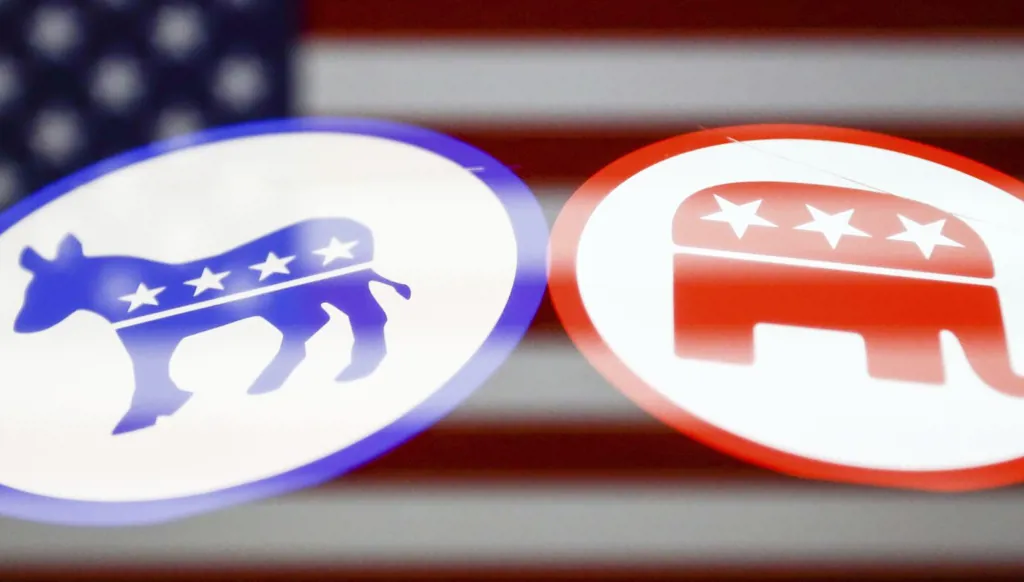
If the symbols of the “donkey” and the “elephant” are among the most recognizable in American midterm election cartoons, with the former associated with the Democratic Party and the latter with the Republican Party, Americans largely owe this to cartoonist Thomas Nast (1840-1902).
Some say that the word “nasty” is also associated with Nast himself because of his biting style. Of course, the word is much older, dating back to the late 14th century, according to the “Etymology Online Dictionary.”
According to the “National Museum of American History,” party symbols inspired by the natural world helped dramatize political issues, making them easier for Americans, including those who were illiterate in the 19th century, to understand.
The association between the Democrats and the donkey dates back to the 1828 presidential election, when Andrew Jackson was a candidate. His opponents played on his name, turning it into “Jackass,” meaning donkey.
According to the “History” website, Jackson calmly accepted the description and even put the donkey on his campaign posters. Jackson had the last laugh, managing to reach the White House by defeating his rival, President John Quincy Adams, and becoming the seventh president of the United States. He was also the country's first Democratic president.
Cartoonists helped spread the symbol, including Nast. Americans had largely forgotten the association until Nast revived it starting in 1870, helping cement it in the American public's imagination. However, the Democratic Party has never officially adopted the donkey as its emblem.
The elephant first appeared as a Republican symbol in a cartoon during the Civil War (1861-1865). At the time, soldiers used the phrase “seeing the elephant” to describe a difficult combat experience, particularly their first encounter with one. The pro-Lincoln newspaper “Father Abraham” published a cartoon showing an elephant carrying a banner celebrating the Union Army's victories.
Nast was such a strong supporter of Lincoln that the president described him as his “best recruiting general” during his campaign for a second term.
Nast helped popularize the symbol across the United States in 1874. That year, he drew a cartoon in “Harper’s Weekly” titled “The Third-Term Panic,” depicting a donkey wearing a lion's skin and bearing the word “Caesarism,” frightening a group of animals, including an elephant marked “Republican Vote.”
The cartoon was a reaction to a rumor circulated by the Democrat-leaning “New York Herald,” suggesting that Republican President Ulysses Grant was considering running for a third term. At the time, the practice of not seeking a third presidential term was merely a tradition established by America's first president, George Washington. It did not become a constitutional rule until 1951. The word “Caesarism” suggested that Grant was seeking to retain imperial power.
Nast drew on the ancient Greek fable “The Ass in the Lion's Skin,” which tells the story of a fool attempting to disguise himself, only to be exposed by his own words. However, Nast also suggested that despite their size, Republicans were trembling with fear at words intended to spread panic.
In reality, Grant ran for a third, non-consecutive presidential term in 1880 but failed to secure his party's nomination.
It is worth noting that the Republican Party officially adopted the elephant as its symbol.