Add as preferred on Google
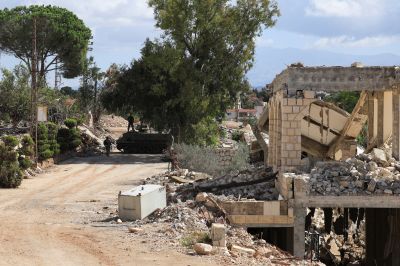
Aerial view of the site of the United States Embassy in Lebanon. Archive photo taken from the embassy's X account Add as preferred on Google Information of the dayAmid intensifying attacks by Yemen’s Houthis on Saudi Arabia, particularly targeting civilian airports and other critical infrastructure, Washington warned that hostilities could ‘‘quickly expand beyond this area.’’In updated travel recommendations issued Friday, the U.S. State Department reiterated its advice against travel to Lebanon, warning that drone and missile strikes could occur throughout the country, including in Beirut. U.S. citizens in the southern suburbs of the capital, southern Lebanon, areas near the Syrian border and refugee camps were urged to leave areas described as ‘‘particularly dangerous’’ immediately.The update does not change Lebanon’s advisory level or risk indicators. Lebanon remains at Level 4, the highest level, on the State Department’s travel advisory, meaning Americans are advised not to travel there for any reason. Although the advisory has been in place for several years, Washington regularly issues reminders during periods of heightened regional tension.Why this mattersThe U.S. travel update covers several Gulf and Middle Eastern countries, including Saudi Arabia, Qatar, the United Arab Emirates, Iraq and Israel, with varying advisory levels amid fears of escalating hostilities.Exchanges of strikes between Yemen’s Houthi rebels and Saudi Arabia continue. On Saturday, the Houthis reported at least 15 people killed in Saudi strikes on Sanaa, its surroundings and the coastal city of Hodeida, before claiming further attacks.Meanwhile, negotiations between Washington and Tehran remain deadlocked. U.S. envoy Tom Barrack mentioned Friday the possibility of American strikes against Iran as early as this weekend. President Donald Trump denied the remarks.In southern Lebanon, the escalation on the ground continues. On Saturday afternoon, Israeli jets carried out at least five strikes within an hour across several sectors of the occupied area. In Wadi Houjeir, farmworkers harvesting olives narrowly escaped a projectile dropped from an aircraft, without suffering injuries.New demolitions were also reported in Kfar Tebnit, Taybeh and Yohmor al-Shaqif, where several houses were destroyed. For Lebanon, the risk is that a new confrontation with Iran could trigger expanded Israeli operations and renewed Hezbollah involvement alongside Tehran.What to keep watch out forThe Israeli army forced about 1,200 Palestinians to leave their homes in Hebron, in the occupied West Bank, according to a Palestinian official, following an attack that killed two Israeli soldiers. Prime Minister Benjamin Netanyahu announced a large-scale military operation after the soldiers were killed by two Palestinians who opened fire at a military checkpoint near the city. Both assailants were shot dead. The Palestinian Authority subsequently called for international pressure on Israel to halt the displacement of Palestinians, demanding ‘‘urgent international action in response to the crimes’’ committed by the Israeli state in the occupied West Bank.In other newsDemonstrations took place across France on Saturday under the watch of 70,000 police officers and gendarmes, with violence at a much lower level than the previous week, despite clashes in several cities. In Paris, tens of thousands of people, according to police, marched peacefully to protest high living costs, accusing President Emmanuel Macron of cutting public services without addressing rising inequality. Police used tear gas in Clermont-Ferrand, Grenoble, Lille and Nice. The government deployed 10,000 more police officers and gendarmes than on Oct. 17, when protests across the country led to some of the worst violence recorded in France in years. Interior Minister Laurent Nuñez announced early Saturday afternoon that 135 people had been arrested nationwide. In much of central Paris, precautionary measures were particularly visible: Shopkeepers had barricaded their windows, museums had closed and more than 20 metro stations were shut.The death toll from an attack on a church in Jordan rose to nine after two people wounded in Friday’s attack in the country’s south died of their injuries, Health Minister Ibrahim al-Bdour said. 25 people injured in the attack remained hospitalized. Interior Minister Mazen al-Faraya blamed the rare attack targeting the country’s Christian community on ‘‘a group of extremists.’’Lebanese President Joseph Aoun visited Tripoli, saying there could be ‘‘no development without security’’ and that it was time to end the neglect affecting the major city in northern Lebanon. He called for putting citizens’ interests above all else. During the visit, the first by a Lebanese president to the city in nearly 15 years, Aoun made the fight against corruption a ‘‘priority’’ and urged judges and security forces to carry out their duties without yielding to pressure.Our recommendations REPORT ‘Apartheid is the lesser evil’: Israel’s Palestinians determined to turn the page on Netanyahu REAL ESTATE Beirut apartment prices in 2026: Downtown Start your mornings with The Morning Brief, our flagship newsletter that brings you the latest from Lebanon and the region. Enjoy 7 days of free access when you create your account. Email Address Password I would like to receive special offers from L'Orient Today as well as selections of the best articles. Register By creating an account, you agree to the terms and conditions of use and our privacy policy. Register Or register with: Facebook
Already have an account? Login here Log in to your account to see the results of the polls E-mail Password Log in I forgot my password Log in with Facebook Log in with Google Information of the dayAmid intensifying attacks by Yemen’s Houthis on Saudi Arabia, particularly targeting civilian airports and other critical infrastructure, Washington warned that hostilities could ‘‘quickly expand beyond this area.’’In updated travel recommendations issued Friday, the U.S. State Department reiterated its advice against travel to Lebanon, warning that drone and missile strikes could occur throughout the country, including in Beirut. U.S. citizens in the southern suburbs of the capital, southern Lebanon, areas near the Syrian border and refugee camps were urged to leave areas described as ‘‘particularly dangerous’’ immediately.The update does not change Lebanon’s advisory level or risk indicators. Lebanon remains at Level 4, the highest level, on the State Department’s travel advisory, meaning... You have reached your article limitStay informed about a Middle East in crisis.Subscribe for $0.5/month for the first 3 months. Subscribe now Log in This article is only available to L’Orient Today subscribers. Subscribe now Log in Create a free account to continue reading this article. You’ll also receive The Morning Brief, our must-read daily digest of Middle East news. Opt out anytime Email Address Password Email Address Password I would like to receive special offers from L'Orient Today as well as selections of the best articles. Register By creating an account, you agree to the terms and conditions of use and our privacy policy. Register Or register with: Facebook
Already have an account? Login here