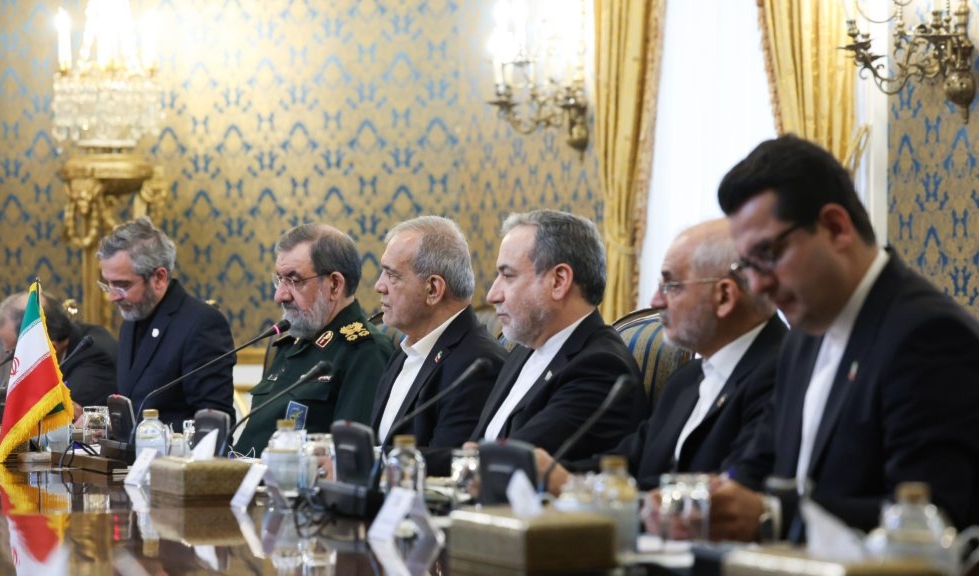
The four-way meeting in Tehran marked an important turning point in the diplomatic and strategic landscape of West Asia. The unprecedented gathering came at a highly sensitive time, as direct and indirect confrontations between Iran, the US and the Israeli occupation grew increasingly complex, raising serious questions about the region's future stability and security. Rising tensions in the Strait of Hormuz, mounting attacks on energy infrastructure across the Gulf, and the security risks stemming from the expanding conflicts in Yemen, Palestine and Lebanon have exposed neighboring countries to direct threats. Against this backdrop, the simultaneous presence in Tehran of Saudi Defense Minister Khalid bin Salman, Pakistan's army chief Asim Munir and Turkish intelligence chief Ibrahim Kalin attracted considerable attention from media outlets, news agencies and research centers inside and outside Iran. The officials attended at the invitation of Major General Mohsen Rezaei, secretary of Iran's Supreme National Security Council. Although Iran is not an institutional member of the pact, no sustainable regional security arrangement can ignore its deterrence capabilities or geographic position. Iranian media offered different interpretations of the meeting. Dr. Arash Reisinezhad, an international relations scholar and university professor, linked Iran's relationship with the Mecca Pact to its geopolitical weight. He argued that formal membership in the alliance does not necessarily reflect strategic realities. Although Iran is not an institutional member of the pact, no sustainable regional security arrangement can ignore its deterrence capabilities or geographic position. What Reisinezhad calls the "paradox of exclusion" highlights the central obstacle to building regional alliances without taking local powers into account. Iranian diplomatic circles viewed the meeting as an example of "homegrown regional security" and an effort to strengthen neighborly diplomacy during a crisis. In an analytical article published by the Islamic Republic News Agency (IRNA), Iran's ambassador to Saudi Arabia, Alireza Enayati, described the gathering as a valuable step towards creating a regional order free from outside interference. Former Foreign Minister Mohammad Javad Zarif also welcomed the meeting, suggesting that it could lay the groundwork for a West Asia Security Network, or WASL, bringing all key regional powers together within a common institutional framework. However, some conservative circles and critical commentators questioned the participants' intentions. They pointed to Saudi Arabia and Pakistan's security and military ties with Washington, raising concerns that the Mecca Pact leaders' visit could serve to convey US or Israeli messages or exert diplomatic pressure aimed at containing Iran's deterrence capabilities. Two main scenarios have emerged from the debate over West Asia's future security arrangements and the Mecca Pact's position towards Iran. The first involves maintaining limited alliances and unilateral balancing. Under this scenario, groups such as the Mecca Pact would seek to protect their members without including Iran. While this approach could reduce some vulnerabilities in the short term, it would fail to deliver lasting stability because it overlooks Iran's influence and deterrence capabilities, reinforcing the paradox of exclusion. The second scenario envisages a gradual shift towards a comprehensive regional security framework involving all major powers. Under this emerging model, the Tehran meeting could serve as an initial platform for building trust and pave the way for mutual non-aggression guarantees and institutional cooperation. This is an edited translation of an article originally published in Arabic.