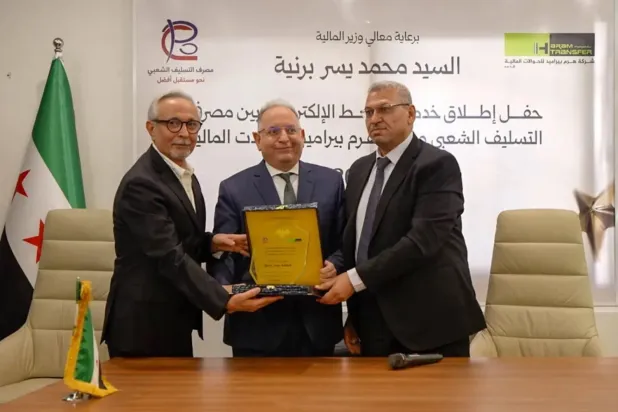
The General Secretariat of the Syrian Presidency has approved a series of measures to control and rationalize public spending, aimed at safeguarding the state budget. Syrian Finance Minister Mohammed Yisr Barnieh said Monday that the measures would not affect salaries, wages or essential expenditures, particularly in the health, education, water, energy, security, public safety and operational maintenance sectors. As Syrians fear a harsh winter that could revive memories of the difficulties they faced during the war and shortages of basic necessities, the Syrian government is increasingly concerned about continued regional escalation and rising energy production and fuel costs. Sources close to the government told Asharq Al-Awsat that there was concern over continued escalation in the region, particularly the wars in Iran and Yemen, and its impact on Arab Gulf states, which have become Syria’s new financial lifeline. They said the escalation was casting a dark and direct shadow over the country’s political and economic landscape and threatening recovery efforts, amid the possibility of declining support and investment. Barnieh explained in a Facebook post Monday that the measures include limiting nonessential expenditures and reprioritizing spending and investment projects, while postponing projects that can be deferred according to their necessity, readiness and financial, economic and social impact. The financial measures are aimed at improving the efficiency of public spending by directing available resources toward projects with a direct impact, strengthening the budget’s ability to withstand current pressures and preserving fiscal sustainability, according to the minister. The launch of the public spending rationalization plan coincides with preparations for the 2027 budget, amid challenges related to containing the current year’s fiscal deficit. Public spending during the first half of this year reached about $3.7 billion, compared with total public revenue of around $2.7 billion, according to the state budget’s fiscal performance report issued last August, which estimated the fiscal deficit at approximately $1 billion. Compared with the first half of 2025, public revenue rose by about 111%, while public spending increased by around 331%. The government says the increase in spending was primarily linked to higher salaries and wages, expanded spending on government priorities and higher costs for a number of goods, services and inputs as a result of regional developments and rising import prices. The government is working to cover the budget deficit through financial instruments such as short-term bonds and efforts to attract foreign investment, as living conditions worsen and the gap between salaries and wages and the cost of basic necessities widens. The government raised fuel prices on Sept. 13 by between 25% and 40%, covering gasoline, diesel and household gas. More than 90% of Syrians live below the poverty line, while 65% live in extreme poverty, according to UN figures. Estimates indicate that a Syrian family of five needs more than $500 a month — nearly 6 million Syrian pounds at prevailing valuations — to meet minimum basic needs. By contrast, salaries in the public and private sectors often do not exceed $100 to $150.