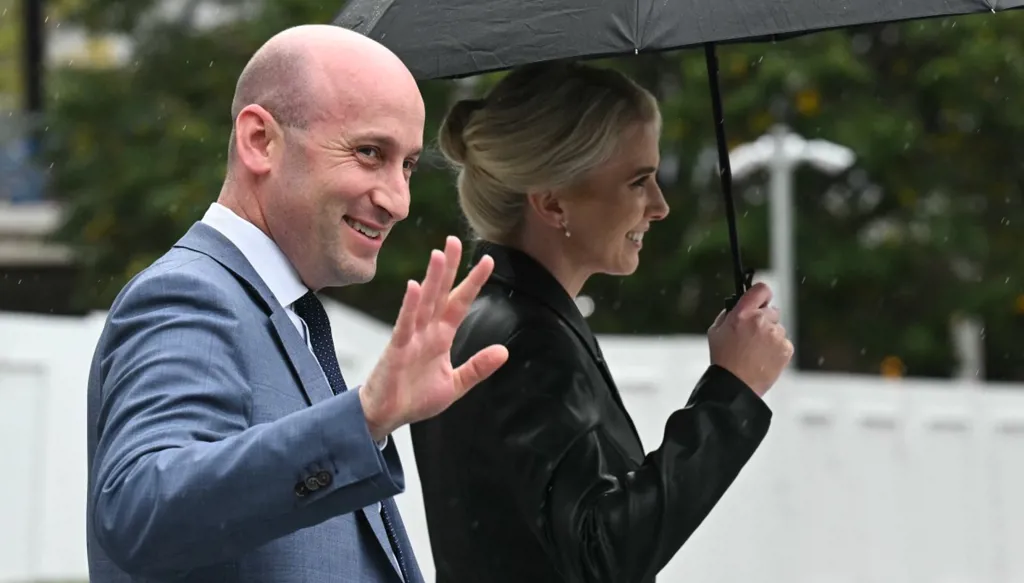
Officials in President Donald Trump's administration and other Republicans view Trump's decision to promote Stephen Miller, a longtime supporter, to White House Chief of Staff as a sign that he intends to escalate confrontations during the final two years of his presidency and deflect external political and economic pressures.
Voters delivered a historic blow to Republicans in the congressional midterm elections held on Tuesday.
Officials and experts who spoke to Reuters said that, with Miller assuming the role of White House Chief of Staff, the Trump administration is expected to continue its hardline immigration campaign, deepen cultural divisions and show no flexibility toward a Democrat-controlled Congress.
They said hesitant Republicans will face increased pressure to adhere to the administration's approach, while businesses may find it more difficult to convince the White House to take their interests into account.
Dan Eberhart, a financier for Trump's campaign and an executive in the energy sector, commented: "This indicates that the administration will adopt a trench-fighting approach in the last two years."
Despite Trump's insistence that he can work with Democrats, he has adopted a sharp approach since the midterm election results became clear.
On Saturday, Trump ordered the Department of Justice to investigate Democrats whom he accused of sending "threatening messages" to Republican Party donors and other Trump allies. He also offered Dana White, an event organizer, the position of White House spokesperson.
Miller's appointment, at the age of 41, marks a significant shift from his predecessor, Susie Wiles, who managed Trump's 2024 presidential campaign.
Wiles lacked extensive experience in Washington but was considered an adept manager of competing interests. In contrast, Miller is viewed by both allies and adversaries as an ideologue firmly committed to his positions, with a deep understanding of power dynamics and unwavering loyalty to Trump.
Miller said at an event held at one of Trump's estates in Florida on Friday: "If it weren't for Trump, the United States of America wouldn't exist now. This man saved America."
Miller joined Trump's first presidential campaign in 2016 and held positions in the White House throughout both of Trump's presidential terms. He is known for driving Trump's hardline immigration campaign, which rallied Trump's supporters but angered many voters.
A Reuters/Ipsos poll conducted in October showed that only 37 percent approved of Trump's handling of immigration, down from 50 percent when he took office.
Nevertheless, four officials in the U.S. immigration administration told Reuters there are no signs that the administration will ease its procedures. One official, who requested anonymity, said: "Nothing changes."
Congressman Don Bacon of Nebraska, who occasionally criticizes Trump and plans to retire, told Reuters that Miller "is in denial," saying that he and other Republicans had tried to warn him before the election that Trump's immigration and tariff policies were alienating voters.
He added: "We told him, 'you're going to bring us a bad midterm election,' but he refused."
The White House said Miller will continue to achieve "historic successes" in his new role, but Bacon said that most of his colleagues in the House view the move as "insisting on adopting a failed strategy."
Bacon described Miller's appointment as "upsetting the majority of Congress."
Miller also oversaw the issuance of Trump's executive orders, giving him a clear understanding of the administrative tools available to the president. Many people interviewed by Reuters for this story expect the White House to rely more heavily on executive orders rather than cooperate with legislators.
Republican lawmakers will face pressure to stick to Trump's positions during upcoming investigations led by Democrats, even if doing so harms the party as a whole.
Republican strategist Ron Bonjean said: "Those on Capitol Hill looking to distance themselves from the Trump administration will know that Stephen Miller won't stand by idly watching it happen."
Alongside the domestic issues he has focused on throughout most of his career, Miller will now have greater influence over foreign affairs.
Three sources familiar with Miller's thinking, who requested anonymity, revealed that Miller opposes prolonging the war with Iran but strongly supports Israel, which may put him at odds with a president who has threatened to resume strikes on Iran and announced that he would stop aid to Israel.
Miller's promotion has also raised concerns among some corporate lobbying groups, which fear that he may not address their issues as Wiles did after establishing relationships with senior executives.
A senior official at a Trump-supporting company, who requested anonymity, said: "This will be a big change. Miller is there to focus on political priorities, such as immigration and tariffs, which matter to Trump, and will not follow Susie's approach, who realized that policies have unintended consequences."
Miller's appointment was met with praise from senior government officials and political supporters, who described him as the fighter they will need in the final phase of Trump's term.
Trump ally Roger Stone told Reuters: "I think Donald Trump has found his wartime adviser."