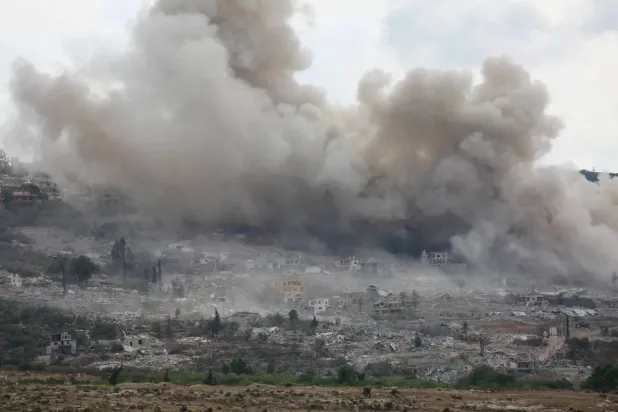
Preparations for the next round of Lebanese-Israeli talks in Tampa, Florida, have stirred debate in Lebanon: Do they mark a shift from political negotiations over withdrawal and sovereignty to military administration of the south? Lebanese sources following the talks reject that interpretation, saying the focus is on resolving outstanding military and security issues. A ministerial source told Asharq Al-Awsat that those issues require decisions and action on the ground before other tracks can advance. “We have not moved to military administration of the south. Most issues that remain unresolved are military matters on the ground: halting bulldozing, house demolitions, gunfire and combat operations; securing Israeli withdrawal; identifying new model areas; addressing the issue of prisoners; and returning residents to their villages,” the source said. “These are not political, economic or legal issues for specialists in those fields. We are discussing details on the ground: where withdrawal takes place, where operations stop, how the Lebanese army deploys and which areas residents can return to. It is natural for military personnel to discuss these details.” Combat operations continue, though at a lower intensity, the source said. Other steps cannot advance seriously until a minimum level of security and stability is achieved. “How can the Lebanese army deploy without an Israeli withdrawal or an end to gunfire? How can residents return to their villages while demolitions, bulldozing and military operations continue?” Resolving military issues The United States is focused at this stage on resolving outstanding military and security issues with Israel, the source said. These include completing the withdrawal, identifying model areas and halting bulldozing, demolitions and gunfire so other issues can move forward. “This does not mean a military track is replacing the political track,” the source said. “Negotiations have followed two tracks from the outset, political and military. But progress on political issues has remained closely tied to conditions on the ground. No political process can be built upon without a degree of stability and an effective ceasefire.” That explains the military and security focus of the current meetings, the source said. “What is needed is decisions on the ground. That is why this stage involves a meeting focused on military and security matters, to resolve outstanding points through US pressure on Israel.” The US role, according to the ministerial source, is to press Israel to resolve those issues, rather than establish an alternative military administration for the south. A shift in direction Lawmaker Ashraf Rifi sees a broader shift. In his view, the growing military emphasis is more than a temporary technical measure: It reflects a change in how the situation is being managed. Rifi told Asharq Al-Awsat he expected “a very violent round” of fighting in the south, with escalation potentially concentrated in Rihan, Soujoud and surrounding areas. “I do not think the escalation will extend to Beirut unless assassinations take place,” he said. Asked whether negotiations over Israeli withdrawal were giving way to a military approach to managing the south, Rifi said the region was heading toward “military, intelligence and security administration under US supervision.” The process, he said, had moved beyond negotiating Israeli withdrawal to broader military and security administration of the south. Withdrawal would remain part of that process, under US supervision. “We have moved from negotiating withdrawal to military, intelligence and security administration of the south under US supervision. This administration naturally includes Israeli withdrawal, but places it within broader arrangements overseen by the United States,” he said. “The military dimension has come to the fore at this stage,” Rifi added. The arrangements would become clearer as conditions on the ground developed and the anticipated round of fighting ended. No separate military track Lebanon’s former ambassador to Washington, Antoine Chedid, disputed that reading. A greater military emphasis, he said, does not change the process or its political authority, given the limits of the Lebanese army’s powers. “Lebanon has not moved from political negotiations over withdrawal and sovereignty to military negotiations or military administration of the south,” Chedid told Asharq Al-Awsat. The Tampa discussions continue the existing process, he said, even if the venue and participants suggest a military character. “Tampa is a military hub, but that does not mean Lebanon has entered military negotiations with Israel,” he said. “The Lebanese army implements decisions made by the government, the political authorities and the president. It cannot independently enter military negotiations with the Israelis, even under US mediation, or make decisions that fall within the authority of Lebanon’s political leadership.” The talks, Chedid said, continue the political framework and discussions that began in Washington and Rome. “The Tampa talks are not strictly military discussions. They are a continuation of the political framework and the discussions that began in Washington and Rome, but in a different format. The venue and those present may give the impression of military negotiations.” “The Lebanese army cannot decide in Tampa on matters that fall within the authority of Lebanon’s political leadership,” he added. “The army operates under political authority, as it should. I therefore do not see what is happening in Tampa as a shift to a separate military track.”