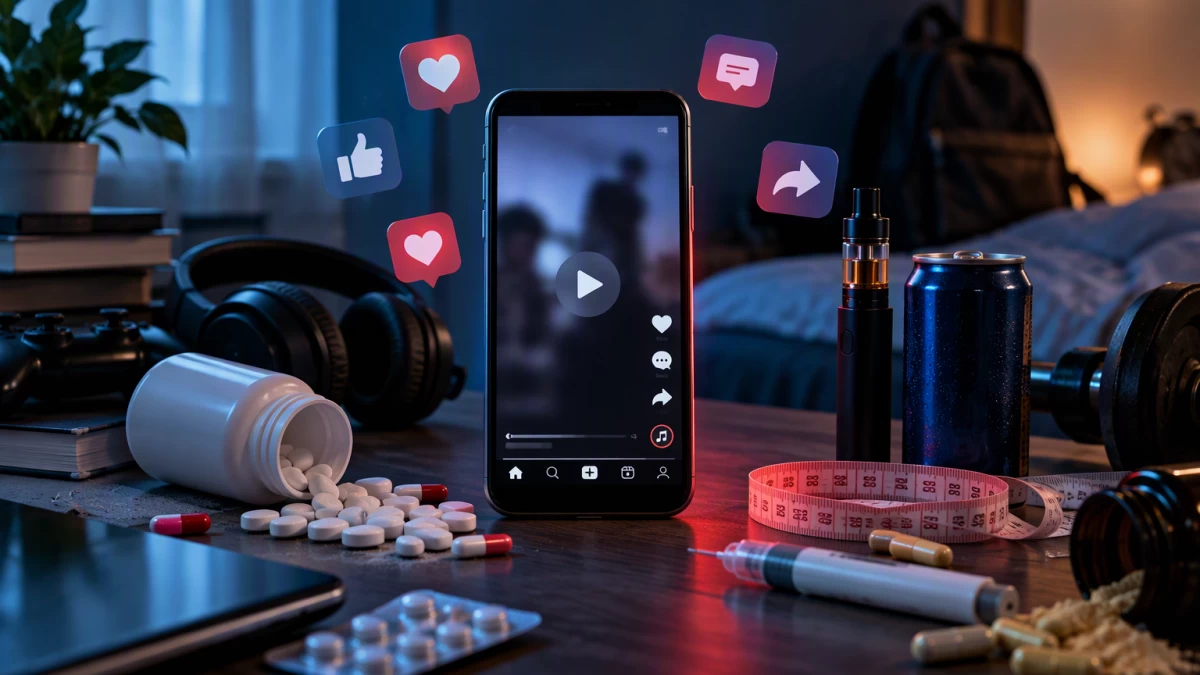
Dubai: Doctors have warned of 10 dangerous health challenges and trends circulating on social media, some of which have evolved from videos designed to attract views and likes into practices that can threaten the lives of children, teenagers and young people.
They warned against imitating such behaviours without understanding the health consequences, stressing that a medication overdose or a challenge involving breath-holding can turn a seconds-long video into a medical emergency, potentially causing permanent complications or death.
The trends include the “Benny Tripping Challenge”, which involves taking excessive doses of Benadryl to induce hallucinations and filming the effects; overdosing on paracetamol; mixing medications for a faster or stronger effect; and stopping prescribed treatments after following advice circulated online.
Other practices include breath-holding and deliberately losing consciousness on camera to attract followers; the use of electronic smoking devices and modern nicotine products; and promoting slimming drugs and injections as quick weight-loss solutions without medical assessment or checks on product safety.
The list also includes stimulants and herbs with unknown ingredients; skincare and beauty experiments involving mixed chemicals, unsuitable products or home procedures; and excessive use of sports supplements and muscle-building hormones without medical supervision.
Other trends involve excessive consumption of energy drinks and caffeine, sometimes mixed with other ingredients; experimenting with products intended to boost activity and concentration; and sleep and physical-endurance challenges, including deliberate sleep deprivation, promoted as ways to improve health and fitness.
Doctors said the danger was not limited to new challenges. Some have existed for years but resurface on social media in different forms, with rapid sharing and reposting increasing the likelihood of imitation, particularly among children and teenagers.
Curiosity, experimentation, the desire for social acceptance and friends’ approval, and the pursuit of fame and views are among the main reasons teenagers may participate. Peer influence can further increase the risk while their ability to assess consequences and make decisions is still developing.
Doctors urged families to build relationships based on trust and dialogue and avoid punishment and reprimands that could encourage children to conceal dangerous behaviour. They said protecting teenagers is a shared responsibility involving families, schools, health institutions and digital platforms.
They also stressed the importance of teaching young people to distinguish reliable information from misleading content. Specialist psychological assessment may be needed when dangerous behaviour is repeated, significant psychological or emotional changes appear, medications are misused, self-harming behaviour emerges or a teenager’s daily life is affected.
Emergency departments
Dr Mahmoud Medhat Abu MoussaDr Mahmoud Medhat Abu Moussa, an intensive care medicine specialist, warned that social media challenges encouraging teenagers to take excessive doses of medication for views or to impress friends can cause severe, life-threatening poisoning, even when no symptoms are initially apparent.
“From the reality of working in the emergency and intensive care departments, the importance of raising awareness about the dangers of these practices is evident, as some patients may arrive at the hospital suffering from severe complications that require urgent medical intervention, even though the beginning of the problem was just an experiment motivated by curiosity or imitating popular content on the internet,” he said.
Common medicines found at home, including painkillers, allergy and sleep medications and some psychiatric drugs, can cause heart rhythm disturbances, convulsions, loss of consciousness, respiratory failure and liver or kidney damage when taken in excessive doses. Severe cases can be fatal.
Dr Abu Moussa stressed that the absence of early symptoms does not mean a teenager is out of danger because some drugs can cause internal damage before clear clinical signs emerge. A paracetamol overdose, for example, can cause severe liver damage even when the person appears relatively normal during the first few hours.
Severe poisoning may require intensive care, particularly when consciousness, breathing or blood circulation is affected. Patients may need artificial respiration, blood pressure support medication, specialist poisoning treatments or, in some cases, kidney dialysis, depending on the drug involved and resulting complications.
Recovery depends on factors including the type and amount of drug taken, the time before treatment begins, the patient’s health and the extent of organ damage. Early medical intervention can be crucial to survival and reducing the risk of permanent complications.
Dr Abu Moussa warned parents against inducing vomiting or giving milk or home remedies, saying these measures can worsen the situation and delay appropriate treatment.
He also warned that teenagers may delay seeking help because they fear punishment or their family’s reaction. Parents should respond calmly and seek urgent medical assistance whenever an overdose is suspected, even if there are no symptoms.
Prevention, he said, begins with keeping medicines out of the reach of children and teenagers, raising awareness about misuse and encouraging family discussions about dangerous online content.
“What begins as a challenge that lasts for seconds in front of a phone camera may end with days in intensive care, and perhaps with lifelong health complications. Therefore, any suspicion of taking a drug overdose requires dealing with it as an urgent medical case, not just a reckless act that can be ignored.”
Crossing the line
Dr Zia Danish JumaniEmergency medicine consultant Dr Zia Danish Jumani warned against social media challenges involving excessive medication or mixing pharmaceutical substances. A drug that is safe at its prescribed dose can become toxic when misused or taken beyond safe limits, he said.
Complications depend on the drug and quantity taken and can include convulsions, breathing difficulties, heart rhythm disturbances, damage to vital organs and loss of consciousness. Severe cases may require intensive care.
Dr Jumani said social media challenges were a genuine concern but stressed that every case of drug poisoning requires an independent medical assessment to determine its cause, severity and appropriate treatment.
Teenagers may participate because of peer pressure, curiosity or the pursuit of attention and online fame, without fully understanding the potential consequences. Parents, teachers and caregivers should educate teenagers, store medicines safely and encourage them to discuss dangerous online content with a trusted adult without fear of blame or judgement.
If an overdose is suspected, immediate medical help should be sought rather than waiting for symptoms. Dr Jumani warned against inducing vomiting because vomit could enter the lungs and cause serious complications. The person should not be left alone or given anything by mouth if they are extremely drowsy, confused or unconscious.
Psychological motives
Dr Omar bin AbdulazizPsychiatrist Dr Omar bin Abdulaziz said social media is an integral part of teenagers’ lives, but some trends and challenges can expose them to unnecessary risks, particularly when they involve dangerous behaviour, unsafe medication use or risky activities undertaken for attention or fame.
Teenagers are still developing psychologically and emotionally and may view such challenges as a way to gain social acceptance, appreciation and recognition, even when adults see the behaviour as reckless.
The need for acceptance and belonging becomes particularly important during adolescence and may drive young people to imitate peers, impress friends or seek more likes and views. The appeal of fame and social approval can sometimes outweigh fear of the consequences.
Dr bin Abdulaziz said it was important not only to ask why teenagers engage in dangerous behaviour, but also to understand the psychological or social need they are trying to meet.
Curiosity and experimentation are natural parts of development, and a reckless decision does not necessarily indicate a psychological disorder. Concern rises when risky behaviour becomes frequent or increasingly dangerous, or begins affecting academic achievement, social relationships or psychological and emotional stability.
There is no age at which imitating dangerous behaviour can be considered safe, he said, as a single incident can have serious health and psychological consequences. Parents should seek to understand a teenager’s motives and help them make more informed and safer decisions rather than judging or labelling them.
Dr bin Abdulaziz urged families to listen before judging. Fear of punishment or humiliation can make teenagers less willing to discuss their experiences or admit mistakes and may encourage them to hide dangerous practices. Parents should respond calmly, explain the risks and set clear boundaries without damaging trust.
Warning signs include sudden behavioural changes, secrecy, withdrawal from family life, unusual medication use and excessive preoccupation with social media fame or popularity. Children should feel safe discussing mistakes without fear of rejection or humiliation.
Prevention should focus on awareness, dialogue and trust rather than intimidation alone. Young people should be taught to think critically about online content, understand the consequences of their decisions and recognise that personal value is not measured by likes, views or online attention.
Dr bin Abdulaziz stressed that protecting children is a shared responsibility among families, schools, health institutions and digital platforms. He also highlighted the UAE leadership’s support for children’s health and wellbeing, family stability, education and the protection of future generations.
Specialist psychological assessment becomes necessary when dangerous behaviour is repeated, significant psychological or emotional changes occur, medications are misused, self-harming behaviour appears or difficulties begin affecting a teenager’s daily life.
The goal, he said, should not simply be to raise children who are afraid of making mistakes, but to develop confident young people with family and community support who can make responsible decisions about their health, safety and future.
Gaining social acceptance, friends’ approval, fame and increased views are among the main motives for teenagers engaging in these behaviours.