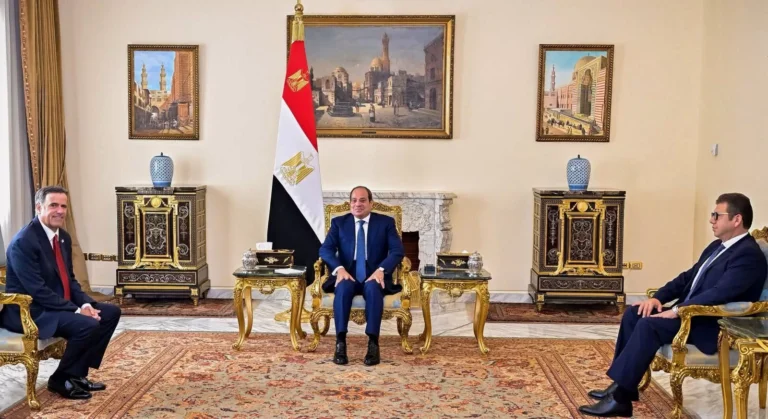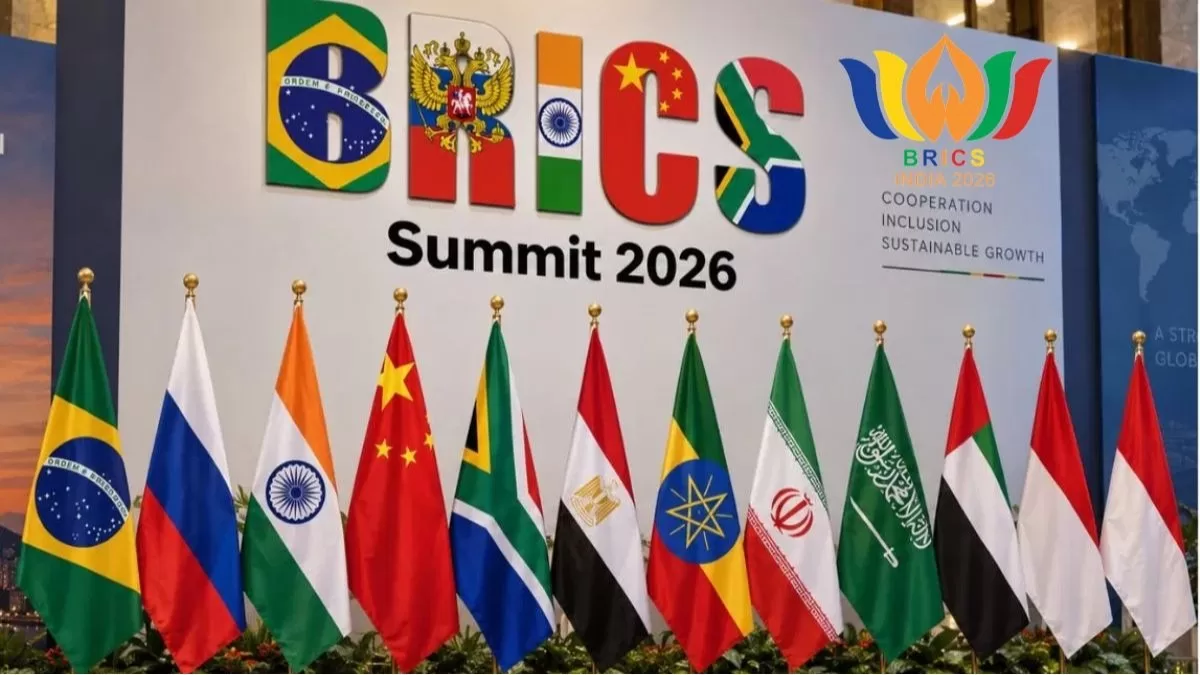
Egypt’s participation in the BRICS grouping entered its third-year last week as President Abdel Fattah El Sisi led the country’s delegation to the bloc’s 18th summit in New Delhi. The summit, hosted by India on September 12 and 13 under the theme “Building Resilience, Innovation, Co-operation and Sustainability”, brought together the bloc’s 11 member states. Addressing attending leaders, President Sisi stressed the prime necessity of boosting co-operation among BRICS member and partner states to address global economic challenges, enhance resilience and promote inclusive and sustainable growth. The president highlighted the need to expand co-operation in innovation, AI, energy, food security, transport, logistics, technology and investment, urging broader access for developing countries to financing and technology. “Accelerating shifts and challenges confronting the global economy underscore the need for cultivating resilient economic models by diversifying growth drivers, reinforcing supply chains, investing in human capital and technology, and broadening the scope of South-South co-operation,” he added. “To this end, Egypt places high priority on collaboration in innovation, artificial intelligence, and technology transfer and localisation, thereby enabling our countries to fully leverage technological transformations and empower youth to drive the economy of the future,” the president noted. Over the past few years, Egypt has undertaken a comprehensive expansion of its ports, transit corridors, and transport networks, thereby elevating trade efficiency, accelerating the green transition in maritime transport, and reinforcing regional integration. The Suez Canal, one of the most vital arteries of global trade, entrust Egypt with a pivotal role in supporting supply chain stability and fostering the efficiency and sustainability of global trade flow. Egypt formally joined BRICS in January 2024, seeking to expand its economic, trade and investment ties with emerging economies and deepen co-operation with countries of the Global South. The grouping, originally established in 2009 by Brazil, Russia, India and China before South Africa joined in 2010, has grown into a major platform for political and economic coordination among emerging powers. Its current membership includes 11 countries. Trade volume Egypt’s trade with BRICS members rose to nearly $53.5 billion in 2025, up from $45 billion in 2024. Egyptian exports to the bloc increased from $9.5 billion to $14 billion over the same period. Meanwhile, Egyptian imports from BRICS countries hit roughly $39.68 billion in 2025, compared to around $35.55 billion in 2024. Through the rich diversity of its members and partners, BRICS holds a profound opportunity to shape a practical model for South-South co-operation, one grounded in resilience, innovation, collaboration, and sustainability that yields actionable programmes for the prosperity of peoples. Major partner China stands at the forefront of Egypt’s trading partners within BRICS, driven by significant trade volumes, investments, and industrial co-operation. In June 2026, the Central Bank of Egypt and the People’s Bank of China renewed their three-year currency swap agreement and raised its value to 30 billion yuan, or about $4.43 billion. The agreement aims to support bilateral trade and allow more transactions to be settled in Egyptian pounds and yuan. It could also reduce the need to use the US dollar in some trade deals. The move comes as BRICS members work to expand the use of local currencies in trade and investment and develop cross-border payment systems. These issues were discussed at the 2026 BRICS Summit in New Delhi. For Egypt, a wider use of local currencies could provide another tool for managing foreign trade with major partners, such as China, India and Russia. Settling part of trade transactions in local currencies could reduce the need for US dollars. It could also help lower transaction costs and limit some exchange-rate risks. New Development Bank The New Development Bank (NDB) was established in 2015 through an initiative by Brazil, Russia, India, China, and South Africa to finance infrastructure and sustainable development projects in member states and emerging economies. Egypt officially became a member of the bank in 2023, making it one of the institution’s first new members beyond the founding nations. At the New Delhi summit, President Sisi expressed Egypt’s keenness to reform the international financial architecture, develop innovative financing instruments, and boost the NDB’s role, including its new strategy for 2027–2031. The move offers a golden opportunity for the Egyptian economy to mobilise long-term financing for development projects without relying on a single source of funding. Economic benefits “Egypt’s participation in BRICS offers several economic benefits, particularly in trade and the use of local currencies,” prominent banking and economic expert Sahar el-Damaty said. One key area, she added, is barter trade agreements, under which countries exchange goods directly instead of relying entirely on cash payments. “This can help increase trade among BRICS members, while reducing pressure on foreign-currency reserves,” she told The Egyptian Gazette. She noted that expanding the use of local currencies in trade is another major objective. “This could significantly reduce Egypt’s reliance on the US dollar and ease pressure on its greenback reserves,” el-Damaty added. This is particularly important, given Egypt’s trade with major BRICS countries, such as Russia and India. She described these countries as “important suppliers” of commodities that Egypt imports, including wheat, maize and other essential food products. “Membership in the NDB also provides Egypt with access to financing for development projects,” el-Damaty said. “As a member, Egypt can seek loans from the bank, potentially under terms that are more accessible than those offered by some other financing institutions,” she added. She expressed hopes that stronger economic co-operation within BRICS could help Egypt reduce its reliance on the greenbacks and encourage a greater use of the currencies of member countries in bilateral trade. Financial markets expert Hanan Ramsis shared a similar view. Joining BRICS, she said, gives Egypt a major economic boost, particularly when it comes to securing essential resources like energy and food. “The bloc also offers opportunities to attract investment to Egypt’s industrial zones and promote the localisation of industries, creating benefits for both sides,” Ramsis told The Gazette. Such investments could create jobs while making better use of available industrial land, raw materials and labour. Ramsis also pointed to the possibility of converting part of the loans owed to BRICS countries, such as China, Russia and India, into investment projects. “Such arrangements could generate returns while helping Egypt meet its financial obligations through productive investments,” she said. The post Sisi commends expanded BRICS action in innovation, AI, energy appeared first on Egyptian Gazette.