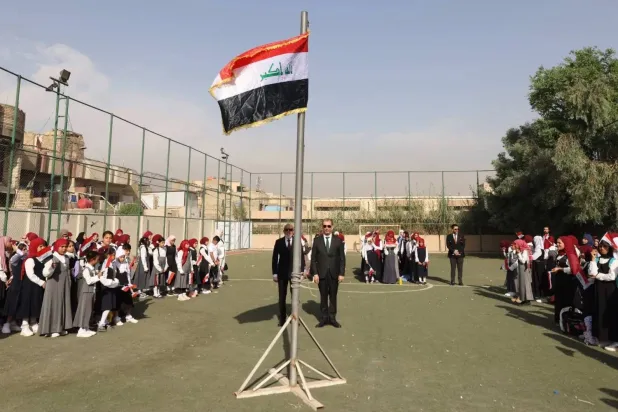
The Iraqi Education Ministry’s decision to postpone the start of the 2026-27 academic year has sparked widespread debate over the real reasons behind the move, which coincides with the scheduled withdrawal of US-led coalition forces and the start of a process intended to bring armed factions’ weapons under state control. The ministry announced Tuesday that the school year, originally scheduled to begin Sept. 20, would instead start Oct. 11. The postponement could cost students nearly a month of the academic year and prevent them from completing the curriculum, particularly those in final grades at the primary, intermediate, and secondary levels. Education observers say the nine-month school year is already increasingly vulnerable to being shortened by numerous official holidays and breaks associated with religious occasions. Speculation has linked the postponement to Sept. 30, the date set for the withdrawal of international coalition forces from Iraq and a deadline for bringing weapons under state control, amid widespread talk among activists and bloggers of possible clashes. The Education Ministry, however, cited four main reasons for the postponement, none involving the foreign troop withdrawal or disarmament. In a statement, Education Minister Abdul Karim Abtan al-Jubouri explained that the delay would allow time to complete second-round examinations for students in non-graduating classes and prepare schools for the new academic year. The ministry added that the decision also took into account high temperatures during this period and the need to complete educational, technical and administrative requirements before students return to schools across Iraq. Amid public criticism of the postponement, ministry spokesman Karim al-Sayed provided further reasons, explaining that the previously announced Sept. 20 start date had proved too early and had been based on circumstances that subsequently changed. These included the introduction of comprehensive admission and a special examination round scheduled from Sept. 26 to Oct. 10, as well as second-round examinations that began Sept. 15 and continue through Sept. 24. Al-Sayed added that the decision followed appeals from teaching staff over the lack of electricity in some schools and high temperatures, as well as a proposal by parliament’s Education Committee to postpone classes. The committee had previously called for the academic year to be postponed, but its proposal was for October 1 rather than October 11. Sept. 30 concerns A senior Education Ministry source believes the coincidence between the postponement and the government’s Sept. 30 deadline for bringing factions’ weapons under state control — also the scheduled date for the coalition withdrawal — fueled speculation that the two were linked, something the ministry denies. “Fluctuations in the start date of the school year are nothing new. Classes were delayed by about a month during the COVID-19 pandemic, in addition to delays related to special-round examinations,” the source, who requested anonymity, told Asharq Al-Awsat. Education specialist Mustafa Abada argued that the ministry’s reasons for postponing the school year “need further clarification, particularly as other educational issues remain unresolved, including delays in the delivery of some textbooks, changes to several curricula, problems with school buildings and infrastructure, as well as the continuation of special-round examinations.” Asked about speculation linking the postponement to political and security circumstances, Abada told Asharq Al-Awsat: “The timing raises questions about whether there are concerns that potential security developments could affect regular school attendance. But that does not necessarily mean there is a connection between the two.”