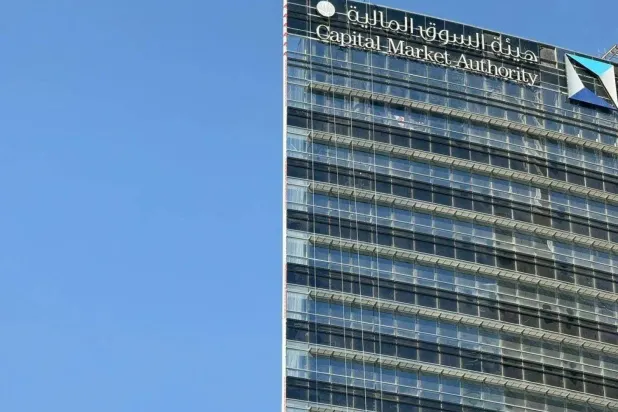
Saudi money market funds are entering a new phase of liquidity management and portfolio restructuring as new rules cap foreign investments at 5% of net asset value. Fund managers will have to balance returns, liquidity and risk more carefully. The rules do not require funds to exit existing foreign investments immediately. The Capital Market Authority has given managers transition periods to bring portfolios into compliance. This allows deposits and murabaha transactions to mature before funds are reallocated, avoiding early exits that could hurt returns or disrupt liquidity management. The measures also require foreign counterparties to hold investment-grade credit ratings, strengthening protection against overseas exposure risks. Financial analysts say the main impact may not be an immediate shift in capital flows. Instead, the rules are likely to reshape money market fund portfolios and how managers allocate liquidity between domestic and foreign instruments, based on returns, liquidity and credit quality. As investment options in the Saudi market expand, the restructuring could direct greater attention toward domestic liquidity instruments. The transition periods will allow managers to adjust gradually, retain flexibility over existing investments and reduce the risks of rapid reinvestment. Investor protection Financial analyst Abdullah Al-Jabali told Asharq Al-Awsat that the move was part of the Capital Market Authority’s efforts to regulate higher-risk investments and strengthen investor protection, particularly amid global market shifts and continued uncertainty over interest rates. The decision seeks to reduce Saudi money market funds’ exposure to foreign investments and limit the impact of related volatility, he said. The timing and scale of interest-rate cuts in the coming years remain unclear. Al-Jabali said the measures go beyond imposing a cap on foreign investments. They also tighten requirements governing the entities through which funds may invest, taking into account credit ratings, solvency and reliability. This would help reduce risk and safeguard investors’ money. The rules also seek to prevent money market funds from concentrating investments in instruments or entities that could be difficult to exit when needed. This would strengthen liquidity and improve funds’ ability to respond to market changes, he said. Al-Jabali expected further regulations to follow, potentially covering other foreign investments such as real estate funds, financing funds and foreign sukuk. The measures could also extend to funds’ private-equity investments outside the kingdom. He said the changes reflected the authority’s efforts to reduce risks linked to some investment practices, strengthen the investment environment and protect investors in the Saudi market. Financial analyst Tariq Al-Atiq told Asharq Al-Awsat that the decision was primarily intended to reduce risk, strengthen investor protection and impose greater discipline on the placement of liquidity outside the kingdom. Money market funds typically invest in deposits, murabaha transactions and short-term sukuk. Financial companies affiliated with banks manage a large proportion of these funds, he said. A fund valued in Saudi riyals does not necessarily hold all its investments inside the kingdom, Al-Atiq said. Some liquidity may be placed with Gulf or foreign banks in search of higher returns. The decision would reduce that exposure and return some liquidity to the domestic market. Giving funds up to two years to comply takes into account the fixed maturities of deposits and murabaha transactions, he said. Early exits could hurt fund performance, while allowing foreign deposits to expire without renewal would support a gradual, orderly transition. Gradual compliance The Saudi Capital Market Authority has capped foreign investments by public money market funds at 5% of net asset value and given managers transition periods to bring existing holdings into compliance. Under a circular sent to capital market institutions, managers of public money market funds whose foreign investments exceed 5% must comply with the cap within two years of the circular’s date. The requirement also affects transactions made during the transition. Until compliance is achieved, managers must not make an investment or enter into or renew any transaction that would breach the limit. Funds with foreign investments exceeding 20% of net asset value face a shorter deadline. Their managers must reduce that exposure to below 20% within six months of the circular’s date. They must then continue reducing foreign investments until they reach the final 5% cap within the timeframe set by the circular. The rules therefore set different paths based on the level of foreign exposure. Funds above the 5% cap have up to two years to comply, while those above 20% must first bring their exposure below 20% within six months. The authority also required all foreign investments by public money market funds to be made with counterparties holding investment-grade credit ratings issued by licensed credit-rating agencies. Managers whose funds hold foreign investments that do not meet this requirement must bring them into compliance within two years of the circular’s date. The Capital Market Authority stressed that capital market institutions must comply with the circular, the Capital Market Law and its implementing regulations. It designated the Collective Investment Schemes Compliance Department to answer questions about the new requirements.