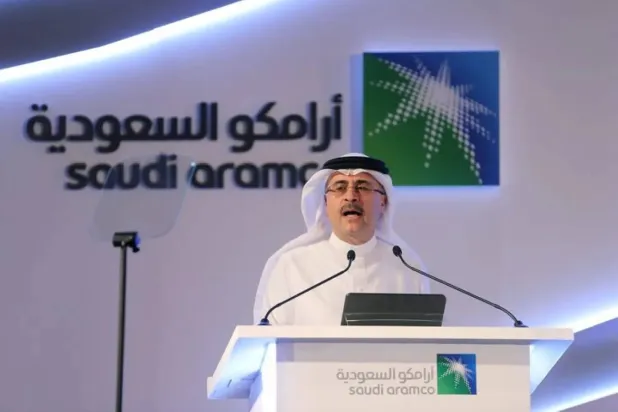
Saudi Aramco can restore disrupted operations within days and is looking at building alternative oil export routes, its President and CEO Amin Nasser said. Nasser told Nikkei Asia in Tokyo on Thursday that Aramco was studying "a fourth and a fifth route" for crude oil exports in addition to its three primary routes. Nasser added that the company is considering expanding overseas storage capacity, including in Japan, to strengthen its ability to withstand disruptions. He stated that Aramco's operations are built with abundant flexibilities in place to continue serving its customers even during disruptions. He added that observers often assumed Aramco had only two major export pathways, through the Strait of Hormuz or the Bab el-Mandeb Strait at the southern entrance to the Red Sea after using the East-West pipeline. In reality, Nasser said, the company could also access the 320km Sumed pipeline, which carries crude from the Red Sea to the Mediterranean through Egypt. "People think about interruptions in Hormuz, interruptions in Bab-el Mandeb, [but] we never stopped. We continue to supply our customers," he said. "The only thing you do [is] shift more vessels, one way or the other. ... We do have this multiple optionality that allows us to meet our customers' demand." The chief executive said that the company was also keen to add more optionality in its oil supplies, including building up additional storage capacities abroad to meet short-term disruptions, as well as "a fourth and a fifth route" for exporting crude. The company was in discussions with the relevant ministry and its partners in Japan on expanding its storage capacity in the country, as well as "doing the engineering and the feasibility and all of the work that is required" for the additional export routes, Nasser said.