The emerging defense pact signals a shift away from U.S.-led security arrangements as regional powers seek to counter Iran and redefine the Middle East’s security architecture.
Amid discussions of a possible future war involving Iran, the United States, and Israel, and as Tehran continues its policy of escalation while insisting on controlling the Strait of Hormuz and threatening other waterways, a surprising announcement was made regarding the signing of a joint tripartite defense agreement between Saudi Arabia, Turkey, and Pakistan.
This reshuffles the cards in the effort to build a new security system for the Middle East, based on granting major regional powers a greater role in stabilizing the region’s security and confronting challenges to its stability. Relying entirely on Washington to act as the region’s police force and guarantee its security is no longer suitable for the current and future phases, particularly in light of recent developments.
The impact of the war in Ukraine, the growing Sino-American competition, shifts in American leadership priorities, and advances in military technology have all affected Washington’s performance and its ability to fulfill its previous commitments to its allies around the world.
The countries forming the tripartite coalition possess the military, human, and economic capabilities, as well as the geographic reach, needed to help fill the vacuum created by the declining influence and role of the United States and Western powers, alongside the hesitation or inability of China and Russia to fill it.
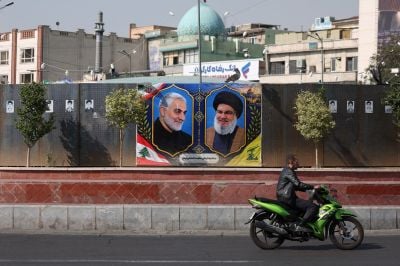
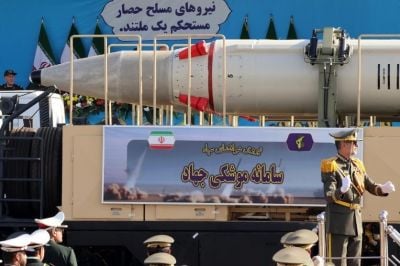
The most immediate challenge facing these countries is the Iranian threat to the region’s security, as Tehran clearly seeks to control the three strategic waterways: the Strait of Hormuz, the Bab el-Mandeb Strait, and the Suez Canal. The escalation by the Iran-allied Houthi militia in the Red Sea, along with the recent targeting of a gas tanker at Damietta port near the Suez Canal, are clear indications of Tehran’s intentions. These threats affect the national security of Middle Eastern countries more than others.
Therefore, this joint move by the major powers could serve as an effective deterrent against Iran. They are Islamic countries that border Iran, and none of them has initiated an attack against Tehran. Consequently, any threat from Iran or its proxies against any of these countries could potentially draw them into a military conflict with Iran collectively. It would be sufficient for Turkey and Pakistan to simultaneously close their land borders with Iran alongside an American naval blockade, potentially collapsing the regime.
Furthermore, Washington may be compelled, after the war ends, to redeploy a significant portion of its forces outside the region, particularly amid growing Russian threats in Europe and Chinese threats in East Asia and the Pacific. The rapprochement among these countries through a military alliance would enhance regional security and technological cooperation in addressing threats and countering any other plans aimed at imposing dominance by external or regional powers.
This alliance would also send a clear message to Israel that regional countries do not intend to continue relying heavily on America for their security, and that the best path forward is to pursue more realistic and practical strategies that do not prioritize security solutions over political solutions in addressing the Palestinian issue and relations with Arab countries.
The expansion of the Abraham Accords should be based on adopting a two-state solution and halting settlement expansion in order to achieve peace and normalization with the countries of the region. Israel’s threats against the region’s countries and its targeting of whomever it wishes, wherever it wishes, including in Gulf countries, as happened with the targeting of Doha, will not be acceptable within the security system being developed.
It seems that Washington is not far from supporting the formation of this alliance and security system, particularly as it would not harm its interests or threaten Israel. In fact, the administration of President Donald Trump has excellent relations with the leaders of these countries and is working to strengthen ties with them in the fields of energy, technology, defense, and trade.
This will restrain any attempts by other regional parties to undermine the alliance. The region may even witness an expansion of this defense agreement to include other countries at a later stage. For the time being, however, the focus will remain on addressing Iran’s threat to the waterways and ending the role of its proxies in Lebanon, Iraq, and Yemen.
This will take place within the broader context of steps and developments that the region is expected to witness. While these developments may appear separate from one another, they are in fact complementary, ultimately leading to the emergence of a new security system for the Middle East.
Disclaimer: The opinions expressed by the writers are their own and do not necessarily represent the views of Annahar.
Thank you for subscribing to our newsletter