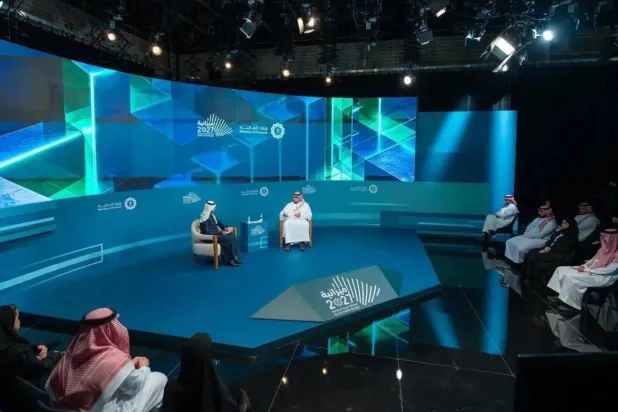
As regional crises mount, Saudi Arabia is moving to strengthen its economy's resilience while sustaining development momentum and advancing national priorities. Its 2027 budget reflects that strategy, balancing safeguards against risks with investment in growth to reinforce stability and lay the foundations for a more sustainable future. Following the approval of the 2027 state budget, Prince Mohammed bin Salman bin Abdulaziz, Crown Prince, Prime Minister and Chairman of the Council of Economic and Development Affairs, stressed the government's commitment to prioritizing national advancement and citizens' interests while preserving development gains for current and future generations. He attributed the Kingdom's achievements to the guidance of Custodian of the Two Holy Mosques King Salman bin Abdulaziz and the efforts of Saudi men and women. Experts said that despite regional geopolitical challenges and the Yemen crisis, Saudi Arabia had adopted an expansionary budget of 1.392 trillion riyals ($371.2 billion) for 2027, pressing ahead with development programs, economic diversification and Vision 2030 objectives. The budget also seeks to advance national projects and strategies, broaden the economic base and drive growth. Speaking to Asharq Al-Awsat, the experts highlighted exceptional government initiatives introduced in 2026 in response to geopolitical developments, aimed at shielding citizens and residents from the fallout of the crisis while enabling the private sector to continue driving economic diversification, a key government priority. They said the government had successfully kept supply chains flowing and secured financing to bolster commercial inventories, safeguarding the Kingdom's food and commodity security. Economic resilience Fadl bin Saad Al-Buainain, a Shura Council member and economic adviser, said drawing up an expansionary budget, forecasting revenues and expenditures, and setting spending allocations were among the toughest financial challenges during wars and global crises. Uncertainty limits governments' ability to anticipate spending needs, pursue strategic development projects and secure the financing they require, he added. Saudi Arabia, however, has been able to adopt an expansionary budget and project revenues and expenditures despite global economic fluctuations and regional geopolitical risks, thanks to its financial strength, prudent fiscal management, oil and financial reserves, efficient governance and access to diverse sources of financing, he stressed. Above all, the Kingdom benefits from a leadership that has placed development at the heart of its policies and made economic efficiency and diversification unwavering strategic priorities, he remarked. He told Asharq Al-Awsat that wars often bring development to a standstill, diverting government spending toward military efforts that can consume entire state budgets and force governments to raise taxes to finance wars and protect their countries and economies. Saudi Arabia, by contrast, has maintained expansionary spending, strengthened social safety nets, supported the private sector and provided financing through national development funds, he noted. These measures help drive growth, advance development programs and strategic projects, and strengthen infrastructure and essential public services, he said. Private sector Al-Buainain said the 2027 budget puts investment and private sector empowerment at the forefront, maintaining initiatives and reforms that enable businesses to thrive. One of Vision 2030's key objectives is to increase the private sector's contribution to the economy and establish it as the main engine of growth by the end of the decade - a goal that remains on track, he said. Non-oil activities accounted for a record 57.7% of gross domestic product, while unemployment fell sharply, meeting Vision 2030 targets, and women's participation in the labor market increased. Employment grew 7% compared with 2025, while the number of Saudi nationals employed in the private sector reached 2.7 million by the end of the second quarter of 2026, up 7.7%, Al-Buainain said. The number of micro, small and medium-sized enterprises reached 1.832 million by the end of the third quarter of 2026, up about 4% from the end of 2025. These indicators underscore the government's commitment to supporting the private sector through a clear strategic vision, Al-Buainain added. Government intervention He noted development funds provide essential financing to the private sector, directly supporting small and medium-sized enterprises that form the backbone of the economy. The government also offers incentives to businesses, addresses the challenges they face and treats them as partners. He highlighted exceptional government intervention to facilitate trade, keep supply chains moving and finance commercial inventories, safeguarding food and commodity security while supporting traders and the wider private sector domestically and regionally. The measures also included logistical support across land, sea and air transport. Al-Buainain said the Saudi economy had demonstrated considerable flexibility and resilience in the face of crises, with diversification helping sustain economic stability and preserve development gains. He cited the finance minister's forecast of 10.9% GDP growth in 2027, describing it as optimistic against the backdrop of global economic and geopolitical challenges. The projection, however, is justified by an expected increase in oil production next year, sustained growth in non-oil activities, increasingly diverse growth drivers and the expanding contribution of key sectors to GDP, he said. Keeping inflation in check Osama bin Ghanem Al-Obaidi, an adviser and professor of commercial law, said Saudi Arabia's expansionary 2027 budget reflects its commitment to maintaining spending on public services and development. Despite geopolitical and economic challenges across the region and beyond, the government remains focused on maintaining the continuity and quality of healthcare, education, social services and other public services while keeping inflation to a minimum, he added. Al-Obaidi stressed that Saudi Arabia was pressing ahead with strategic programs and projects under Vision 2030, maintaining spending on economic and development priorities, diversifying income sources, reducing dependence on oil revenues and expanding non-oil revenues.