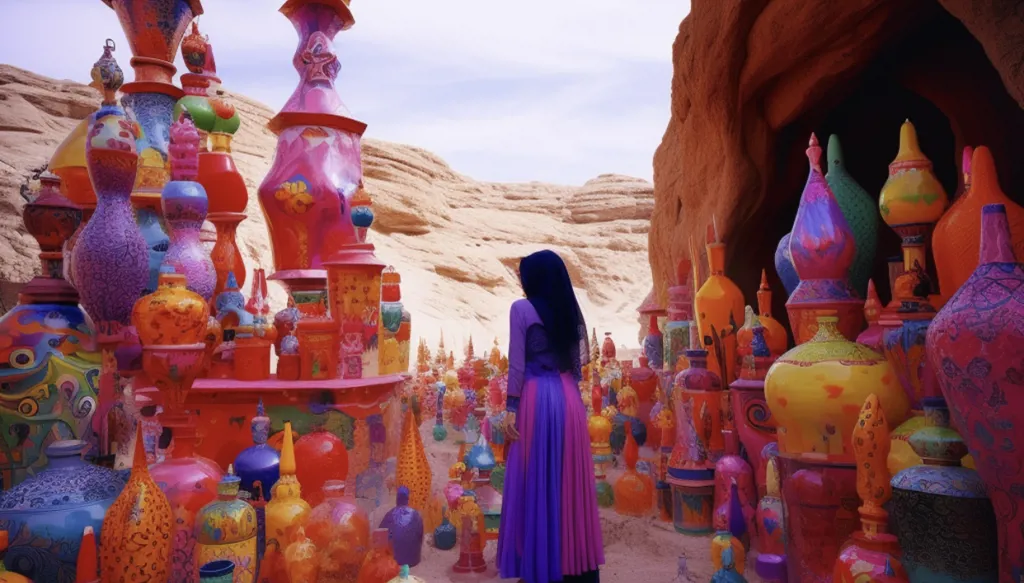
The new guidelines seek to balance AI-driven innovation with cultural authenticity, intellectual property rights and human responsibility, keeping the final creative decision in human hands.
The question is no longer whether artificial intelligence (AI) will enter the cultural sphere, but rather how it will do so, and what boundaries it should not cross. Between a text written by an algorithm, an image borrowing an artist’s style, and a voice digitally reproduced, the possibilities are expanding alongside growing questions about authenticity, ownership and accountability.
Against this backdrop, the Saudi Ministry of Culture issued, on September 14, 2026, a guidance document entitled “Ethics of Using Artificial Intelligence in the Cultural Sector.” The guide is one of the products of the Cultural Policy Design Lab, and aims to regulate the rapidly evolving relationship between technology and the creative industries while mitigating the risks of misuse without closing the door to innovation.
The guide covers 11 cultural sectors and is addressed to cultural institutions, practitioners and AI technology developers. It provides examples of responsible practices, alongside the most prominent forms of potential unethical use in each sector.
A Guidance Document, Not a Binding Regulation
The guide does not have the status of a legally binding regulation, with the ministry emphasizing that existing laws and regulations in the Kingdom remain the priority. Its significance, however, lies in establishing an ethical and professional framework to help those working in the cultural sector make more informed decisions, particularly in areas of uncertainty that have yet to be settled by legislation.
The guide is based on seven guiding principles, including cultural safety and authenticity; safeguarding the ownership and attribution of creative works to their creators; transparency, explainability and the lawful use of data; the ethical and fair use of AI; leveraging AI to empower creativity; expanding access to cultural content; and protecting data privacy and security.
At the heart of the guide is a principle that redefines the relationship between the creator and the machine: the human remains responsible for the creative vision and final artistic formulation, while AI serves as a supporting tool rather than the author of the work.
Accordingly, the guide calls for disclosure of AI use, obtaining the necessary permissions, verifying the integrity of data and outputs, and respecting copyright and intellectual property rights. The problem does not arise when technology assists an artist, but when the line between assistance and authorship is erased, or when an AI-generated work is presented to the public without clarifying its source or how it was created.
Protecting Culture from a Memoryless Copy
The debate goes beyond the question of who wrote the text or created the image, reaching a deeper issue: How can cultural memory be protected from reduction or distortion? An algorithm can rapidly reproduce and recombine patterns, but it does not possess a society’s collective memory or lived experience. It may produce an image that is technically convincing, yet stripped of its context or disconnected from the people to whom it genuinely belongs.
The guide is aligned with the guidelines of the Saudi Authority for Intellectual Property, the UNESCO Recommendation on the Ethics of Artificial Intelligence, and frameworks issued by the Saudi Data and Artificial Intelligence Authority (SDAIA). It also forms part of the Kingdom’s efforts to broaden access to knowledge, support the preservation and management of heritage, and build a safer, more inclusive and sustainable digital cultural sector.
Thank you for subscribing to our newsletter