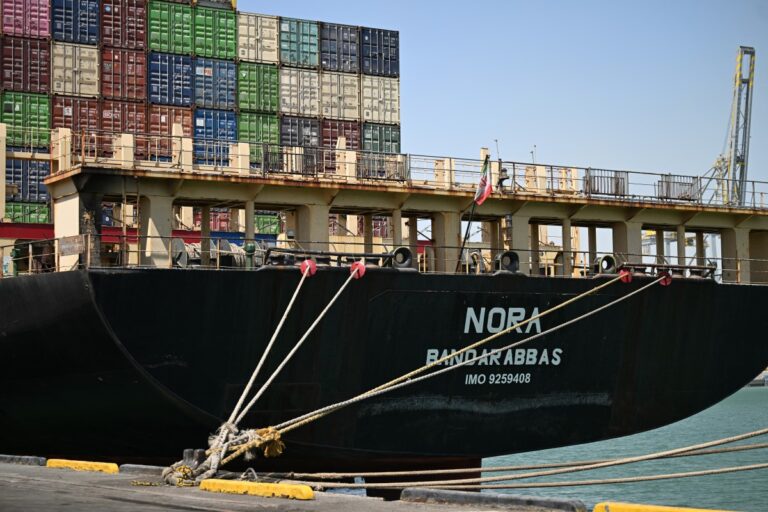
Saudi Arabia has officially begun encouraging its private sector to import Lebanese goods, a concrete step to revive trade between the two countries after years of disruption. The step implements directives from Prince Mohammed bin Salman, Crown Prince and Prime Minister, and follows a request from Lebanon’s presidency and government. Beirut port recently saw the first shipment leave for the Kingdom, in a ceremony officials said marked the rebuilding of economic trust, backed by modern and strict security controls to safeguard exports. According to information obtained by Asharq Al-Awsat, Saudi Arabia’s General Authority of Foreign Trade informed the Federation of Saudi Chambers that a royal order had approved the resumption of Lebanese exports to the Kingdom. It asked that the decision be circulated across the private sector so companies could benefit from it. The move is expected to spur Saudi companies to tap the Lebanese market and push trade between the two countries toward broader horizons in line with their ambitions. First export shipment Acting on the Saudi royal order, Lebanese products were shipped again to Saudi Arabia on June 20, in the presence of the Saudi Ambassador to Lebanon, Fahd Al-Dosari. The shipment carried more than goods and merchandise. It carried “a message of trust rebuilt after years of disruption, and an economic opportunity Lebanon eagerly awaits at a time when the need to stimulate production and increase exports is growing.” The return of the Saudi market, which alone represents about 85% of the Gulf market, is not only a recovery of what was lost when exports stood at about $378 million before the ban. It also opens the door to greater ambitions to expand Lebanon’s presence in this vast market. Al-Dosari said in a speech: “In implementation of the directives of Crown Prince Mohammed bin Salman to resume Lebanese exports to the Kingdom, and in response to the request of Lebanese President General Joseph Aoun and Prime Minister Nawaf Salam, and in line with the positive steps taken by the government toward rebuilding state institutions and the work completed by the specialized teams, we gather today to witness the departure of the first exports bound for Jeddah Islamic Port through Beirut port.” He added: “As an embodiment of brotherly relations and out of the Kingdom’s keenness to stand by its brothers, this decision to resume Lebanese exports to the Kingdom confirms beyond doubt its support for Lebanon’s stability, its sovereignty over all its territory and the welfare of its brotherly people.” Security screening Prime Minister Nawaf Salam said Lebanon would not be allowed to again become “a launchpad for any harm against its Arab brothers,” and thanked Crown Prince Mohammed for lifting the ban on Lebanese exports. The attendees then inspected modern scanning devices recently installed at Beirut port to examine goods and containers with precision. The equipment is designed to tighten security controls and speed up customs clearance. Saudi Arabia had been Lebanon’s top export market before the ban. In 2014 and 2015, it ranked first, accounting for about 12% of Lebanon’s total exports, with a value of around $378 million in 2014, according to Lebanese customs and Chamber of Commerce data. Bilateral trade was estimated at hundreds of millions of dollars annually.