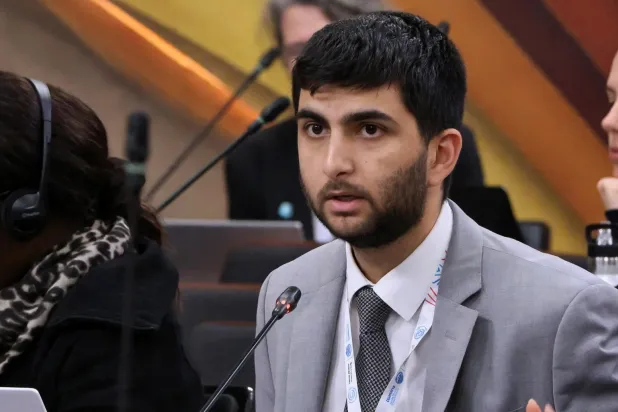
Saudi Arabia defended the need to keep all solutions and technologies available to combat climate change and reduce emissions during the 31st United Nations Climate Change Conference (COP31), including carbon capture, utilization and storage (CCUS), rejecting the characterization of these technologies as greenwashing. The Kingdom's position comes as deployment of these technologies remains below the levels needed to keep the goal of limiting global warming to 1.5 degrees Celsius within reach, according to reports by the Intergovernmental Panel on Climate Change (IPCC). Disagreement over the role of these technologies was among the contentious issues in negotiations that failed to produce a comprehensive political consensus, alongside disputes over climate finance and unilateral climate-related trade measures. Saudi Arabia also criticized the failure of the final text to adequately reflect developing countries' demands, according to Mohammad Ayoub, a member of the Saudi delegation representing the Kingdom within the Arab Group, who addressed the conference's closing plenary. COP31 concluded in Antalya, Türkiye, on Sunday after more than two weeks of negotiations that extended beyond Friday's scheduled closing date, without reaching an overarching political agreement on addressing the climate crisis. Ayoub said climate finance and trade-restrictive measures had been excluded from the final text despite their importance to achieving the goals of the Paris Agreement. He noted that Arab countries account for less than 2% of historical greenhouse gas emissions, while other groups are responsible for 55%. He also pointed out that approximately 80% of the remaining carbon budget available to limit global warming to 1.5 degrees Celsius has already been used. Carbon capture and storage technologies involve capturing carbon dioxide from industrial activities and other emission sources, then either using it in industrial applications or transporting and injecting it into deep underground geological formations to prevent its release into the atmosphere. These technologies form part of Saudi Arabia's circular carbon economy approach, which is based on four principles: reducing, reusing, recycling and removing carbon. Climate Finance Climate finance remains one of the most contentious issues in international negotiations, with developing countries demanding greater financial resources from developed nations to help them address climate change, adapt to its impacts, reduce emissions and transition to cleaner energy systems. These needs extend beyond funding individual projects to providing financing on concessional terms, reducing borrowing costs and strengthening countries' capacity to develop projects capable of attracting investment. Against this backdrop, Ayoub said developing countries' demands had not received an adequate response during the negotiations. He explained that proposals to increase financial contributions to the Green Climate Fund to $16 billion in its next replenishment cycle had been excluded from the text, along with calls to raise climate adaptation financing to $120 billion by 2035. UN Framework Convention on Climate Change (UNFCCC) Executive Secretary Simon Stiell had previously stressed in an interview with Asharq Al-Awsat that fulfilling climate finance commitments was essential, particularly to support developing countries most vulnerable to the impacts of climate change. Ahead of the conference, Stiell called for turning the Baku to Belém Roadmap into concrete action. The initiative aims to mobilize $1.3 trillion annually in climate finance for developing countries. He emphasized the need to move beyond pledges toward providing actual, accessible financing and translating commitments into practical investments and projects. Stiell also identified the high cost of capital as one of the main barriers preventing developing countries from accessing financing, particularly low-income and heavily indebted nations. He pointed to the limited capacity of some countries to prepare and develop investment-ready projects as another obstacle. Unilateral Trade Measures Another contentious issue was unilateral climate-related trade measures, which are imposed independently by countries or trading blocs to reduce emissions or prevent carbon-intensive industries from relocating to markets with less stringent environmental standards. Prominent examples include mechanisms that impose carbon-related charges on imports, making certain products more expensive to enter a market depending on the emissions generated during their production. Ayoub criticized the exclusion of these measures from the conference's final text, highlighting their uneven economic impact across countries. According to figures he presented, such measures could generate welfare gains of $141 billion for some parties while imposing losses of approximately $100 billion on developing countries. Carbon Capture Among Available Solutions Disagreements at the conference also extended to the technological solutions that should be adopted to address climate change, particularly the role of carbon capture, utilization and storage. Ayoub criticized the characterization of CCUS technologies as greenwashing, questioning how such a description could be reconciled with IPCC reports indicating that their deployment remains below the levels needed to keep the 1.5-degree Celsius goal within reach. He stressed that tackling climate change requires keeping all solutions on the table, including renewable energy, energy efficiency, carbon dioxide removal, methane emissions reduction and carbon capture, while allowing countries to choose the approaches best suited to their national circumstances. This position aligns with remarks made by Stiell in his interview with Asharq Al-Awsat ahead of the conference, in which he emphasized that energy security and climate action should be treated as complementary priorities rather than competing objectives. Stiell stressed the importance of ensuring reliable and affordable energy supplies while reducing emissions and preparing for long-term changes in energy demand patterns. He had identified accelerating implementation as a central priority for COP31, explaining that formal negotiations would address the just transition, climate finance, adaptation, mitigation and measures to respond to climate change. The conference's action agenda, meanwhile, focused on practical areas, including accelerating electrification and modernizing electricity grids. Stiell acknowledged that global progress in addressing climate change remained insufficient, noting that current projections point to approximately 2.6 degrees Celsius of global warming, compared with more than 4 degrees in the absence of coordinated climate cooperation and national efforts. Concluding his remarks, Ayoub stressed that Arab countries and developing nations had continued to engage constructively in the negotiations despite the exclusion of several of their demands from the final text.