The Ministry of Finance has released the pre-budget statement for 2027, outlining the Kingdom’s fiscal outlook for the coming year and the medium term.
The statement comes as Saudi Vision 2030 enters its final phase, focused on maximizing and sustaining its impact. This phase builds on an integrated framework of strategic priorities and financial and economic enablers to translate national goals into programs and initiatives that deliver lasting benefits. It also seeks to improve quality of life by providing efficient, high-quality essential services to citizens and residents, creating rewarding employment opportunities across the public and private sectors, and strengthening economic security in line with the Kingdom’s development aspirations.
Through its budget, the Kingdom aims to reinforce confidence in its fiscal policy and maintain sustainability amid global economic uncertainty. This approach is based on keeping debt at sustainable levels, maintaining substantial government reserves and maximizing the economic and social returns of public spending.
The budget also supports private sector stability and growth by increasing local content, strengthening supply chain resilience, improving the business and regulatory environment and expanding privatization opportunities. These measures are intended to help businesses manage geopolitical developments, absorb shocks and sustain operations.
Maximizing the economic impact of domestic and foreign investment is another priority. The Kingdom aims to broaden investment opportunities through a competitive business environment supported by clear regulations and targeted incentives, while strengthening its position as a global logistics hub that facilitates regional trade.
The Saudi economy demonstrated resilience in 2026, absorbing shocks and adapting to changing conditions. Long-term fiscal planning and strategic investments have strengthened infrastructure and logistics capabilities, supporting the economy’s capacity to respond to external pressures.
Saudi Arabia has implemented measures to mitigate the effects of escalating regional geopolitical tensions and maintain stable oil supplies and supply chains. These efforts support growth in both oil and non-oil activities and may help ease inflationary pressures in 2027 and over the medium term.
As regional tensions escalated, the government introduced coordinated measures to support priority sectors, including transport and logistics, industry, agriculture, food security and petrochemicals.
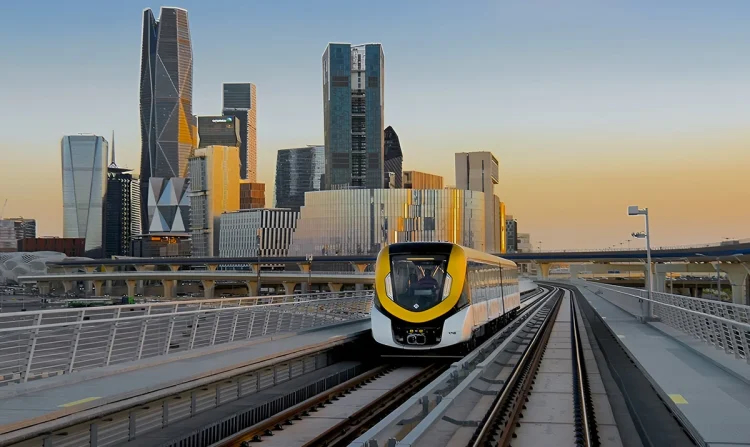
The Kingdom also launched the Logistics Routes Initiative to enhance supply chain continuity and trade flows by leveraging a multimodal transport network combining land and rail transport. The resilience of the energy sector’s infrastructure, including the East-West pipeline, has likewise supported the continuity of oil exports, reinforcing the Kingdom’s position as a reliable energy supplier and strengthening the economy’s ability to respond to geopolitical developments.
Global challenges have underscored the Kingdom’s role in supporting regional and global economic stability. The 2027 budget builds on this role by maintaining fiscal sustainability while advancing national development goals.
Saudi Arabia expanded its use of Red Sea ports and land and air routes amid regional disruptions. These channels handled 40.7 percent of non-oil exports and 48.3 percent of merchandise imports during March-May 2026, up from 19.3 percent and 23.1 percent, respectively, during January-February, before the crisis.
Real GDP declined 0.9 percent in the first half of 2026, while non-oil activities grew 1.8 percent, raising their share of GDP to a record 57.3 percent.
Net foreign investment inflows reached SR23.1 billion ($6.16 billion) in the first quarter of 2026, reflecting continued international investor interest despite regional geopolitical tensions.
Inflation remained moderate by international standards, averaging 1.8 percent during January-July 2026. Preliminary estimates project an average inflation rate of approximately 2.1 percent for the full year.
The Labor Force Survey published by the General Authority for Statistics showed that the Kingdom’s overall unemployment rate fell to 3.0 percent in the second quarter of 2026, while unemployment among Saudi nationals stood at 6.5 percent.
Total revenues are projected to reach SR1,202 billion in 2027 and rise to SR1,351 billion by 2029, supported by anticipated economic growth.
Economic diversification initiatives and structural reforms have increased non-oil revenues from SR166 billion in 2015 to SR505 billion in 2025, strengthening revenue stability and reducing exposure to oil market fluctuations.
Total expenditure is estimated at SR1,392 billion in 2027, rising gradually to SR1,544 billion by 2029. Spending will support sustainable development and economic growth, with continued emphasis on efficiency and medium- and long-term fiscal sustainability.
The 2027 budget is therefore projected to record a deficit of approximately 3.6 percent of GDP. This reflects a fiscal policy that uses available fiscal space to support economic growth across business cycles while maintaining investment in priority projects aligned with Saudi Vision 2030.
Financing will include a measured expansion of borrowing under the medium-term debt strategy.
Saudi Arabia’s fiscal position, supported by sustainable public debt levels and substantial financial reserves, provides flexibility to respond to economic shocks and emergency needs while maintaining investment in priority projects aligned with Saudi Vision 2030.
The government’s approach is rooted in long-term fiscal planning that balances development goals with fiscal sustainability. Progress since the launch of Vision 2030 has also supported the Kingdom’s credit standing. In 2026, Moody’s affirmed Saudi Arabia’s rating at “Aa3,” while Standard & Poor’s and Fitch affirmed their ratings at “A+,” all with stable outlooks.