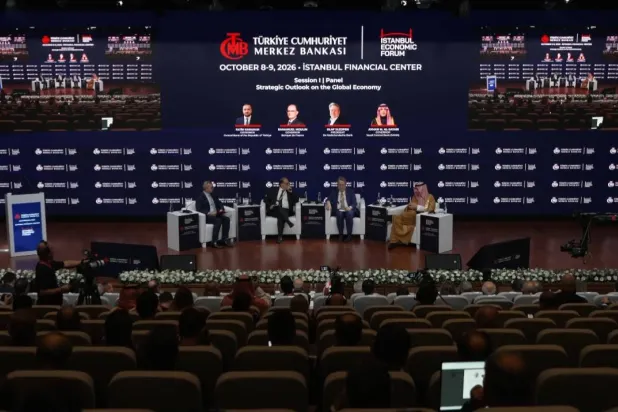
Saudi Central Bank (SAMA) Governor Ayman Alsayari said the global economy has shown considerable resilience despite successive geopolitical shocks, but warned that continued conflict in the region was complicating the outlook for growth and inflation. Speaking at the Istanbul Economic Forum on Thursday, Alsayari said global economic growth was projected at approximately 3% in 2026, following repeated downward revisions, with a recovery expected in 2027. Global inflation, meanwhile, was forecast at around 4.7%, raising concerns about renewed price pressures after a period of easing inflation since 2024. Turning to Saudi Arabia, Alsayari said the Kingdom had maintained considerable economic resilience despite its proximity to regional tensions, supported by strong foreign reserves and assets, long-term infrastructure investments and economic diversification under Vision 2030. He highlighted the importance of investments in energy infrastructure, particularly the East-West Pipeline, and in maintaining oil exports amid disruptions affecting the Strait of Hormuz and the Red Sea. The pipeline has helped Saudi Arabia continue meeting customer demand, he said. Ayman Alsayari speaking during a session at the Istanbul Economic Forum (Asharq Al-Awsat) Alsayari said Saudi Aramco had prepared for potential disruptions by establishing oil reserves in different parts of the world, allowing it to continue supplying customers during the conflict. The governor stressed that recent developments demonstrated the importance of investing in critical infrastructure during periods of stability to strengthen the economy's capacity to absorb unexpected shocks. The SAMA governor said Saudi banks had maintained their financial resilience since the beginning of the regional conflict, supported by strong liquidity and capital positions. According to June 2026 data, the banking sector's liquidity coverage ratio stood at 170%, its capital adequacy ratio at 20.9%, and its net stable funding ratio at 114.6%. He said Saudi banks continued to benefit from the Kingdom's A+ sovereign credit rating, which supported their access to international financing markets despite rising risk premiums. Domestic liabilities accounted for 87.1% of total liabilities at Saudi banks, significantly limiting their exposure to capital outflow risks. Alsayari said the Saudi economy recorded negative growth for two consecutive quarters in 2026, largely reflecting weakness in the oil sector. However, non-oil economic activity continued to expand, growing by approximately 2% in the first quarter and 1% in the second quarter. He attributed the resilience of domestic demand partly to population growth and record-low unemployment among Saudi nationals, alongside the progress achieved through the Kingdom's economic diversification program. Inflation in Saudi Arabia remained moderate at 1.8% as of mid-August 2026, supported by government measures, including domestic fuel price caps, and the Saudi riyal's peg to the US dollar. Alsayari said the currency peg had helped limit imported inflation, given the structure of the Saudi economy.