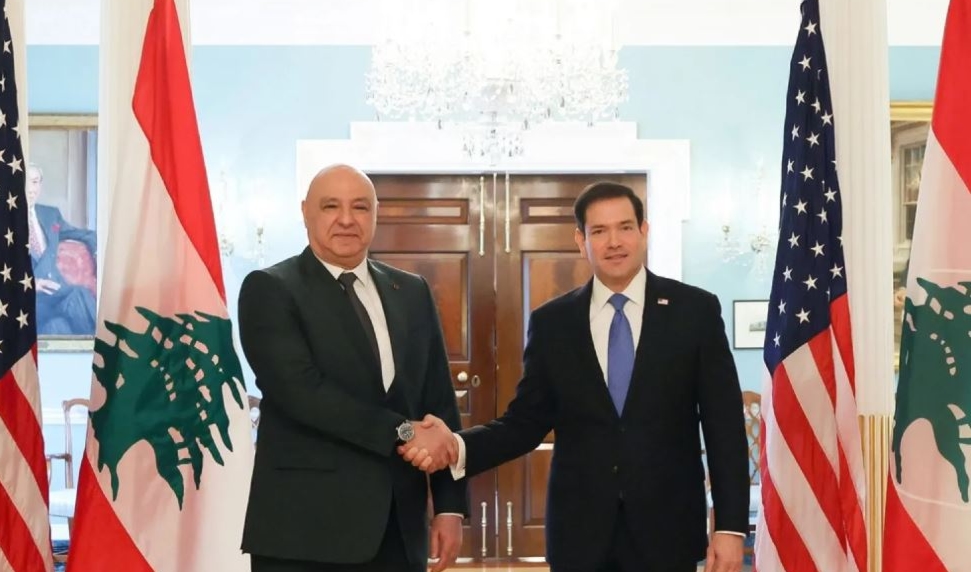
Reports of possible resignations and dismissals among senior officials in President Donald Trump’s administration have raised concerns in Beirut. The reports followed the Republicans’ crushing defeat in the midterm elections. Lebanese officials fear the changes could affect the exceptional US political backing enjoyed by Lebanon’s new leadership. The Republican Party has begun reviewing the reasons for its defeat. The process has put two key pillars of Trump’s regional policy under scrutiny, namely the relations with Israel and the war on Iran. Concern among officials in Beirut’s new administration grew after the British newspaper The Independent reported yesterday, citing US sources, that Secretary of State Marco Rubio could be among those leaving. Rubio played a major role in building US support for Presidents Joseph Aoun and Nawaf Salam. He helped turn them into key figures in the political, social and security campaign against Hezbollah, following the two Israeli wars in 2024 and 2026. He is also regarded as the godfather of the framework agreement. Over recent months, Lebanon’s leadership has benefited from direct US involvement and political and diplomatic support. This backing was closely tied to Washington’s strategy of “weakening Iranian influence” in the region, curbing Hezbollah’s role and strengthening the Lebanese state. It also formed part of efforts to establish new security and political arrangements between Lebanon and the Israeli occupation. But Beirut’s greatest concern is not necessarily Rubio’s fate, despite his prominent role in handling the Lebanese file. It is the broader political reassessment taking shape within the Republican Party. This became particularly clear after unprecedented remarks by Vice President JD Vance. He blamed the war on Iran for the Republicans’ defeat. He argued that winning back voters who had turned away from the party required ending the war and focusing on domestic economic concerns. He also called for a return to the "America First" agenda and a change in the nature of US relations with Israel. The significance of Vance’s remarks increased after Donald Trump Jr. endorsed them. President Trump also acknowledged that the war had contributed to the electoral defeat. However, he continued to defend his decision to launch it. What makes these developments particularly worrying for Beirut is that the two pillars now facing scrutiny within the Republican Party also underpin Washington’s expanded involvement in Lebanon and the wider region. On the one hand, confrontation with Iran gave momentum to US policy. Washington presented its strategy as an effort to curb Tehran’s and Hezbollah’s influence and strengthen the Lebanese state. On the other, Trump’s close relationship with Israel allowed Washington to act as a mediator and guarantor in security arrangements between Beirut and Tel Aviv. This included the pressure Aoun had hoped Trump would exert to secure an Israeli withdrawal from Lebanese territory. Aoun’s team is watching developments particularly closely. It was the Lebanese side that took center stage in the negotiations. Yet many questions remain unanswered in Baabda and its circles. Under pressure from the electoral defeat, Trump could reassess relations with Israel and the costs of confrontation with Iran. Even when the Trump administration enjoyed Republican control of both chambers of Congress, Lebanon’s leadership failed to secure an effective US mediation role. At the time, Netanyahu also led a more cohesive Israeli coalition. Despite meeting a series of US demands, Beirut could not persuade Washington to exert pressure on Israel to halt its attacks and withdraw fully from Lebanese territory. Instead, Lebanon gradually changed its position. It went from demanding an Israeli withdrawal and a ceasefire to accepting a formula that made withdrawal conditional on Lebanon first fulfilling its commitments. It also abandoned its insistence on international frameworks in favor of US security arrangements that assigned no clear role to the United Nations Interim Force in Lebanon (UNIFIL). Beirut then went from rejecting direct negotiations to taking part in them and eventually signing the framework agreement. Political sources are now asking whether Lebanon can secure stronger guarantees under the current circumstances. The leadership failed to persuade Washington to exert serious pressure on Israel when the US administration was at the height of its domestic political power. Now, Trump has suffered a major electoral defeat. Members of his team face possible departures and reshuffles. His foreign policy choices are also under growing scrutiny within his party and Congress. The Israeli election results have added another layer of uncertainty to Beirut’s calculations. Lebanon’s leadership had bet on Trump’s ability to reach an understanding with Netanyahu and impose new security arrangements. It now faces the possibility of shifting power balances in both entities. Netanyahu’s continued tenure has not ensured Israel’s compliance with the framework agreement. His possible departure, however, would not automatically improve the terms of negotiations. Any new Israeli government could review existing arrangements or seek to amend them. At the same time, Washington may be preoccupied with reshaping its priorities and managing domestic political divisions. Potential political change in the Israeli occupation also coincides with an unprecedented US debate over relations with Tel Aviv. On election day, Trump announced his intention to end the annual $3.8 billion in US military aid to Israel. For Beirut, Rubio’s departure, if it happens, would not necessarily signal a decline in US support for Lebanon. But it could deprive the Lebanese leadership of one of the administration’s strongest advocates of strengthening state institutions. Rubio viewed this as a means of reshaping domestic and regional balances. A redistribution of responsibilities within the administration could also lead to a period of hesitation or policy review on Lebanon. This comes just as Aoun is seeking US pressure on Israel to comply with the framework agreement and halt its attacks in South Lebanon. He is also counting on continued political and military support for the Lebanese army. The challenge facing Aoun’s presidency and the government goes beyond the possible loss of an influential ally in Washington. The political foundations of US support for Lebanon since Trump returned to the White House could also change. Aoun’s associates say Lebanon has benefited from “an overlap between its goal of extending state sovereignty and Washington’s strategy of targeting Iranian influence and Hezbollah”. But the leadership may now have to adapt to different priorities. Under pressure from the electoral defeat, Trump could reassess relations with Israel and the costs of confrontation with Iran. Tehran, for its part, continues to regard Lebanon as a primary issue in any potential regional settlement. This is an edited translation of an article originally published in Arabic.