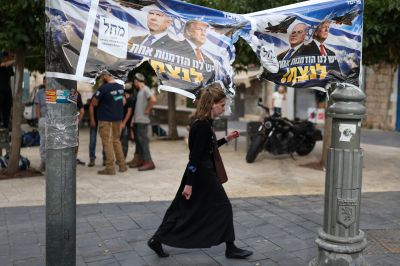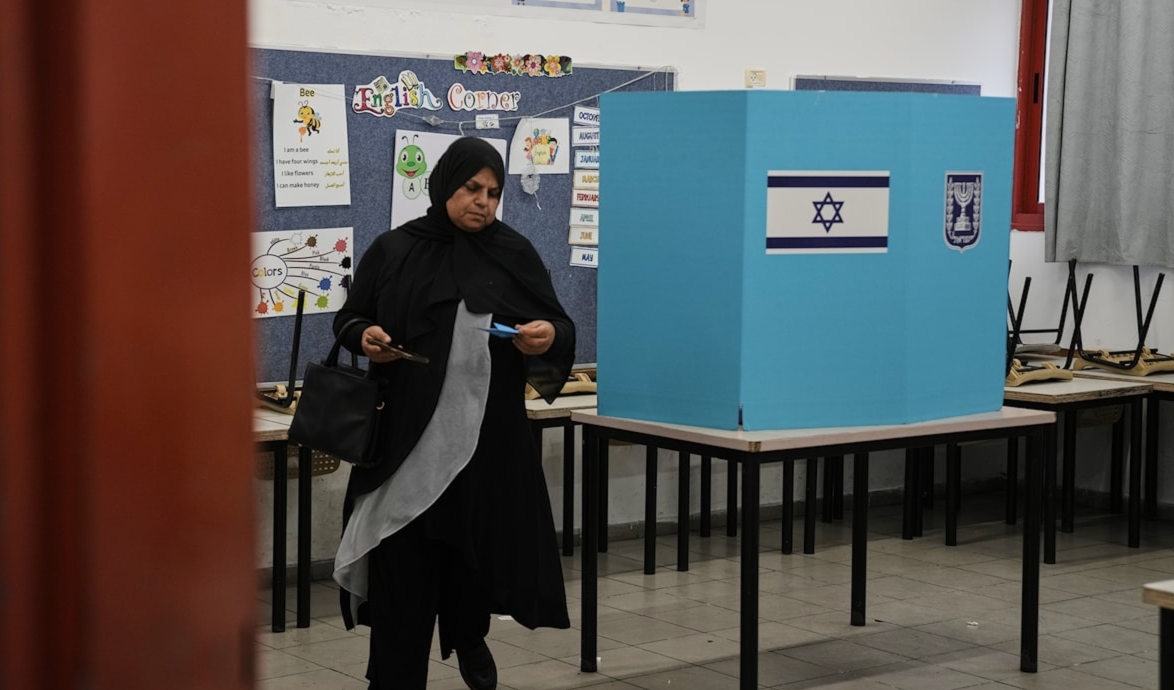
Palestinians account for about 18% of eligible voters in Israeli Knesset elections, or roughly 1.172 million of the 7.332 million registered voters. About 11% of eligible voters live abroad. Those who take part in the elections, along with the wider Arab community in the Israeli occupation, represent the remaining part of the Palestinian people who were displaced from their homeland in 1948. They have fought for recognition through decades of struggle against the Israeli occupation. Their history includes resistance to military rule, which lasted until 1966, the Land Day protests of 1976, and other confrontations and hardships. These included harsh measures against Palestinian prisoners from within the Israeli entity, including martyr Walid Daqqa, and former prisoners Maher Younis and Karim Younis. Palestinian participation has significantly increased overall voter turnout. In several previous elections, their boycott or low participation helped depress the national turnout rate. This time, Palestinian turnout exceeded 75% by around 9 p.m. on election day, according to preliminary figures. The high rate reflects a belief that they can make a difference, even if only to a limited extent. Many Palestinian voters appeared convinced that a strong presence in the Knesset could help curb Israel's war against the Palestinian people and the wider region, while protecting them from the fascist far right. The Israeli right no longer disguises its hostility toward Palestinian citizens. Calls to expel them have become a natural part of its political outlook rather than mere campaign rhetoric aimed at rallying nationalist and religious voters. Palestinian citizens also face growing insecurity and daily fears over rising crime in their communities, which they blame on the Israeli entity's complicity and failure to act. Every Israeli election has carried major consequences for Palestinians, both inside the occupied Palestine and abroad, as successive governments have pursued policies that shape their lives and future. But this election is particularly significant because it is the first since Israel's genocidal war on the Gaza Strip. It comes as Palestinian citizens increasingly recognize their role in confronting Zionist ideology, which has openly exposed its hostility since Benjamin Netanyahu's current government took office in December 2022, and even before then. Yet Palestinian citizens have already scored an initial blow against Netanyahu's political camp. He is unlikely to form a government similar to the current one and may have to reach an agreement with the opposition, potentially forcing him to make major concessions. The impact of the '48 Palestinians has never been confined to their immediate surroundings. They have continued to shape the Palestinian national struggle and sustain its political presence. Their presence within the Israeli occupation serves as a lasting obstacle to its expansionist and exclusionary ambitions, as well as to its efforts to establish itself as a Jewish state. Their survival has also helped preserve Palestine's Arab identity and the Arabic language. If preliminary results confirming more than 16 Knesset seats for Arab lists hold, their representation will exceed the level achieved in the 2020 election. In Israeli political terms, this could amount to an uprising similar to the one Palestinian citizens launched in May 2021 in solidarity with Palestinians elsewhere. During the Sheikh Jarrah events in Jerusalem and Israel's war on Gaza, known as Operation Sword of Jerusalem, they organized the strike of Dignity and Hope on May 18. The action spread across Arab towns and villages. From the perspective of Palestinians living under Israeli rule, the election can be seen as another way to challenge a colonial power from within. Democracy is one means of political expression, and Palestinian representation is a way to preserve presence and assert identity. Keeping Palestinian society vibrant inside the Israeli occupation is essential to maintaining Palestine's Palestinian and Arab character. This explains why Palestinian citizens took part in Israel's first Knesset election in 1949 through the Democratic List of Nazareth and the Communist Party, a joint Arab-Jewish political force led by national activist Tawfik Toubi. Arab representation initially did not take the form of independent Arab lists. That changed in 1977 with the formation of the Democratic Front for Peace and Equality, which campaigned for equality between Arabs and Jews, social justice and workers' rights. It also called for an end to the occupation of territories captured in 1967 and the establishment of a Palestinian state. Over the years, other parties emerged, including the Progressive List of Peace in 1983 and the Arab Democratic Party in 1988, the first Arab party in occupied Palestine. In 1995, Ahmad Tibi founded the Arab Movement for Change, while Azmi Bishara established the National Democratic Assembly, known as Balad. The latter brought together nationalist forces, including the Sons of the Village movement, the Progressive Movement and the Covenant of Equality movement. Balad called for Israel to recognize its Palestinian citizens as a national minority entitled to collective rights. It also demanded equality and challenged Zionism and the social order built around it. The Islamic Movement, meanwhile, split over participation in Knesset elections in 1996. Its northern branch rejected participation, while its southern branch opted to take part, a division that continues today. Arab political representation is now concentrated in two electoral lists. The Joint List includes Balad, the Arab Movement for Change and the Democratic Front for Peace and Equality, known as Hadash. The second is the United Arab List, or Ra'am, led by Mansour Abbas, alongside Yoav Segalovitz. The final election results will soon become clear, bringing consequences that are familiar to the region. Successive Israeli governments have generally continued the policies of their predecessors. Yet Palestinian citizens have already scored an initial blow against Netanyahu's political camp. He is unlikely to form a government similar to the current one and may have to reach an agreement with the opposition, potentially forcing him to make major concessions. Palestinian citizens will also face new challenges, including efforts to break up their political bloc after their broad turnout demonstrated a degree of unity in defending their presence within the Israeli occupation. This is an edited translation of an article originally published in Arabic.