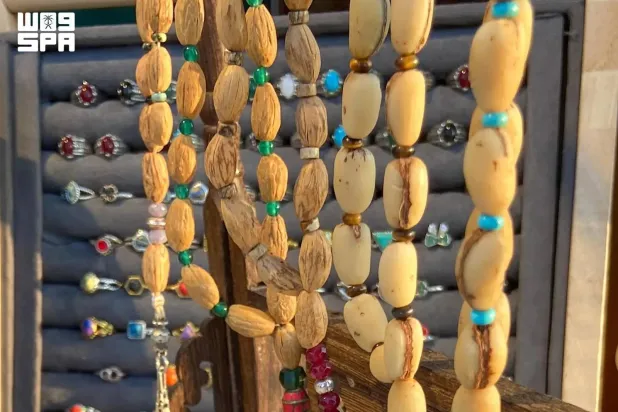
In a creative convergence of traditional heritage, sustainable manufacturing, and resource efficiency, artisans in Qassim Region are converting discarded date pits into handcrafted prayer beads (subha), transforming an agricultural by-product into a high-value consumer item, the Saudi Press Agency reported. The production journey involves a multi-stage process encompassing sorting, cleaning, drying, precise drilling, sanding, polishing, stringing, and final packaging. The resulting product retains the natural texture, color variations, and contours of the palm seed, reflecting the Kingdom's broader drive to foster innovative secondary industries across the date value chain. The production journey involves a multi-stage process encompassing sorting, cleaning, drying, precise drilling, sanding, polishing, stringing, and final packaging. Speaking to the Saudi Press Agency, artisan Noura Al-Harbi explained that the craft requires meticulous manual skill. She stated that after selecting pits of comparable size, artisans drill them for threading, buff rough contours, and polish the surfaces to showcase their organic aesthetic before assembling them with regional decorative motifs. Because no two date pits are identical, each finished rosary possesses a distinct texture and individuality. Al-Harbi emphasized that the market value of date-pit rosaries is elevated by their symbolic connection to the date palm, a central fixture of Saudi agricultural and cultural identity. This narrative creates strong commercial potential within cultural tourism, corporate gifts, and keepsake sectors, allowing visitors to acquire a product directly tied to local heritage. The enterprise embodies principles of the circular economy by repurposing agricultural waste from farms and processing plants into marketable craft products. Al-Harbi noted that integrating semi-automated tools for drilling and cutting with manual finishing could scale production volumes while maintaining artisanal quality. Bridging agriculture, creative entrepreneurship, and tourism, the craft highlights how supporting local artisans and modernizing packaging can expand the economic footprint of the Kingdom's date sector beyond food consumption, creating new avenues for sustainable cottage industries.