DAMASCUS: Kurdish forces still hold around 2,200 foreign relatives of suspected Daesh group fighters in a northeast Syria camp, an official there told AFP, despite an integration agreement between the Kurds and Damascus.
Two government officials also told AFP that transferring the administration of the Roj camp to the Damascus authorities would take time and was among issues in the integration agreement that are still being worked on.
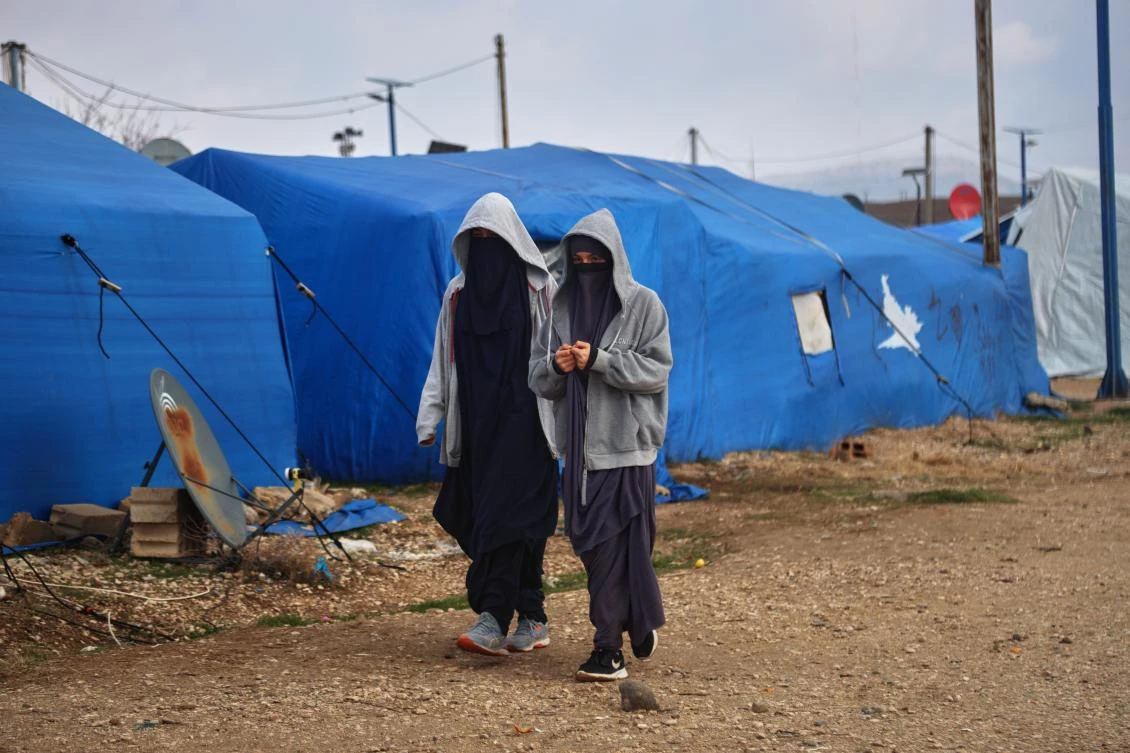
In the Roj camp, located in Syria’s Hasakah province, AFP correspondents saw women wearing the niqab and children including teenagers, some of whom asked not to be filmed.
Kurdish security forces tightly guard the facility.
Camp official Hakmieh Ibrahim told AFP on Monday that “the Roj camp holds 729 families from the Daesh organization, or more than 2,200 people”.
“There has been no change in the (camp’s) administration until now,” she added, despite the integration agreement.
She said the camp holds people of more than 50 nationalities, with Russians making up the largest group, alongside nationals from France, Turkiye, Germany, Tunisia, Morocco and elsewhere.
Residents also include Shamima Begum, who was stripped of her British citizenship after leaving the country for Syria as a teenager to marry an Daesh fighter.
The Kurds and Damascus in January reached an agreement on integrating Kurdish forces and institutions into the state, after a government military push that saw the Kurds give up territory they had seized while fighting Daesh during Syria’s civil war.
In August, Mazloum Abdi, who headed the Syrian Democratic Forces, announced the dissolution of his Kurdish-led fighting force and was appointed as an adviser to Syrian President Ahmed Al-Sharaa.
Damascus has been gradually taking over responsibility for formerly Kurdish-administered bodies and matters.
A Syrian government official told AFP on condition of anonymity that “the integration of the Roj camp, like other institutions, is underway”.
“The transfer of its administration will take time,” the official said, noting its complex “humanitarian and political dimensions, as well as its relationship to foreign parties”, referring to countries that have until now refused to repatriate their nationals.
A Syrian interior ministry official who also requested anonymity told AFP that Roj camp “is part of a general file being worked on”.
Roj is the last camp under Kurdish control, after its forces withdrew from the Al-Hol camp during the government’s military escalation this year.
Most of Al-Hol’s residents including foreigners subsequently left the camp and Syrian authorities later closed it.
In February, the United States transferred over 5,700 Daesh detainees from more than 60 countries to Iraq after years held in Syrian-Kurdish administered prisons.
Stay on top of the issues that matter to you the most.