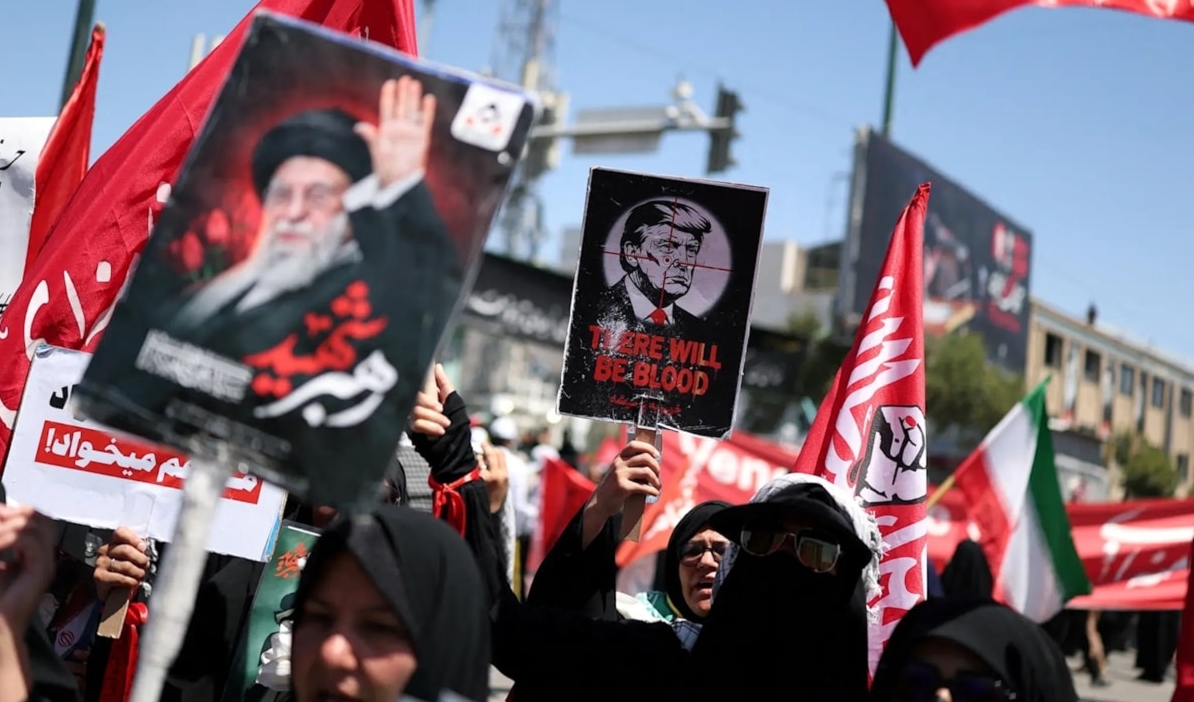
Forty-seven years ago today, less than a year after the fall of Iran’s shah and the victory of the Islamic Revolution, revolutionary students stormed the US Embassy in Tehran. They called it a "den of espionage" and a base for conspiracies against the nascent revolution. The incident marked a turning point in relations between the two countries. Decades of confrontation, failed agreements and shifting tensions followed, eventually culminating in a full-scale war that failed to topple Iran’s government. Today, after years of sanctions, blockades, wars and failed diplomatic settlements, including the 2015 nuclear deal and the Islamabad understanding reached last June, Washington and Tehran stand on the brink of another war. Both continue to test each other’s resolve, displaying their military strength while bargaining at the negotiating table. Maritime blockades and a continuing struggle for control of the Strait of Hormuz have further complicated matters. Military preparations for a potential "third war," widely expected to erupt after the US midterm elections, have pushed tensions to unprecedented levels. Even a minor incident could trigger a much wider confrontation. Events in the Strait of Hormuz on Tuesday underscored that danger. According to reports, Iran opened fire early in the morning toward a US fighter jet flying over the strait. The aircraft then struck Iranian missile launchers and air defense facilities on Qeshm Island. The confrontation extends beyond the battlefield. Washington and Tehran are also holding firm to their negotiating positions, seeking to consolidate their gains and extract maximum concessions. This leaves little common ground and makes mediation increasingly difficult, particularly for Qatar. Qatari envoys arrived in Tehran late Monday to discuss a draft agreement that the two sides have been negotiating for eight days. Informed sources report some progress, but describe the situation as “fragile”, with a “wide gap” remaining between the two sides. Doha is nevertheless trying to maintain an optimistic tone. Qatar’s Foreign Ministry said Tuesday that it was “continuously and directly relaying proposals” between the parties and remained “optimistic” about reaching an agreement. Ministry spokesman Majed Al-Ansari said both countries were reviewing proposals submitted by Qatar as part of its mediation efforts. China’s strategic objective appears to be building a coordinated diplomatic network involving Iran, Gulf capitals and other influential regional players. Statements from Iran’s Supreme National Security Council secretary, Mohsen Rezaei, offered little indication of a breakthrough. Without clarifying whether he was responding to a message from US Vice President JD Vance, Rezaei said Washington’s response to Iran’s demands was "unconvincing." He insisted that the US must “accept Iran’s seven conditions” and said the Strait of Hormuz could reopen only if Washington met them. Iranian Foreign Ministry spokesman Esmail Baghaei also said no new progress had emerged in efforts to reach an agreement. Exchanges of messages through mediators continue at the same pace, he added. Parliament Speaker and chief Iranian negotiator Mohammad Bagher Ghalibaf said “regional countries should understand that Iran remained ready to fight, with its finger on the trigger, but had also delivered a firm and rational response to Washington”. The next step, he said, was up to the US if it wanted to avoid war. Meanwhile, Vance said indirect consultations with Iran had achieved progress that could pave the way for another round of negotiations. At the same time, signs are growing that Moscow and Beijing are stepping up diplomatic efforts to prevent further regional escalation. China, in particular, has emerged as a key center of diplomatic activity in recent days. Beijing’s emerging initiative may go beyond a conventional effort to end the US-Iran confrontation. It could also seek to establish guarantees for implementing any eventual agreement. This broader approach is reflected in the timing of visits to China by Oman's Sultan Haitham bin Tariq, Saudi National Security Adviser Musaed bin Mohammed Al-Aiban and Ali Bagheri Kani, deputy secretary of Iran’s Supreme National Security Council. Reports have also pointed to a trilateral meeting involving Chinese, Iranian and Omani representatives. These contacts coincide with Qatar’s mediation efforts and plans for a visit by China's special envoy to the region in the first half of November. Together, they signal a new and potentially decisive phase in Beijing’s involvement in the crisis. China’s strategic objective appears to be building a coordinated diplomatic network involving Iran, Gulf capitals and other influential regional players. Oman is a natural partner in this effort. It maintains longstanding, balanced relations with both Washington and Tehran and occupies a strategically important position along the Strait of Hormuz. Saudi Arabia, Türkiye, Pakistan and Egypt also support diplomatic efforts for pressing security and economic reasons. Russia, meanwhile, could play an important complementary role in shaping future arrangements, drawing on its political and technical capabilities, particularly in the nuclear field. This is an edited translation of an article originally published in Arabic.