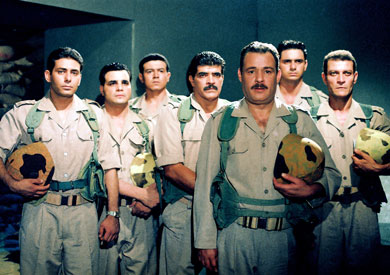
As Egypt marks the 53rd anniversary of the October 1973 War, the country once again turns to one of the most deeply rooted chapters of its modern history: the crossing of the Suez Canal, the breaching of the Bar Lev Line, and the military achievement that reshaped Egypt’s national consciousness. More than five decades later, however, the anniversary raises another question—one that places renewed responsibility on the arts, particularly cinema: Has Egyptian filmmaking done enough to document the war, preserve the stories of those who fought it, and convey its significance to new generations and international audiences? Cinema does more than recreate historical events. At its best, it gives history a human face, transforming military records, testimonies, and statistics into stories that can resonate across generations and borders. Few chapters of modern Egyptian history offer as rich a canvas for such storytelling as the October War. Over the decades, Egyptian cinema has produced a substantial body of feature films and documentaries dealing with different stages of the Arab-Israeli conflict—from the War of Attrition and Egypt’s military operations against Israeli targets to the October crossing and the breaching of the Bar Lev Line. Yet one question remains: Has Egyptian cinema produced the definitive film that matches the scale, complexity, and historical significance of the October War? The question has gained added urgency in an era when films, television series, and digital platforms play an increasingly powerful role in shaping public understanding of history. It also comes at a time when competing narratives of the conflict continue to circulate internationally, sometimes presenting events from perspectives that differ sharply from the Egyptian and Arab historical record. El-Mamar reopens the debate Among the most prominent recent Egyptian films to revisit the country’s military experience is El-Mamar (The Passage), released in 2019. The film focused on a series of Egyptian military operations during the War of Attrition, highlighting the courage of Egyptian servicemen and operations carried out against Israeli positions, while also touching on Egypt’s efforts to develop its military capabilities and defence industries. The film attracted significant public attention and reignited debate over whether Egyptian cinema could once again produce large-scale military dramas capable of bringing the country’s wartime history to a new generation. Although El-Mamar deals with the War of Attrition rather than the October War itself, it represented an important step towards revisiting Egypt’s military history on screen. Its reception also demonstrated that audiences remain deeply interested in the stories of the soldiers and commanders whose actions paved the way for the October victory. “Wall of Heroism”: The air defence battle The Wall of Heroes- The Air Defense Battle More than two decades before El-Mamar, the 1998 film “Wall of Heroism” offered a dramatic portrayal of a crucial phase of the conflict. The film followed Egyptian society through the War of Attrition and into the October War, with particular emphasis on the role of Egypt’s air defence forces and the missile wall established to counter Israeli air superiority. The film remains significant for bringing attention to a dimension of the conflict that has often received less cinematic treatment: the strategic role of Egypt’s air defence system in preparing the ground for the eventual crossing. “Al-Tarik Ila Eilat” Road to Eilat Among the most celebrated Egyptian films dealing with the War of Attrition is “Al-Tarik Ila Eilat”, directed by Enas Mohamed Ali and released in 1994. Based on a real military operation, the film dramatised the mission carried out by Egyptian frogmen against Israeli naval vessels in the port of Eilat. It portrayed the courage and sacrifice of the officers and servicemen who took part in one of the most daring operations of the War of Attrition. The film has since become closely associated with Egypt’s collective memory of the war. Director Enas Mohamed Ali has repeatedly described “Al-Tarik Ila Eilat” as one of the most important and personally cherished works of her career, precisely because it tells the story of real Egyptian heroes who risked—and in some cases gave—their lives for their country. She has said that she feels particularly proud whenever the film is broadcast around the anniversary of the October victory, noting that cinema succeeded in portraying the War of Attrition with considerable force because it represented the critical stage that preceded the crossing. At the same time, Ali has stressed the need for more films exploring the October War itself in greater depth, urging producers and filmmakers to search for untold stories and firsthand testimonies that could be transformed into compelling cinematic narratives. “Hikayat Al-Gharib”: The years before the crossing Ali also directed “Hikayat Al-Gharib” in 1992, another film centred on the War of Attrition and the years leading up to October 1973. Rather than treating the conflict solely as a sequence of military confrontations, the film explored the impact of the period on ordinary Egyptians and the social atmosphere that prevailed between the two wars. In doing so, it presented the War of Attrition as more than a prelude to October. It portrayed it as a formative period that shaped the country and prepared the way for the decisive battle that followed. Cinema after victory In the years immediately following the October victory, Egyptian cinema produced a number of films reflecting the atmosphere of triumph and the experience of the Egyptian soldier. One of the most prominent was “Alrosasa La Tzal Fi Gaibi”, which became one of the best-known films associated with the October War. It portrayed the Egyptian soldier and the emotional experience of reclaiming land after years of war and national trauma. Bullet Is Still in My Pocket “Abnaa El Samt” offered another important perspective, tracing the conflict from the sinking of the Israeli destroyer Eilat in 1967 through the War of Attrition and ultimately to the October crossing and the breaching of the Bar Lev Line. Other notable productions included “Al-Wafaa Al-Azeem”, which focused on the heroism of Egyptian servicemen, and “Al-Soa’d Ela Al-Hawya”, which approached the conflict from an intelligence perspective, telling the story of an Egyptian woman recruited by Israeli intelligence and eventually exposed. “El Omr Lahza” also stands among the important national films of the period. It examined the war through the experience of a journalist determined to uncover the truth and document the stories of soldiers and civilians. The production incorporated authentic footage connected to the atmosphere of the October War. Taken together, these films form a substantial part of Egypt’s cinematic record of the conflict. Yet their existence does not necessarily mean that the war has been fully explored on screen. Inam Mohamed Ali: More films are needed Director Inam Mohamed Ali believes Egyptian cinema has produced important examples of films dealing with the War of Attrition, but that there remains considerable room for a new generation of filmmakers to explore the October War in greater depth. For Ali, the strength of such productions lies in their connection to real events and real people—not simply in their status as patriotic films released around a national anniversary. She argues that many stories remain untold, particularly the human stories of soldiers and officers who experienced the conflict firsthand. Such stories, she believes, could add a deeper emotional and human dimension to future military films. Inam Mohamed Ali Medhat El-Adl: October has not yet been properly dramatised Screenwriter Medhat El-Adl believes Egyptian cinema has yet to produce a feature film that captures the October War on the artistic scale it deserves, despite the number of films made in the years following the conflict. According to El-Adl, many of the earlier productions concentrated primarily on the atmosphere of victory and national pride, while contemporary audiences are increasingly interested in the details of the battle itself—particularly the experiences and decisions of the officers and soldiers who participated in it. Today’s audiences, he notes, can access firsthand accounts by military officers through books, interviews, television programmes, and digital platforms. A new film, therefore, must offer more than a familiar retelling; it must transform those testimonies into a sophisticated cinematic narrative. Medhat El-Adl El-Adl also points to the high cost of producing large-scale war films, particularly in an era when audiences expect increasingly sophisticated visual effects, realistic battle sequences, and technically advanced production values. Nevertheless, he argues that Egypt needs a major film worthy of the October War, particularly as younger generations are exposed daily to information—and misinformation—through the internet and social media. Cinema, he maintains, has a responsibility to present the historical record in a compelling artistic form and to convey the scale of the sacrifices made by Egyptians to achieve the peace and security that followed. Tarek El-Shennawy: The Battle Is Also About the Narrative Film critic Tarek El-Shennawy takes the argument a step further, saying the challenge is no longer simply to make a film about the war, but also to engage in the broader struggle over how the history of the conflict is remembered and presented. El-Shennawy has pointed to Israeli productions dealing with figures and events connected to the conflict, including portrayals of Ashraf Marwan, as well as international productions that advance particular interpretations of the war and its final stages. He argues that Egypt has yet to produce a film of genuinely international scale portraying the achievements of the Egyptian and Syrian armies during the October War. El-Shennawy has therefore called for the resources necessary to produce a film capable of competing internationally—not merely in terms of production values, but also through a cinematic language capable of reaching audiences beyond the Arab world. He has suggested that such a project could be produced in English and feature an internationally recognised star, while being directed by Egyptian filmmakers with the technical and creative ability to handle a production of such magnitude. In more recent remarks, El-Shennawy described the creation of a major artistic work about the October victory as a matter of “national security”, warning against leaving the field open for competing narratives to shape international perceptions of the war. In this context, cinema becomes more than a vehicle for commemorating a historic event. It becomes a means of preserving collective memory at a time when visual storytelling has become one of the most powerful forces shaping how younger generations understand history. Ahmed Bedair: An Eyewitness Among the voices carrying particular weight in this debate is veteran actor Ahmed Bedair, not only because of his long career in Egyptian cinema and his participation in patriotic productions, but also because he personally experienced the October War and served on the frontlines. Ahmed Bedair Bedair believes that the films made about the war, despite their importance, have not fully conveyed the reality of the conflict or adequately communicated the scale of what was achieved during the crossing. He has expressed his hope that the state will support the production of a major international film capable of preserving the story of the war, its victories and its real heroes. For Bedair, the issue is not simply about making another film. It is about preserving the experience of an entire generation and transmitting it to future generations in a form that is both authentic and emotionally powerful. Ahmed Ezz: What We Did Was Nothing Compared with the Real Heroes Actor Ahmed Ezz, who starred in El-Mamar, has also spoken about the experience of portraying Major General Mohie Nouh, one of the celebrated figures of the War of Attrition. Ezz has described the role as a profound honour, emphasising the enormous difference between portraying heroism on screen and living it on the battlefield. Ahmed Ezz Reflecting on the experience, Ezz said: “It was an honour to portray Major General Mohie Nouh. As actors, we felt that we were doing something very significant. These men went on missions knowing they might never return to their families. What we did was nothing compared with what the real heroes did—men who literally put their lives on the line.” His remarks underscore the gap between cinematic representation and the reality experienced by those who fought the war—a gap that makes the responsibility of filmmakers even greater when attempting to bring such stories to the screen. Why Has Egypt Yet to Make the Definitive October War Film? Despite the passage of 53 years, one question continues to resonate: Why has Egyptian cinema not yet produced a definitive large-scale film about the October War? The conflict was far more than a military confrontation lasting several days. It was the culmination of years of preparation, planning, the War of Attrition and special operations, followed by the crossing of the Suez Canal, the assault on the Bar Lev Line and a complex series of land, air and naval battles. Behind the military narrative were also thousands of individual human stories—soldiers, officers and families whose lives were transformed by the war. A film capable of capturing that experience would require an enormous production effort: substantial financing, military equipment, carefully reconstructed locations, sophisticated visual effects, and a team of historians and military experts capable of ensuring historical accuracy. Yet perhaps the greatest challenge is the screenplay itself. The ideal film would need to reconcile historical accuracy with compelling drama, avoiding the pitfalls of turning the story into a history lesson while also resisting the temptation to sacrifice authenticity for cinematic spectacle. From a Commemorative Film to a Global Production What many filmmakers and critics are calling for today is not simply another film released around the October anniversary, but a major cinematic project capable of living beyond the occasion and reaching Egyptian, Arab and international audiences. A film capable of carrying the story of October to the world would require a different vision—ambitious production values, a genuinely international cinematic language, and human characters whose experiences can resonate with audiences regardless of nationality. It would also require international distribution, professional marketing and high-quality translation, allowing the film to move beyond the domestic market and become part of Egypt’s broader cultural presence on the international stage. October Must Not Remain a Once-a-Year Memory Perhaps the most important message emerging from the anniversary is the need to move beyond treating the October War solely as an annual occasion for celebration and instead recognise it as a national memory that requires a sustained cultural and artistic project. The anniversary returns every year, but generations change. The ways in which people access information also change, and visual storytelling has become a central force in shaping public consciousness. Earlier generations learned about October through the testimony of parents and grandparents, books, newspapers and the films produced in the aftermath of the war. Younger generations, by contrast, increasingly encounter history through digital platforms, social media and international film and television productions. That reality places an even greater responsibility on Egyptian cinema. A powerful film does more than preserve the memory of a hero. It preserves a moment in history, captures its details and communicates them to new generations in a language they can understand and engage with. At the same time, it can carry an Egyptian historical narrative to audiences far beyond the country’s borders. The October War: A Story That Has Yet to Be Fully Told The October War remains one of the defining chapters of modern Egyptian history—a story of an army rebuilding its capabilities and confidence, a society enduring years of war and attrition, and men who sacrificed their lives in the pursuit of victory and the recovery of national dignity. Egyptian cinema has already contributed important works to that collective memory, from “Abnaa El Samt”, “Alrosasa La Tzal Fi Gaibi”, “El Omr Lahza”, “Al-Wafaa Al-Azeem” and “Al-Soa’d Ela Al-Hawya”, to “Al-Tarik Ila Eilat”, “Hikayat Al-Gharib”, “Wall of Heroism” and, more recently, El-Mamar. But the cinematic journey is far from complete. There are still stories that have never been told, testimonies that have never been transformed into drama, figures who remain largely unknown to the public, and countless details of the War of Attrition, the crossing and the battles that followed that have yet to receive the cinematic treatment they deserve. The need today, therefore, is not simply for more films designed around an annual commemoration. What is needed is a major Egyptian cinematic project capable of placing the October War firmly on the map of international cinema. Such a project would combine historical truth with compelling drama, military achievement with human stories, and documentary evidence with cinematic imagination—while remaining capable of speaking to Egyptian, Arab and international audiences alike. October is not merely an anniversary to be celebrated each year. It is a national memory, a story of extraordinary courage and a historical narrative that must remain alive. And cinema, with its unparalleled ability to reach millions of people and transcend borders, remains one of the most powerful tools available to keep that memory alive—to carry the story of the victory from one generation to the next, and to tell the world, through image, narrative and drama, the story of one of the defining chapters of modern Egyptian history.