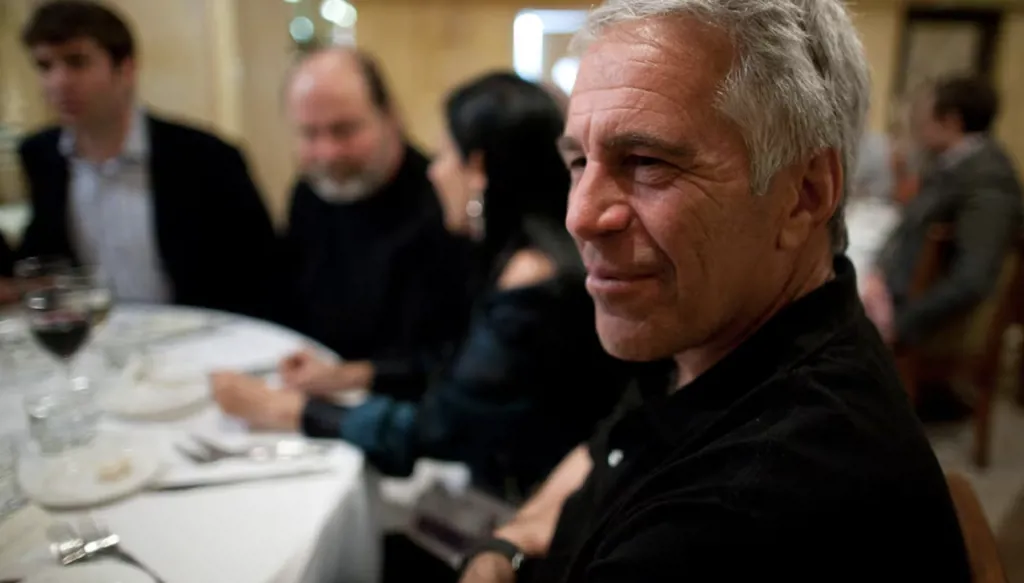
A new presentation by forensic experts has reignited the debate over the death of convicted sex offender and American financier Jeffrey Epstein, concluding that his injuries suggest he may have been murdered while in custody. However, the New York City Office of Chief Medical Examiner has stood by its official finding that he died by suicide by hanging.
Epstein’s body was found in his cell at the Metropolitan Correctional Center in New York on August 10, 2019, while he was awaiting trial on charges of sex trafficking of minors.
According to CNN, the presentation was delivered on Monday in London. It was prepared by Michael Freeman, a forensic epidemiology researcher and consultant; Anders Eriksson, a professor of forensic medicine at Sweden’s Umeå University; and Itiel Dror, a cognitive neuroscience researcher.
The authors said they had reviewed the full autopsy file and reconstructed the circumstances of Epstein’s death. They concluded that his injuries were consistent with an assault and a struggle, arguing that there was no evidence that a hanging had taken place.
They added that "the ligature marks are more consistent with a criminal strangulation from behind, most likely using a narrow, knotted fabric ligature."
In an interview with The New York Times, Freeman said he did not know who might have killed Epstein, explaining that his focus was on what he described as shortcomings in the investigation and autopsy report. He asked: "How did this go so far off track?"
In response, the New York City Office of Chief Medical Examiner said in a statement to CNN that it "stands by its conclusion" that Epstein died by suicide by hanging.
Epstein’s lawyers had challenged the initial findings announced a week after his death and called for a more thorough examination of what had happened inside the prison. Both the FBI and the Justice Department’s inspector general investigated the circumstances surrounding his death.
The new findings add another chapter to the ongoing controversy surrounding the case, but remain at odds with the official conclusion.
In 2019, Epstein faced charges of running a sex trafficking network through which he sexually abused dozens of underage girls. He was accused of paying girls, some as young as 14, in exchange for sex at his New York home and his Palm Beach estate between 2002 and 2005.
Documents related to the case have been released in batches, including millions of emails, text messages and photographs, after Congress passed a law requiring the files to be made public.
Although the documents did not substantiate some conspiracy theories, including claims that Epstein had a "client list" of people he blackmailed, they shed light on his ties to business tycoons, billionaires, members of royal families, government officials and media personalities, causing widespread embarrassment in the United States and beyond.