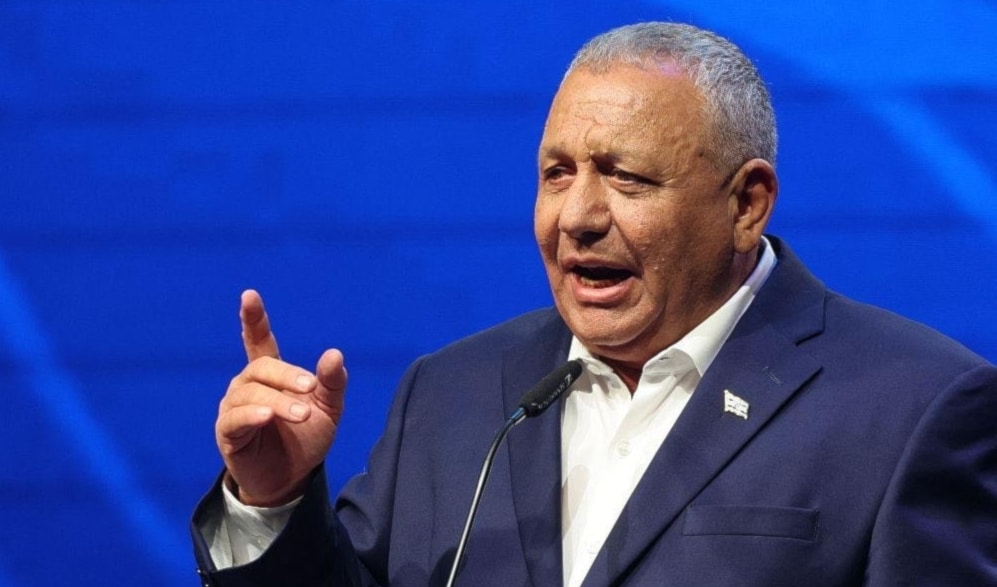
Israel’s Knesset election has deepened the country’s political crisis, leaving the struggle for power unresolved. Has Benjamin Netanyahu suffered a blow that could end his long dominance of Israeli politics, or can he once again exploit divisions among his rivals to remain in office? Although Netanyahu’s bloc has lost ground in the preliminary results, the opposition, led by former military chief Gadi Eisenkot, has failed to secure a majority to form an alternative government. Neither camp has the 61 seats needed for a majority in the 120-seat Knesset, leaving the outcome dependent on the alliances that emerge in the coming days. Arab parties could play a decisive role by endorsing a candidate to form a government or supporting an alternative coalition. But their parliamentary weight will matter only if opposition parties overcome their differences over who should become prime minister and how to structure the next government. Celebrations in the opposition camp after polls closed may therefore prove premature. Netanyahu’s setbacks do not automatically spell his downfall, just as his opponents’ gains do not guarantee a transfer of power. Netanyahu is counting less on his own bloc’s seats, which fall short of a majority, than on the opposition’s inability to unite behind an alternative. He and his allies are pursuing two parallel strategies, questioning the legitimacy of cooperation between the opposition’s “Change” camp and Arab parties while seeking to persuade an opposition party to join a government under his leadership. The strategy reflects Netanyahu’s recognition that his opponents, despite sharing the goal of removing him from office, do not necessarily agree on how to govern. Preventing them from reaching a deal could be enough to derail efforts to form an alternative government, without requiring Netanyahu to build a new majority for his own bloc. Netanyahu’s setbacks do not automatically spell his downfall, just as his opponents’ gains do not guarantee a transfer of power. Meanwhile, Eisenkot’s camp has shown initial signs of coordination but remains divided over the choice of prime minister, the possibility of rotating the position and the extent of cooperation with Arab parties. No clear compromise has emerged, and there are few firm signs that the parties are willing to make the necessary concessions. The first test of the opposition’s ability to coordinate its positions and reach an understanding with Arab parties will be the contest for the Knesset speakership. Success could signal that the opposition can assemble a parliamentary majority and begin serious negotiations to form a government. Failure would give Netanyahu another opportunity to exploit divisions and regroup. The final calculations also depend on the completion of the vote count, including ballots cast by soldiers, reservists, displaced people and others unable to vote at their usual polling stations. Any change in the distribution of seats could alter the balance of power and the options available to both camps. The election has reshaped the political landscape but has yet to determine who will govern. The opposition has an opportunity to oust Netanyahu but has not agreed on how to seize it. On the other side, Netanyahu is betting that his rivals’ divisions will help him overcome his bloc’s losses. A transfer of power, continued deadlock or even another election remains possible, depending on the negotiations and alliances that take shape in the coming days. This is an edited translation of an article originally published in Arabic.