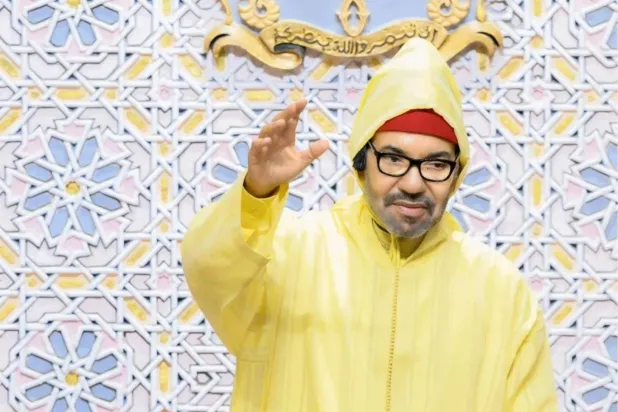
Morocco’s King Mohammed VI called for the new parliamentary and government term to mark a genuine turning point in advancing Morocco’s ambition as a rising, trusted economic power, balancing economic growth with greater social and regional equity. He stressed that youth issues must be a public policy priority. Speaking in Rabat on Friday at the opening of the first session of the first legislative year of the 12th parliamentary term, the king said the term came at an exceptional moment, with opportunities that might not recur to build on achievements across various fields. He congratulated members of the House of Representatives on winning voters’ confidence. King Mohammed VI urged governance bodies to put youth issues first through an integrated approach that ensures equal opportunities and covers education, training and economic inclusion. The royal address linked this approach to strengthening young people’s confidence in their prospects for upward social mobility, in their country’s institutions and in the opportunities it offers to build a better future in freedom, dignity and stability. On territorial governance, the king said the central challenge in the coming period was to work on the ground, identify each area’s actual problems and find realistic solutions. He said integrated development, better public services and productive investment were closely tied to advanced regionalization and the implementation of administrative decentralization. He warned that delays and shortcomings hampering decentralization undermined economic and social development programs and hindered responses to citizens’ actual concerns. “Any delay or procrastination in fully implementing the Decentralization Charter is no longer acceptable,” King Mohammed VI said. This requires transferring powers and the necessary human and financial resources from the central administration to provinces and regions. He also called for removing obstacles to regional institutions’ work by defining their powers more clearly, increasing their human and material resources, organizing relations between the state and the regions, and establishing coordination and contractual mechanisms that enable regions to make decisions and carry out projects. On the economy, the king called for accelerating planned infrastructure projects and launching a new generation of major strategies, particularly in water, energy and food security, industrial development, the digital economy and artificial intelligence. He also urged more efficient management and stronger national capacity in strategic reserves, along with secure supplies of essential goods. He called on the domestic private sector to become a strategic actor in the country’s development transformation, with greater initiative, innovation and capacity to create jobs, invest and export. On migration and the crisis that erupted with Spain, King Mohammed VI said Morocco’s balanced approach to managing migration had delivered tangible results. But recurring crises showed that the current cooperation model had become outdated. He said the partnership with Spain had made significant progress across various fields, including efforts to combat irregular migration. It now faced major challenges, however, from certain outdated legal provisions and court rulings detached from reality. He said these provisions and rulings regrettably prevented the repatriation of minors and people falsely claiming asylum status, while encouraging criminal networks’ ambitions. Addressing irresponsible statements from some political and media circles, King Mohammed VI stressed that the partnership was a political choice and a voluntary commitment, and would never be subject to pressure, threats or blackmail. He said Morocco would present its partners with a clear, practical strategic document laying the foundations for a new form of partnership to strengthen shared development and economic competitiveness. In a message to lawmakers, King Mohammed VI said a parliamentary mandate was “a position of trust, a political commitment and a moral contract” binding them to citizens. He urged members of parliament to fulfill their national responsibility. “Be equal, may God protect you, to this national responsibility that you bear before God, before the citizens and before history,” he said. King Mohammed VI was accompanied by Crown Prince Moulay Hassan, Prince Moulay Rachid and Prince Moulay Ahmed.