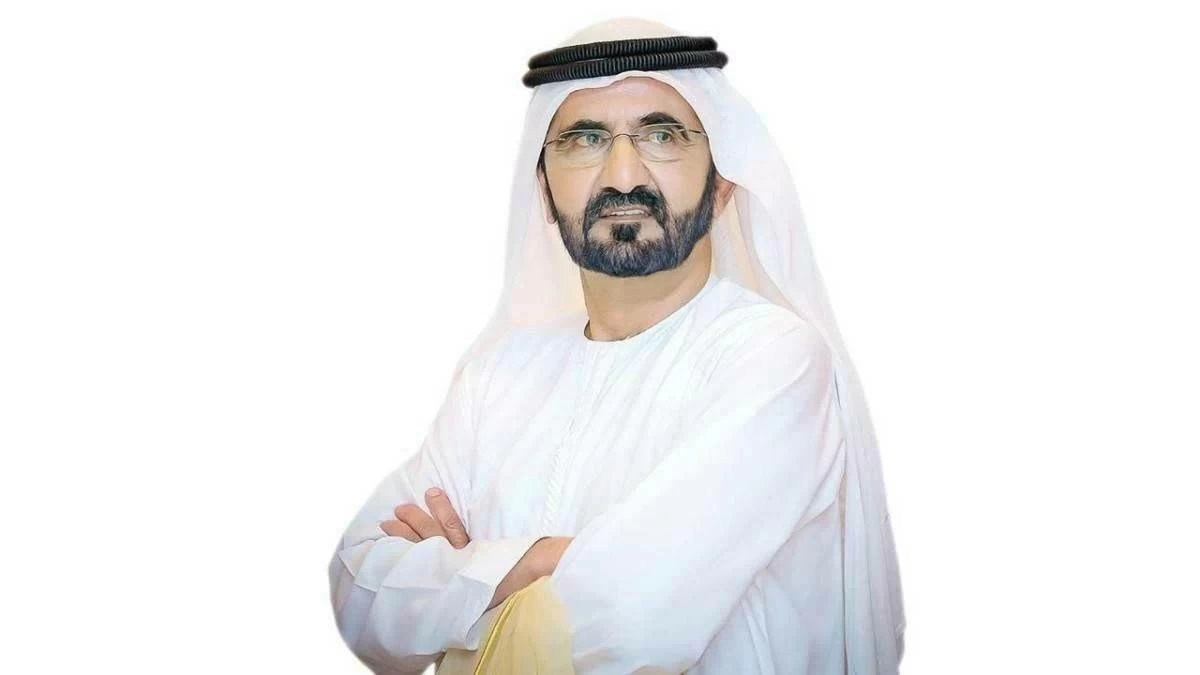
What unites the people of the Gulf is greater than what divides them. This is the central message His Highness Sheikh Mohammed bin Rashid Al Maktoum, Vice President and Prime Minister of the UAE and Ruler of Dubai, has delivered to the region at a time when preserving its shared bonds matters as much as strengthening its future.More than a reminder of historical and social ties, the message is an invitation to look ahead and recognise what the Gulf can achieve when its capabilities complement one another and its ambitions converge, without individual countries abandoning their distinct identities or development experiences.Significantly, Sheikh Mohammed addressed his message not to leaders or government officials, but to the people of the Gulf, its younger generations, intellectuals and thinkers. Relations between countries are not sustained by political agreements and economic interests alone. They also rest on human, cultural and social bonds that are neither created by political decisions nor dissolved by changing circumstances.He reminds us that the Gulf was brought together not by political agreements, but by generations who lived along its shores, mothers who waited for their sons to return, and families connected by faith and kinship. Long before modern states emerged with their borders and institutions, the Gulf was a shared social space where families, trade, cultures and traditions moved freely.Gulf unity, therefore, should not be understood only in political or institutional terms. There is a deeper unity, shaped by centuries of everyday life and still reflected in collective memory, language and social relationships.Yet the message does not dwell on the past. Sheikh Mohammed, whose leadership has been associated with anticipating the future and turning ambitious visions into tangible projects, also looks at the Gulf through the opportunities it can create by making better use of its collective strengths.Over a few decades, Gulf states have transformed modest ports and limited economies into global centres for trade, aviation, investment, energy and services. The region is no longer simply a supplier of oil and gas. It has become an influential participant in the global economy.These achievements raise an important question: What more could the Gulf accomplish if its diverse capabilities became more complementary, its institutions better coordinated, and its projects more closely connected to a shared future?When Sheikh Mohammed says that bringing together the Gulf’s ambitions, wealth and determination can turn the impossible into projects yet to be launched, he is pointing to opportunities that can be multiplied through cooperation.Importantly, he makes clear that he is not calling for a political union or for individual national experiences to be disregarded. Rather, he advocates closer relations, cooperation, stronger institutions and the wise management of differences.This is a realistic understanding of unity. Gulf countries do not need to become identical in their economic choices, development models or national priorities. Competition in innovation, investment and achievement can encourage progress. But it should not come at the expense of broader shared interests.The message also contains a warning that deserves particular attention. Sheikh Mohammed declares that geography, history and blood ties must not bring Gulf peoples together only for the media to drive them apart. The media can strengthen mutual understanding, but it can also turn differences of opinion into hostility and isolated incidents into sweeping judgements about entire peoples. In an age when words travel in seconds and facts are often mixed with rumours and emotional reactions, the responsibility to distinguish criticism from insult, and differences in position from hostility, becomes especially important.Nor should the call for closer relations remain an emotional appeal repeated on ceremonial occasions. Shared sentiments need to be translated into economic, scientific and cultural cooperation, wider opportunities for young people, and projects that give Gulf citizens a greater stake in a common future.The Gulf has demonstrated that modern cities, institutions and economies can be built within a relatively short time when vision, determination and resources come together. Preserving these achievements will require comparable wisdom in managing relationships and shared interests.Over the past few decades, the people of the Gulf have achieved what would have seemed impossible to earlier generations. Sheikh Mohammed’s message is a reminder that the preoccupations of the present must not cause them to miss the opportunity to build a greater and better future.The history that brought the Gulf peoples together was not entirely of their own making. Their future, however, is a responsibility they all share.---Abdul Hamid Ahmad is a UAE Writer and Columnist