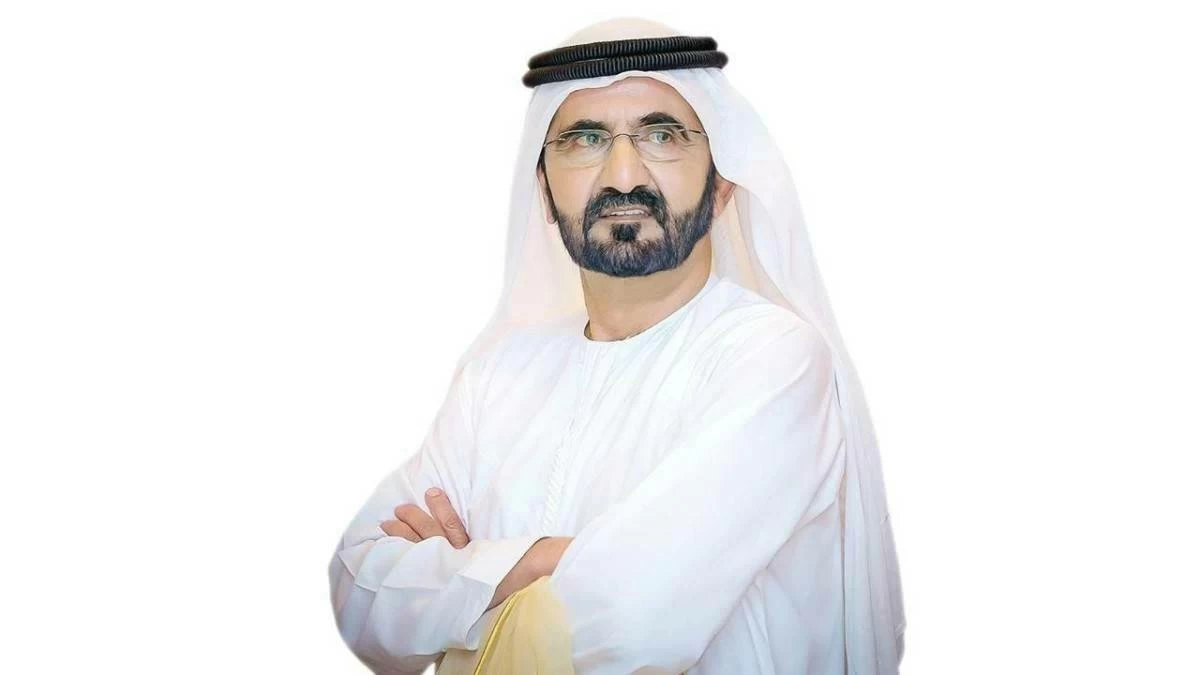
Dubai: His Highness Sheikh Mohammed bin Rashid Al Maktoum, Vice President and Prime Minister of the UAE and Ruler of Dubai, has outlined three key principles for young future leaders as they navigate a world marked by rapid and increasingly interconnected change.In a message addressed to his team, His Highness said leadership in the new world would be fundamentally different from the traditional models people have become accustomed to.“What got us here will not necessarily get us there,” he said, describing this as the first lesson future leaders need to understand.His Highness said technological change was no longer the only force reshaping the world at extraordinary speed, with political and economic shifts also accelerating and increasingly influencing one another.Artificial intelligence, for example, can increase productivity, which in turn affects labour markets. Changes in the labour market can influence countries’ social and political stability, while political decisions can then affect investment in technology, he explained.The challenge for future leaders, therefore, is not simply understanding change, but being able to operate amid several major changes taking place simultaneously.“The challenge is not the speed of change, but that many things are changing at the same time. This is our reality today,” His Highness said.He added that recent years had demonstrated just how interconnected the world had become. A software decision by a start-up could transform an entire industry, a discovery in a small laboratory could create a market worth billions of dollars, and a single social media post in one part of the world could shake markets elsewhere.Against this backdrop, His Highness outlined three principles for the next generation of leaders.1. Build organisations that can adaptThe future leader, His Highness said, should not focus solely on long-term plans or traditional five- and 10-year strategies. Instead, leaders should build organisations capable of adapting and teams capable of learning, unlearning and learning again.“Successful future leadership will be more about mastering readiness than the accuracy of prediction,” he said.Future leaders will not have certainty about what lies ahead and should therefore prepare their organisations for several possible scenarios rather than a single anticipated future.The most resilient organisations, he said, will be those that have the greatest number of options available to them.A leader’s strength will also no longer come primarily from accumulated knowledge and experience, but from the ability to ask the right questions.“If he believes he knows everything about the future, he will be one of its first victims,” His Highness said.2. Don't treat people as resources – unleash their ideasHis Highness urged future leaders to rethink the traditional concept of employees as “resources”.Machines can now write, store information, archive records, programme systems and monitor processes, he said. The importance of people lies elsewhere: in their creativity, imagination and ideas.“Ideas will be the organisation’s most valuable assets,” he said, adding that any employee could have an idea capable of dramatically changing an organisation’s future.“The future is the future of ideas.”His Highness contrasted traditional and future approaches to management, saying conventional leaders monitor employees, while future leaders free them to realise their potential.Traditional leaders fear employees' mistakes, while future leaders create environments in which people can experiment with new ideas. Similarly, while conventional leadership places a premium on discipline, future leadership should build trust and encourage initiative.“Every leader who kills the spirit of initiative destroys the future of their organisation,” he said.3. Speed up the journey from idea to executionThe third principle centres on speed.His Highness said organisations begin to fall behind when the pace of change becomes faster than their ability to respond.“In the past, making the wrong decision was the greatest risk for any organisation. Today, delaying a decision is the greatest risk,” he said.Future leaders do not have more hours in the day than anyone else, he added, but they can reduce the time between an idea and its execution – with artificial intelligence providing a powerful tool to accelerate that process.“History will reward those who move before certainty is complete. A good decision you make today is better than a perfect decision you make next month,” he said.Concluding his message, His Highness said the changes ahead would arrive much faster than people imagine.The future, however, could be brighter if organisations developed cultures built around adaptability, equipped their teams with continuous learning skills and created working environments that unleashed imagination and innovation.“The future will be more beautiful if we can build a culture of adaptability in our institutions, develop continuous learning skills among our people, and unleash imagination and innovation in our workplaces,” His Highness said.