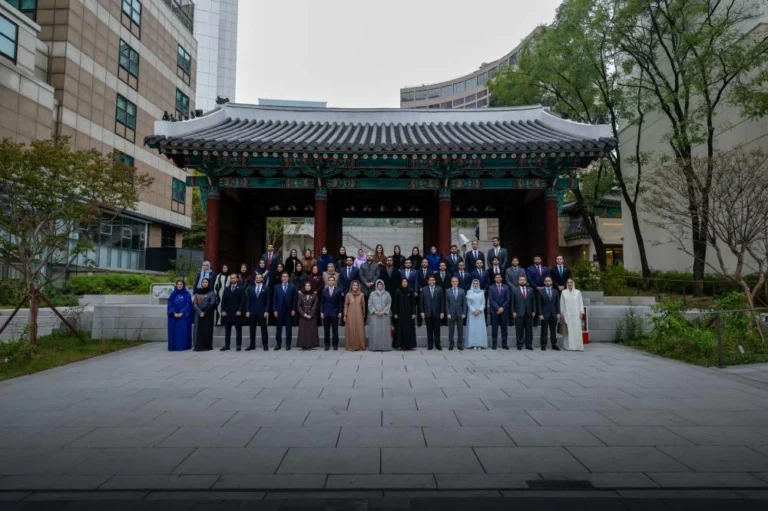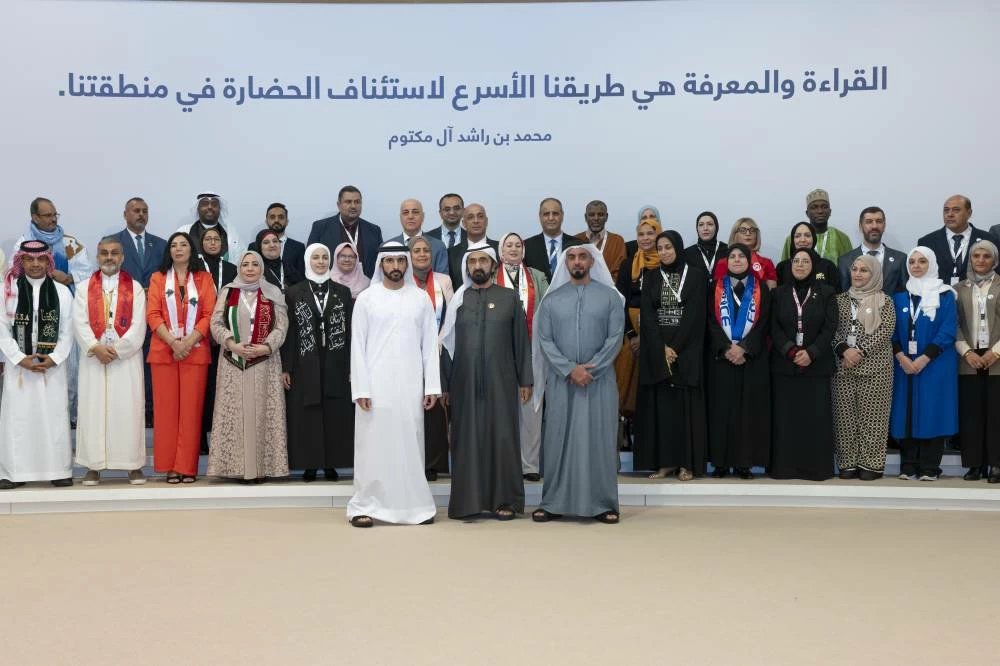
Dubai: His Highness Sheikh Mohammed bin Rashid Al Maktoum, Vice President and Prime Minister of the UAE and Ruler of Dubai, in the presence of His Highness Sheikh Hamdan bin Mohammed bin Rashid Al Maktoum, Crown Prince of Dubai, Deputy Prime Minister and Minister of Defence of the UAE, and Chairman of The Executive Council of Dubai, crowned Mayar Mohammed Ragab Othman from Egypt as the 10th Arab Reading Challenge Champion.
The closing ceremony of the 10th Arab Reading Challenge, held today at the Dubai World Trade Centre, also recognised winners in the Outstanding Supervisor, Best School, Community Champion and People of Determination Champion categories, as well as country-level winners of the world’s largest reading competition and initiative.
His Highness Sheikh Mohammed bin Rashid Al Maktoum said: “The Arab Reading Challenge is an inspiring cultural movement, in which we placed our trust in our students and in the quest for knowledge, aiming to foster a culturally conscious generation that excels in areas of science and intellect.”
His Highness added: “More than 40 million students participating in this tenth edition have proven that an educated human being is the true force in a changing world. We take immense pride in this promising generation. Our commitment to empowering human potential remains limitless and boundless.”
The closing ceremony was attended by His Highness Lt. General Sheikh Saif bin Zayed Al Nahyan, Deputy Prime Minister and Minister of the Interior; His Highness Sheikh Mansoor bin Mohammed bin Rashid Al Maktoum, President of the UAE Olympic Committee; and His Highness Sheikh Majid bin Mohammed bin Rashid Al Maktoum, alongside ministers and senior officials.
Record participation
This year’s Arab Reading Challenge, organised by Mohammed Bin Rashid Al Maktoum Global Initiatives (MBRGI), recorded the largest participation in its history, drawing 40,286,428 students from 60 countries, including 74,062 students in the People of Determination category.
Participation increased by 24% compared with the Challenge’s ninth edition and represented 48% of all school students across the Arab world. The 10th edition also engaged 138,426 schools and 161,507 supervisors.
With AED11 million awarded annually to winners and top participants, the total value of prizes awarded over the initiative’s 10 editions has reached AED110 million.
The 2026 Arab Reading Challenge Champion, Mayar Othman, received AED500,000 after prevailing in the final qualifying round, which brought together country-level winners in Dubai. Ghazal Rashad Adel Tayyem from Palestine secured second place, receiving AED100,000, while Rayan bin Adeeb Ali Al Zakeri from Saudi Arabia claimed third place and received AED70,000.
Country-level champions who reached the final round of the 10th Arab Reading Challenge were Khadija Bumelik (Morocco), Bana Omar Abdullah (Syria), Omar Mohammed Al Ameri (Qatar), Nour Osama Al Kandari (Kuwait), Lujain Ahmed Abed (Iraq), Mayar Mohammed Ragab Othman (Egypt), Sondos Mohammed Al Sayyed Rehab (Al Azhar Al Sharif), Ghazal Rashad Adel Tayyem (Palestine), Raneem Murshid Al Darweesh (Bahrain), Rayan bin Adeeb Ali Al Zakeri (KSA), Aya Mahmoud Mansour Al Tahat (Jordan), Di Shaikhen Al Zamraki (Mauritania), Danah Adel Al Zarouni (UAE), Yasmin Abdulhamid Al Butti (Libya), Baha Maymouni (Tunisia), Manissa Bilal Abu Mahmoud (Lebanon) and Mejalli Abdulrahman Ali Abdullah (Yemen).
Outstanding Supervisor
His Highness Sheikh Hamdan bin Mohammed bin Rashid Al Maktoum awarded the Outstanding Supervisor title to Fakhri Mahmoud Mayyas from Jordan, who received AED300,000. Budoor Faleh Meteb Al Asqa from Kuwait placed second and received AED100,000, while Aysha Al Atawi from Bahrain came third and received AED50,000.
Country-level winning supervisors included Ezzeddine Al Muwansi (Morocco), Alaa Nasser Sharookh (Syria), Hisham Badreddine Al Sayyed (Qatar), Budoor Faleh Meteb Al Asqa (Kuwait), Dalia Hassanin Ahmed (Egypt), Bani Suwaif area (Al Azhar Al Sharif), Ahed Saleh Aburrob (Palestine), Aysha Al Atawi (Bahrain), Hanan Ali Al Hazemi (KSA), Fakhri Mahmoud Mayyas (Jordan), Mohammedo Mohammed Al Amin Mohammed Al Sheikh (Mauritania), Naima Al Amiri (UAE), Awatef Ali Al Shaheyye (Libya), Munir Al Furaiji (Tunisia), Haidar Mushawrab (Lebanon) and Intisar Hassan Amer Al Awadi (Yemen).
Community Champion
His Highness Sheikh Hamdan bin Mohammed bin Rashid Al Maktoum awarded the Community Champion title to Sohaib Majd Mohammed from New Zealand, who received AED100,000. Hala Adib Al Rzouq from Malaysia placed second and received AED70,000, while Mohammed Shahinshah Nadamurikkal from India came third and received AED30,000.
Finalists in the category included Omar Mohammed Abdulkhaleq Mohammed (Australia), Rayhan Mohammed Al Mohammed Al Sheikh (Brazil), Mais Saed Hassan Abu Ajwa (China), Massa Abdein (Germany), Suad Al Miqdad (Norway), Sarah Al Ali (Austria), Aline Al Asad (USA), Nousa Al Sherbini Ibrahim (Greece), Yara Ali Abu Farah (Italy), Yousef Abdullatif Deeb (UK), Lana Mohaimeed (Belgium), Omar Erdogan (Türkiye), Owais Al Haidari (Russia), Massa Jandal Al Refai (Scotland), Ali Aked Saeed Mohammed Ali (Switzerland), Neyan Al Maleki (Finland), Omar Mohammed Essam Mohammed Al Sheikh (Canada), Sondos Al Khateeb (Luxembourg), Hala Adib Al Rzouq (Malaysia), Sohaib Majd Mohammed (New Zealand), Nadeem Al Omar (France), Renad Raed Shalar (The Netherlands), Mohammed Shahinshah Nadamurikkal (India), Hiba Basel Saleh Abbas (Ireland), Mohammed Reda Eid (Sweden), Julina Feras Hamza (Denmark), Hashem Mohsen Mohammed Mohsen Al Haddar (Indonesia), Ramadan Hajji Nebbo (Ethiopia), Yasmin Nour Abdi Abdeulrahman (Somalia), Kholoud Khalil Mubarak (Niger), Ishaq Al Sheikh Farid (Benin), Meryah Salem Dawoud (Tanzania), Kwitonda Dhahab (Rwanda), Juwaida Abbas Mohammed (Zanzibar), Alhaj Falo Sisi (Senegal), Zaid Abdulmalik Kenkale (Kenya), Nakayiwa Khansaa Qassim (Uganda) and Ahmed Mohammed Mousa Wassef Hussein (Colombia).
Introduced at the conclusion of the Challenge’s second edition, the Community Champion category allows students from Arab communities abroad, as well as non-Arabs learning Arabic, to participate.
Throughout the 10th edition and during the finals, students underwent an oral examination in which they summarised the key themes of the 25 books they had read, demonstrating their command of Standard Arabic.
The judging panel evaluated each student’s vocabulary and ability to articulate ideas in their own words.
Best School
His Highness Lt. General Sheikh Saif bin Zayed Al Nahyan awarded the Best School title to Sidi Amer School from Tunisia, which received AED1 million.
Martyr Mahmoud Al-Maghrabi Primary School from Egypt placed second and received AED500,000, while Al Yarmouk High School for Girls in Kuwait came third and received AED300,000.
Country-level winning schools included Lycée Qualifiant Moulay Idriss (Morocco), Al Maha Academy for Boys (Qatar), Al Yarmouk High School for Girls (Kuwait), Martyr Mahmoud Al-Maghrabi Primary School (Egypt), Al Israa Private High School for Boys (Palestine), Saar Secondary School for Girls (Bahrain), Al Aziziyah Private Primary School for Girls (KSA), Al-Khalidiyah Secondary Comprehensive Mixed School (Jordan), Afaaq Al Mostaqbal School (Mauritania), Hamad bin Abdullah Al Sharqi School – Cycle 3 (UAE), Sidi Amer School (Tunisia), Sisters of Saint Joseph School (Lebanon) and Al Nawras School (Yemen).
People of Determination
His Highness Lt. General Sheikh Saif bin Zayed Al Nahyan honoured Mahmoud Imran from Syria with the 2026 People of Determination Champion title and a prize of AED200,000. Enas Mohammed Ahmed Sumeirat from Jordan placed second and received AED100,000, while Rawan Ashbooli from Tunisia came third and received AED50,000.
Country-level winners in the category included Hamza Kameli (Morocco), Mahmoud Imran (Syria), Lina Mohammed Farouq (Qatar), Abdullah Mahmoud Al Mutairi (Kuwait), Sajjad Hassan Mohammed (Iraq), Mohammed Abduljawad Abdulnabi Nagdi (Egypt), Mohammed Al Amir Zakariya Riyad (Al Azhar Al Sharif), Ghazal Ismail Sidqi Daraghmeh (Palestine), Batool Al Sayyed Rida Sharaf (Bahrain), Luma bint Yousef Mohammed Qassadi (KSA), Enas Mohammed Ahmed Sumeirat (Jordan), Yousef Mohammed Saeed Hamed (UAE), Rawasi Ramadan Belqasem (Libya), Rawan Ashbooli (Tunisia), Ahmed Ali Qutaish (Lebanon) and Sana Mahmoud Hassan Al Humairi (Yemen).
The People of Determination category was introduced during the Challenge’s seventh edition to amplify participants’ presence on the Arab cultural scene and support their positive integration into society. Participants are required to read 25 books.
The category offers students the opportunity to showcase their potential and motivate others, having demonstrated determination and perseverance over the past four editions.
Inspiring a unique cultural phenomenon
His Excellency Mohammad Al Gergawi, Secretary General of MBRGI, affirmed that the Arab Reading Challenge continues to build on its success, reflecting the vision of His Highness Sheikh Mohammed bin Rashid Al Maktoum to empower a new generation that believes in its ability to shape a future anchored in knowledge and learning, with a deep understanding of the role of reading in preserving the Arabic language and creatively engaging with Arab and global cultures.
His Excellency said: “Over 10 editions, the Arab Reading Challenge has created a unique cultural phenomenon, reinforcing MBRGI’s commitment to driving the initiative toward even greater levels of impact and reach.”
The 10th Arab Reading Challenge finalists arrived in Dubai a few days ago and were welcomed by the Arab Reading Challenge team, which organised an itinerary taking participants to Dubai’s main cultural landmarks and world-famous attractions.
Global acclaim
The Arab Reading Challenge has received worldwide acclaim as an inspiring model for nurturing and empowering younger generations.
Reflecting the Challenge’s status and impact, His Excellency Shavkat Mirziyoyev, President of the Republic of Uzbekistan, launched the Uzbek Reading Challenge, a national initiative aimed at fostering a culture of reading and knowledge among the younger generation. The initiative forms part of the strategic partnership between the UAE and Uzbekistan in government experience exchange.
The Uzbek Reading Challenge is an extension of the Arab Reading Challenge, drawing inspiration from its success. It aims to highlight the country’s rich legacy as a historic centre of Islamic knowledge.
Expanding reach in the Arab world
The Arab Reading Challenge continues to earn widespread acclaim across the Arab world. On 18 December 2024, the League of Arab States called on education ministries across Arab countries to adopt the Challenge as part of their curricula and support its dissemination and development.
Marking World Arabic Language Day, the League stated that the initiative is a leading knowledge and cultural project that strengthens Arabic as the vessel of Arab heritage and identity.
In April 2025, the Arab Reading Challenge participated in the 30th Rabat International Book Fair, one of the largest cultural fairs in Africa and the Arab world. The Challenge’s pavilion attracted strong engagement, welcoming more than 5,000 visitors.
The Arab Reading Challenge also participated in this year’s 57th Cairo International Book Fair, one of the Arab world’s leading cultural events, with its pavilion receiving 50,000 visitors.
Far-reaching impact
A recent joint study by MBRGI and UNESCO measuring the impact of the Arab Reading Challenge since its launch in 2015 documented significant increases in participating students’ reading habits, language skills and self-confidence.
Out-of-school reading time increased from less than one hour per week before participation to more than four hours per week, equivalent to nearly 200 hours annually. The average number of books read by each student annually increased from eight to more than 40.
Regular weekly reading rose to more than 80% among participants. Self-confidence increased by 96%, while 70% of participants reported easier access to paper and e-books.
The proportion of students reading more than 50 books annually increased by 147% after joining the Challenge, while daily or near-daily reading increased by 122%. Of those participating, 48% started borrowing books, 41% bought new books and 30% joined book clubs.
Key findings showed that 93% of participants improved their Arabic language proficiency across reading comprehension, writing, vocabulary and style, while 71% reported feeling a stronger connection to their heritage.
Since its launch, the Arab Reading Challenge has drawn more than 203 million students, over 1.065 million schools and a total of 1.193 million reading supervisors across its 10 editions.
Participation in the 10th edition increased by 1,019% compared with the inaugural edition, which attracted 3.6 million students.
The ninth edition brought together 32.231 million students from 50 countries, representing 132,112 schools under the guidance of 161,004 supervisors. The main title was awarded to Tunisian twins Bisan and Baylasan Kouka, while Maria Hassan Ajil from Iraq took first place in the People of Determination category.
The Outstanding School title was jointly awarded to Atika Bint Zaid School (Cycle 1) from the UAE and Tarablus Al Haddadin School from Lebanon. Sahar Misbah from Egypt was named Outstanding Supervisor, while Jehad Mohammad Murad from Italy took first place in the International Communities category.
Inspiring a passion for knowledge
The Arab Reading Challenge was launched by His Highness Sheikh Mohammed bin Rashid Al Maktoum in 2015 as the largest-ever Arab literacy initiative. It aims to promote reading among students across the Arab world and beyond, strengthen language skills such as comprehension and clear self-expression, and nurture young Arabs’ love of the Arabic language and its everyday use.
The initiative seeks to foster a lasting passion for knowledge and reading among new generations, equip them with the tools to create a better future and help build their character. It also aims to shape young people’s values by exposing them to the customs, beliefs and traditions of other cultures, promoting the principles of tolerance and coexistence.