In a nation’s collective memory, heritage and lived experience do not sit side by side. They fuse. They form an identity that cannot be erased and a leadership that does not easily lose its footing. On Saudi National Day 96, which will be marked on Sept. 23, the slogan “Our pride is in our nature” returns with new force. It reminds us that the dignity of nations is not borrowed. It grows from a clear understanding of who they are — and from the skill of turning a civilizational inheritance into the language of the present.
National identity is not a festive costume. It is a living system of thought, culture and politics built across centuries of trial, adaptation and construction.
When we look at strategic leadership in the public realm, one fact becomes clear: leadership styles are not imported ready-made. They take shape inside history, cultures and social worlds. Leaders in the Arabian Peninsula, and in Saudi Arabia above all, have long displayed qualities fitted to their own environments: adaptability, resilience and a talent for seizing opportunity at local, regional and global scales.
It is necessary to recall how colonial inheritance reshaped governing structures across much of the world. Western powers, over centuries of expansion, imposed values and systems on people for whom those values were never part of their cultural story. The result was often leadership models that ignored or suppressed local symbols. Aggressive nationalism and recurring conflicts followed, as those same powers sought to keep their dominance.
Contemporary Saudi leadership demonstrates that there is no contradiction between authenticity and modernity
History, however, is not read from one angle alone. The Arabian Peninsula produced leadership experiences that joined authenticity with modernity, the local with the global. Leadership here was never a carbon copy of Western templates. It was always an intelligent translation of local reality.
As the geopolitical landscape changed, the idea of strategic leadership itself had to be revisited. Distinguished leaders from this region have displayed a spectrum of leadership marked by independence and by tangible developmental success.
Consider Imam Saud bin Abdulaziz bin Muhammad Al Saud, known as Saud the Great, and his senior counselor Sheikh Jabr bin Rashid in the First Saudi State or Imam Faisal bin Turki and his principal military arm, Prince Abdullah bin Rashid. They skillfully combined religious, tribal and economic elements in their strategies, even under harsh conditions and scarce resources. Yet a limited grasp of external dynamics constrained the early state’s success. That remains a fundamental strategic lesson: internal strength is not enough without a sophisticated reading of the international environment.
Later leaders understood the need to add the external dimension to the equation of rule, especially after the peninsula faced its first external invasion. That deeper understanding continued with King Abdulaziz, who maneuvered with great skill through the complexities of world politics and built alliances that placed the nation strategically on the global stage. Historic Saudi leadership was never isolationist. It was interactive. It built bridges to the world without losing its roots.
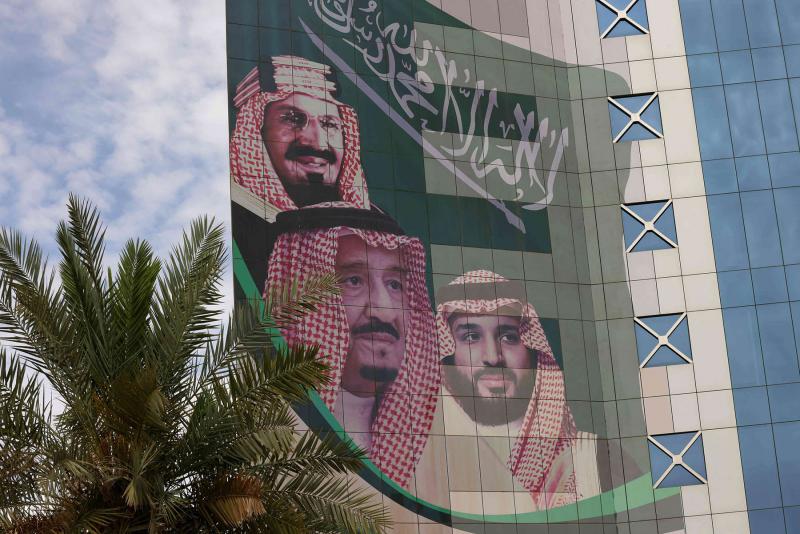
Today, King Salman and Crown Prince Mohammed bin Salman show a firm commitment to reform and sustainable development. They renew the domestic landscape while steering the nation strategically away from international conflicts that do not serve its interests. Vision 2030 is not merely an economic plan. It is a recasting of national identity in a changing world. It shows that a nation can act as a global player without surrendering its distinctive character.
A strong identity comes from conscious openness. Preserving a culture means reproducing it in every generation
True pride comes from knowing one’s own nature — and from the ability to hold authenticity and modernity together, the local and the global, the preservation of identity and openness to others.
This approach reflects a deep understanding of leadership in an age of globalization. Globalization is often treated as an economic force that turns countries into interconnected markets. It also demands cultural exchange and adaptation. That process can flatten cultures. It can also create space for dialogue and for the protection of local identities — provided leaders remain conscious of their own symbols and of who they are.
Leadership in the Arabian Peninsula is not uniform. Religion, tribal belonging and the pursuit of economic growth all play decisive roles in effective rule. As the strategy of Ardashir, founder of the Sasanian Empire, put it: “The king remains by religion, and tax is the pillar of the king.” The point is the same: the philosophies and strategies of government must align with the values of the people.
In the Saudi context, this complexity appears in the leadership’s capacity to preserve Islamic values and authentic Arab traditions while driving economic and social development. Contemporary Saudi leadership demonstrates that there is no contradiction between authenticity and modernity. There is integration, born of a deep reading of society and of its aspirations.
In this crowded global landscape, especially for developing economies, mixing local wisdom with the best global practices is essential. Western experience itself shows how rapid globalization can weaken local culture unless local leaders promote and protect their own symbols with intention.