Lebanon has never had, nor does it currently possess, the ability to influence major developments in the region and its surroundings. Meanwhile, the political sphere is largely committed to waiting to see the outcome of efforts to form a new Israeli government, whether Benjamin Netanyahu can be permanently sidelined in the coming phase, and the results of the U.S.-Iranian wrangling, especially after the electoral earthquake in the United States.
While many politicians fear a decline in the momentum of the framework agreement signed by Lebanon and Israel under U.S. auspices because of the nature of recent developments and their repercussions, they also believe that Lebanon did not make good use of the direct interest shown by U.S. Secretary of State Marco Rubio in the Lebanese file over the past few months.
They believe that the situation will remain pending until it becomes clear whether Gadi Eizenkot, tasked with forming a new Israeli government, succeeds, and what approach he will adopt towards southern Lebanon. They are also watching whether he will seek to implement the framework agreement by advancing the security arrangements stipulated in it, in line with his commitment to implementing U.S. President Donald Trump’s agreement concerning Gaza.
At the same time, they do not overlook the repercussions of giving negotiations between the United States and Iran another chance, with varying estimates over whether they will help the Lebanese state or come at its expense.
Meanwhile, Lebanon has so far lost much of the trust of its external friends, at least regarding its ability to successfully regain control and possess the capacity to do so, contrary to what is announced and repeatedly stated on the matter. Domestically, there is no more trust in the state and its institutions from within than there is from external sources, revolving around the traditional Lebanese pattern of recycling crises and problems without solving them.
Many politicians criticize the nature of this waiting phase, including the inevitable and forced waiting imposed by current circumstances, and question what Lebanon is doing during this period to bring about even partial changes to the internal scene and keep pace with repercussions that could be very serious.
There is an interactive reality in southern Lebanon, marked by continuous protests, particularly among the Shiite community, rejecting being dragged back into, or bearing the cost of, regional wars and external interests. This aligns with what both the President and Prime Minister have announced in this context.
These politicians see the need for official investment in out-of-the-box approaches and through dialogue channels with "Hezbollah," ranging from unilateral to bilateral steps aimed at controlling the reality of the south alone. They believe there is no other pathway to reassert the state's presence, ensure security and restore life to southern towns and villages.
The issue is not only connected to the party's arms and their removal, for which Lebanon is believed to be obliged to find a solution regardless of the nature of the security arrangements that assure Israel in the south. The party itself is involved in this through the statement of its Secretary-General regarding the implementation of the November 27, 2024 agreement and Resolution 1701, with the view that the party's withdrawal should be limited to south of the Litani River and that Israel should be provided guarantees in this regard.
It is believed that this matter is, at least externally, resolved, and that the party's arms have become a purely internal problem.
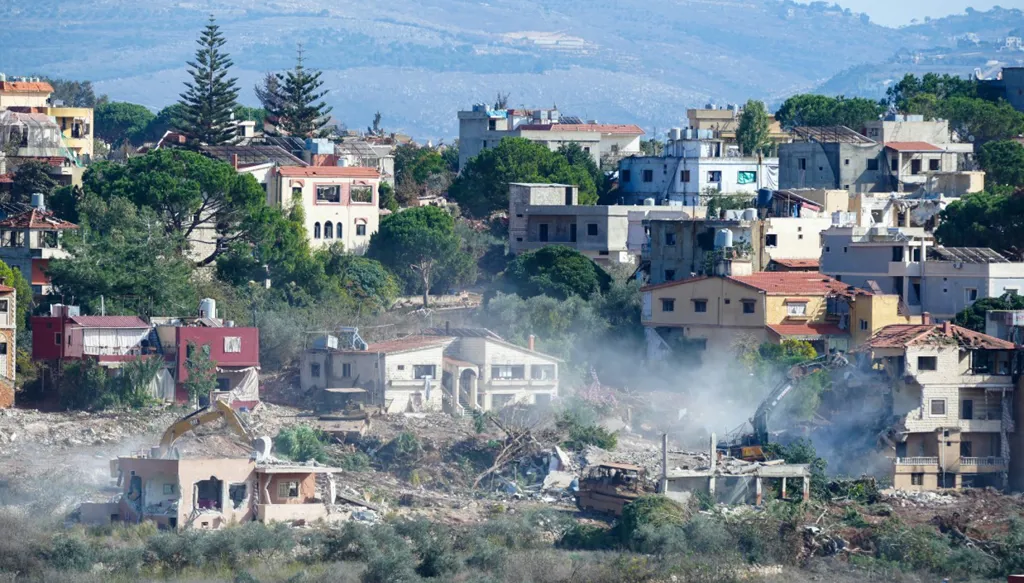
When southerners recount the ordeal of visiting their homes in Israeli-controlled areas and the humiliating procedures they undergo, the issue is not to question whether the occupation exercises its authority in the ugliest ways to protect itself, its sites and its "victories." Rather, the problem is what the party has exposed the south and its people to, the risks of any new war, and the responsibility of the state to find alternatives that would assist the current UNIFIL in cutting off the path of this ordeal.
These points themselves constitute a multi-faceted dilemma that may be confined to the situation in the south, while Lebanon as a whole is in the throes of deep trust erosion regarding the potential of what is being proposed to the country in terms of challenges. This comes especially amid a long and very costly waiting period for Lebanon, with serious repercussions, and questions over the ability of those responsible for the situation to innovate solutions if no external support opportunities are available, which may not be present in the foreseeable future.
Disclaimer: The opinions expressed by the writers are their own and do not necessarily represent the views of Annahar.