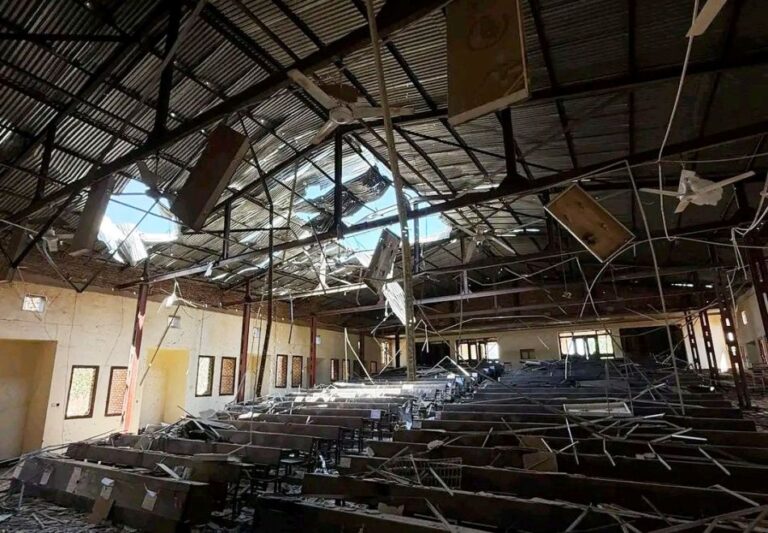
Negotiations to cement the ceasefire in southern Lebanon, alongside talks on the future of the south, the role of the Lebanese army and international guarantees, are raising a central question: Is Lebanon heading toward a repeat of the model that followed the July 2006 war, or has the latest conflict pushed it into a wholly different phase? Nearly two decades after the 2006 war led to UN Resolution 1701, the deployment of the Lebanese army south of the Litani River and a long effort to regulate the confrontation between Israel and Hezbollah, today’s conditions look starkly different. The scale of destruction in the south is deeper, and the international approach to what comes next appears more forceful. Speaking to Asharq Al-Awsat, university professor and lawyer Ali Mourad said the reality on the ground, away from “point-scoring speeches and declarations of victory,” demands a new reading of the war and the future of the south. The south, he said, remains occupied, devastated on an unprecedented scale, and trapped in a displacement crisis likely to drag on. Israel targets Tyre (Reuters) “Talk of ending the conflict in Lebanon can only be achieved through a set of basic goals: ending the war definitively, withdrawing Israeli forces from occupied Lebanese territory, returning prisoners, launching reconstruction and securing the safe and sustainable return of displaced people to their areas,” Mourad said. Mourad, who comes from the southern border town of Aitaroun, said the main fear was “Iran’s attempt to take hold of the Lebanese file.” Such a move, he said, could prolong the management of the conflict rather than end it, keeping the roots of tension alive and blocking a final, stable settlement. Hezbollah’s weapons at the heart of the deadlock Mourad said there would be “no real end to this conflict without a clear and decisive handling of Hezbollah’s weapons.” Leaving the issue unresolved, he said, would place Lebanon before a model entirely unlike the one that followed the 2006 war. Comparing the two phases is no longer realistic, he added, given the changes now in place. “The south today is destroyed on an unprecedented scale, while the battlefield and military realities clearly show that the existing equations are difficult to overturn in the foreseeable future,” he said. That reality, Mourad said, requires sustainable political solutions that address the roots of the crisis, rather than simply managing it. Ending the conflict, he added, depends on resolving the core unresolved issues, not merely halting military operations or containing current tensions. “Any approach that does not address the causes of the crisis will lead to its reproduction in one form or another,” he said. Israel targets Tyre (AFP) The post-2006 phase is over Retired Maj. Gen. Hisham Jaber, head of the Middle East Center for Studies, said the situation in southern Lebanon “differs radically from the phase that followed the July 2006 war.” Talk of returning to the formulas of Resolution 1701 as applied then is no longer realistic, he said, given the military and political changes produced by the latest war. “What happened after 2006 is completely different from what is happening today,” Jaber told Asharq Al-Awsat. “At that time, Israel quickly withdrew from the Lebanese territory it had occupied, and political and diplomatic tracks were launched with broad Arab and international support. Today, Israel is holding on to the areas it occupies and does not seem ready to give them up easily.” A photograph taken from the southern Lebanese region of Marjayoun shows smoke rising following an Israeli airstrike on the village of Choukine on June 19, 2026. (Photo by AFP) Jaber said Israeli Prime Minister Benjamin Netanyahu faces domestic pressure that pushes him to keep the war going and avoid concessions. “Netanyahu cannot appear as someone who fought a long war that ended without clear gains,” he said. “Continuing military pressure is therefore a way for him to improve negotiating terms and force the Lebanese position into submission.” A pause, not an end to war Jaber, who is from Nabatieh, said the current situation does not amount to a comprehensive end to the war. Rather, he called it “a temporary halt to some military operations.” Israel, he said, still claims the right to strike whenever and wherever it chooses against targets it considers linked to Hezbollah. “The Israelis say clearly that they retain freedom of military action in Lebanon,” he said. “So we cannot speak of an end to the war as much as we can speak of managing the conflict and controlling the level of confrontation.” Jaber said the comparison with 2006 no longer stands. “The post-2006 phase is over,” he said. “We are facing a completely different new reality, and Israel will not accept a return to the previous equations or to the situation that existed before the latest war.” Washington manages the conflict Jaber said the United States is managing the conflict more than trying to end it. “If it wanted to end it completely, it would have applied sufficient pressure to stop the war definitively,” he said. “What we are seeing today is conflict management and an attempt to prevent it from exploding, nothing more.” Israel, he said, is treating the border strip and destroyed villages as “a buffer security zone.” “There are dozens of villages that are almost completely destroyed, and their residents cannot return because of the scale of destruction and the absence of reconstruction capacity, making the crisis likely to continue for a long time,” he said. The aftermath of a bombing in the Eastern sector of South Lebanon Fronts (AFP) A difficult test for Lebanon’s army On the Lebanese army’s role, Jaber said the military faces challenges that exceed its current capabilities. Some proposals under discussion, especially those related to moving Hezbollah fighters away from areas south of the Litani, cannot be carried out without a full Israeli withdrawal and clear security guarantees, he said. “The army cannot be asked to carry out unilateral measures while Israeli occupation continues and attacks persist,” he said. “This is unrealistic, and the army cannot resolve the problem alone in this way.” Jaber said the next phase would remain governed by mutual attrition. “We are facing a phase of managing the conflict, not ending it,” he said. “I do not expect a major breakthrough in the foreseeable future. The war has effectively turned into a low-intensity war of attrition between Israel and Hezbollah, but the real price is being paid by the Lebanese people, especially the people of the south, who have been drained by war, displacement and destruction.” Talks unlike any earlier phase While Jaber’s view starts from the military and field realities created by the latest war, Brig. Gen. Khaled Hamadeh, a researcher in security and political affairs, links the future of this phase to the negotiations themselves. He said the talks differ radically from all previous rounds, and that their success remains tied to US-Iranian understandings. Hamadeh told Asharq Al-Awsat that the current negotiations between Lebanon and Israel are unlike the 2000, 2006 or 2024 arrangements linked to Resolution 1701. “The military, political and regional circumstances have completely changed, while the outcome remains tied to the path of US-Iranian dialogue,” he said. “In 2000, indirect negotiations took place between Hezbollah and Israel with German mediation to implement Resolution 425. Israel withdrew without conditions, and the border was demarcated. Today, the scene is completely different because the Lebanese state is conducting the negotiations, not the party.” After the 2006 war, he said, Resolution 1701 called for UNIFIL to deploy alongside the Lebanese army south of the Litani, with a mechanism to monitor implementation and prevent any armed presence outside the state in that area. “But this mechanism later proved ineffective, and war returned and fighting resumed,” he said. Hamadeh said the current process is not a new international resolution, but understandings based on Resolution 1701. The difference, he said, is that they are being built through negotiations led by the Lebanese state, with security responsibility gradually shifting to the state after earlier monitoring mechanisms failed. “The main difference today is that the negotiations are moving toward ending the conflict,” he said. The latest US memorandum, he added, speaks for the first time of ending the state of war between Lebanon and Israel and addressing border issues between the two states — points not included in Resolution 1701. From Resolution 1701 to the armistice agreement “If we compare the current texts with the 1949 armistice agreement, we find a great similarity,” Hamadeh said. The armistice agreement, he said, was based on a commitment by Lebanon and Israel not to use regular or irregular forces in military action against the other side. Today, he added, the principle being established is that the Lebanese state alone should assume responsibility for security, and that no weapons should remain outside its framework. Hamadeh also pointed to a major difference on the ground. “In the 2006 war, Israeli military achievements were limited, and Israeli forces did not penetrate deep into Lebanese territory in the way that has happened today,” he said. “In the latest confrontation, Israeli forces went beyond southern Litani and reached deeper areas, while Hezbollah suffered major field losses, making the balance of power completely different from what it was in 2006.” US-Iranian understanding remains decisive Hamadeh said the current agreement is also unfolding “under a US-Iranian understanding,” a factor that was absent in earlier phases. Iran’s role in the Lebanese file, he said, has become deeper and more influential than before. On the chances of success, Hamadeh said it was “far too early” to speak of definitively ending the conflict, because the Lebanese negotiations cannot be separated from the US-Iranian track. “We must wait to see where those talks lead, and only then can we judge their repercussions for Lebanon,” he said. “If the US-Iranian negotiations fail, Iran may return to using the Lebanese arena again. Therefore, the most influential element in the scene has not yet stabilized, and no final results can be built before the picture becomes clear.” Hamadeh said any disruption in implementing the proposed understandings — whether on cementing the ceasefire, full withdrawal, or Hezbollah’s weapons — would lead to another round of fighting. “Any agreement that is not completed through the implementation of all its stages will not be viable,” he said.