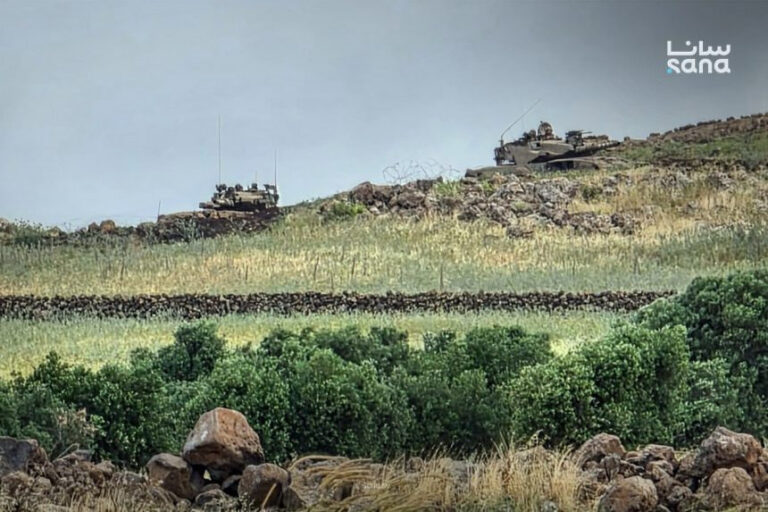
The Lebanese army on Sunday condemned ongoing Israeli military activities in the country's south that it said were preventing its full deployment under a framework deal reached with Israel last month. "Israeli occupation forces continue their attacks and violations of current understandings and of international laws through the systematic destruction and bulldozing of homes, bombardment and sweeps with automatic weapons in several southern areas," an army statement said. "The continuation of these attacks obstructs the army's full deployment according to current agreements and prevents the return of residents to their villages and towns," it added. Under a US-sponsored agreement signed last month, Lebanon's army is to disarm Hezbollah and the Israeli military is to withdraw from "pilot zones" where Lebanese forces will subsequently deploy. The deal came more than three months after Hezbollah drew Lebanon into the Middle East with rocket fire at Israel in support of Tehran, triggering major Israeli airstrikes and a ground invasion that Lebanese authorities say have killed more than 4,300 people. First responders deploy near a heavily-damaged mosque in the village of Zawtar al-Gharbiyeh in southern Lebanon on July 26, 2026. (AFP) Lebanon's army also accused Israeli soldiers of "opening fire near army positions in Kfar Tibnit, Nabatieh al-Fawqa and Zawtar al-Garhbiyeh, which hinders the implementation of its missions". While violence has declined since the signing of a US-Iran memorandum last month on the regional conflict, and the Lebanon-Israel framework deal, Lebanon continues to report intermittent Israeli strikes and artillery shelling on the south, as well as the detonations of buildings in southern villages. This week, Lebanon's army began deploying to Zawtar al-Gharbiyeh, one of the "pilot zones" under the framework agreement, and in recent days local residents have begun checking on their homes there. Israeli forces were previously present on the outskirts of the village. An AFP correspondent on Sunday saw heavy damage and Lebanese soldiers in the streets as some residents inspected their homes. "When I entered my home, I felt sadness. The destruction hurt me," said resident Ihsan Yaghi, surrounded by walls blackened from fire and rooms strewn with debris and rubble. "Our homes used to be filled with life," she told AFP, but vowed that "we will rebuild." A Lebanese soldier stands in front of a destroyed house after deploying in the village of Zawtar al-Gharbiyeh, southern Lebanon, Sunday, July 26, 2026. (AP) "We stand with the (Lebanese) army," she said, adding that "we want to feel safe. It's time for the state to take care of us, we're tired." The army statement said its soldiers "continue to accompany the return of residents" to Zawtar al-Gharbiyeh. The military's deployment in the south is a key test for the government, with Hezbollah refusing to disarm. In a meeting last week with US President Donald Trump at the White House, Lebanese President Joseph Aoun emphasized "the urgent need for a full Israeli withdrawal from Lebanese territory". Hezbollah, meanwhile, continued to criticize the Lebanese authorities over the framework agreement. Member of the party’s parliamentary bloc MP Hassan Fadlallah said the state “was unable to stop the Israeli attacks or make such a goal a priority in its political and diplomatic efforts.” He added that Israel continues to exploit the framework agreement to maintain its occupation and violations. “Priority should be the liberation of remaining occupied land, the return of residents to their villages, the reconstruction of damaged areas and ending the Israeli attacks,” he went on to say. Moreover, he said the Hezbollah was not in a confrontation with the Lebanese army. “The main confrontation remains with Israel,” he stressed, while reiterating the party’s opposition to the Lebanese state’s policies. The party is committed to civil peace and rejects any internal clash, the MP asserted.