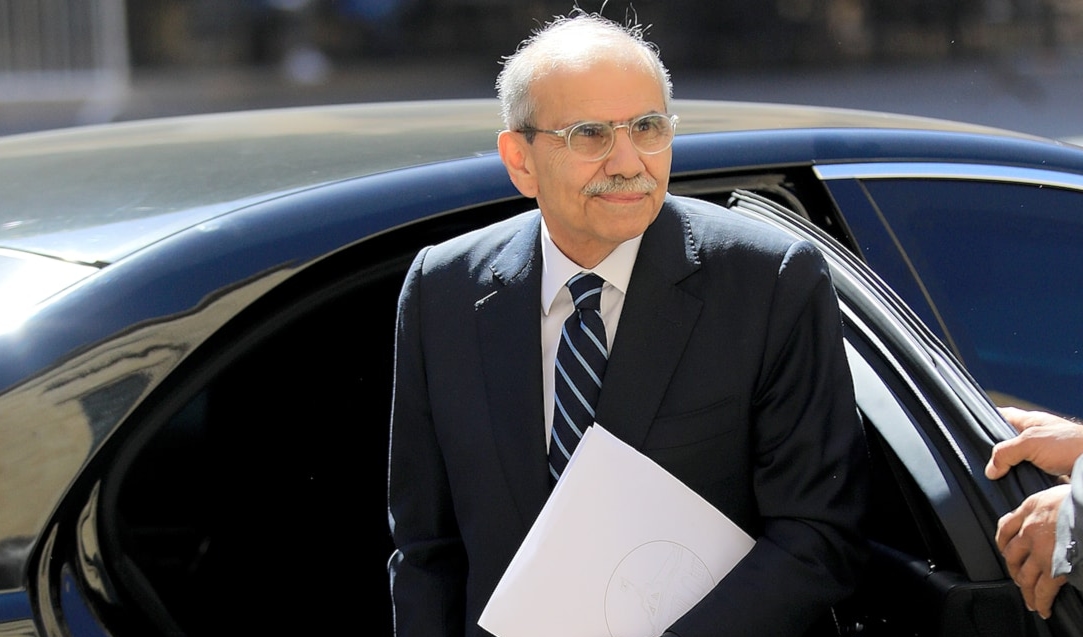
Prime Minister Nawaf Salam does not want his visit to the US to appear as a mere follow-up to President Joseph Aoun’s trip. Nor does he want to be seen as waiting for Baabda to relay the outcome of US contacts. His movements between New York and Washington therefore serve a domestic political purpose alongside the official agenda. He wants to assert the prime minister’s role as a partner in managing Lebanon’s foreign policy and show that he is present alongside Aoun in discussions shaping the next phase. Salam arrives after Aoun’s Washington visit as the debate moves from how to stop the war to what a settlement might look like. One of his aims will be to complete the picture emerging from the president’s meetings and determine whether Washington has settled on its vision for the next stage, particularly the relationship between the framework agreement and UN Security Council Resolution 1701. This is not merely a dispute over terminology. The distinction could largely determine who manages the next phase, as well as its conditions and mechanisms. People familiar with the talks say there are few signs that Salam’s visit will produce exceptional results. They note that Aoun returned to Beirut without tangible gains. For two weeks, Aoun has expressed disappointment over Washington’s inability to restrain Israeli escalation or secure reciprocal steps, as happened with the proposed pilot zones. After New York, Salam is expected in Washington to meet Secretary of State Marco Rubio. Prince Yazid bin Farhan helped facilitate the meeting. Other contacts are also being arranged, including a meeting with Republican Senator Ted Cruz. Salam needs to determine how Washington views three key issues, namely the Israeli withdrawal, the deployment of the Lebanese army and the question of weapons. Does Washington see them as parallel tracks? Or does it expect Lebanon to fulfill its commitments first, while leaving withdrawal dependent on Israel’s assessment that the security threat it cites has been removed? Sources following the talks say negotiations are taking place as Israel continues to alter facts on the ground in South Lebanon and expand its military control. The so-called yellow line is gradually becoming more than a field measure. It could become a bargaining tool in future negotiations. Israel wants to move beyond Resolution 1701 toward an agreement that would legitimize linking its full withdrawal to disarmament across Lebanon. That would go beyond the area south of the Litani, as stipulated in the October 27 agreement. A friendly message from Washington does not stop an Israeli incursion. It does not return a village to its residents. And it does not compel a withdrawal. The issue is becoming more complicated as the post-UNIFIL phase approaches. Discussions over the force or arrangement that would replace UNIFIL are inseparable from the dispute over the governing framework. The question is not only who will fill the gap. What mandate would the force have? Who would authorize it? Where would it report? How would it interact with the Lebanese army and Israel? If Resolution 1701 loses its central role to new arrangements, Lebanon could face a different security order in the south. The US could gain greater influence over implementation, while Israel would seek to consolidate its battlefield gains before any settlement is finalized. Sources say Salam is carrying the framework agreement with him and is expected to highlight its fourth article. It calls for an Arab force to oversee security arrangements in the south and replace UNIFIL. Salam’s agenda also includes the International Monetary Fund (IMF). His meeting with IMF officials will address the agreement and the measures and legislation that remain pending, including financial-sector restructuring and the treatment of losses. But the financial file is no longer separate from the broader political picture. The government needs to reopen access to international institutions and restore financing, while foreign powers are aware of Lebanon’s financial needs. This makes the line between financial support and political conditions particularly sensitive. The same applies to reconstruction. The extensive destruction in South Lebanon has left the government facing enormous financing needs. Salam will seek to determine whether the international community is prepared to fund reconstruction as a separate humanitarian and development obligation, or whether the money will become part of a broader package covering weapons, security arrangements and the future of the south. One of the most serious risks of the coming phase is that the financing needs of destroyed communities could become a bargaining tool, with funding tied to political and security concessions. In the light of these realities, US President Donald Trump’s message to Aoun underscores Washington’s interest in maintaining its relationship with the Lebanese presidency. But the message itself does not indicate any change in US conditions or its approach to security arrangements. The more troubling point is that Lebanon’s authorities appear highly eager to seize any positive signal from Washington and present it as political capital, even though there are still no comparable developments on the ground. A friendly message from Washington does not stop an Israeli incursion. It does not return a village to its residents. And it does not compel a withdrawal. This is an edited translation for an article published in Arabic.