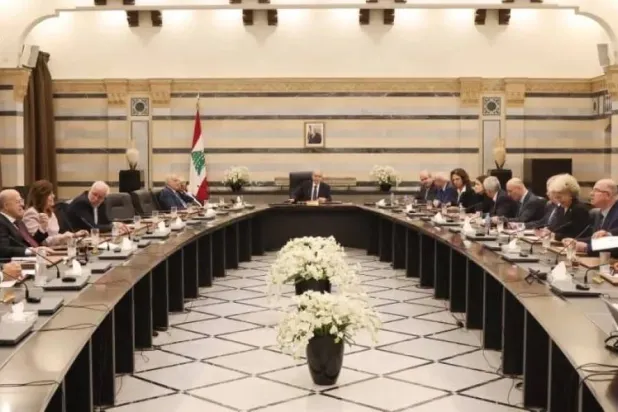
Ministers from the Lebanese Forces party boycotted a cabinet meeting on Thursday over the government’s failure to refer a case involving Hezbollah explosives seized in Dahr al-Baidar to Lebanon’s Judicial Council. The boycott marked an escalation in the dispute after the case was left off the agenda of a meeting chaired by Prime Minister Nawaf Salam at the Grand Serail and devoted to waste management. Lebanese Forces sources told Asharq Al-Awsat that the party could continue boycotting cabinet sessions as long as its demands remained unmet, although it might participate in meetings addressing matters of major strategic importance. The standoff follows the cabinet’s decision at its previous meeting to postpone a ruling on whether to refer the case to the Judicial Council, pending further progress in the investigation. Hezbollah has acknowledged responsibility for the explosives shipment, but the Lebanese Forces argue that the seriousness of the case warrants an immediate referral. Ahead of Thursday’s meeting, Justice Minister Adel Nassar, who is affiliated with the Lebanese Forces, vowed to press the issue. “I will raise the question of referring the Dahr al-Baidar explosives case to the Judicial Council. There will be no concessions or compromise,” he declared. Nassar added that he would demand a date for discussing the referral if Salam refused to address it during the session. Lebanese Forces sources accused the government of repeatedly avoiding a decision on the explosives case. “The waste management issue is certainly important, but there are more pressing priorities today, foremost among them a case of the magnitude of the Dahr al-Baidar explosives,” they told Asharq Al-Awsat. They criticized the repeated postponements, arguing that successive Cabinet meetings had failed to produce a decision on referring the case to the Judicial Council. The party had taken a clear position against attending Cabinet sessions until the matter was resolved, the sources explained. “A case of this magnitude cannot continue to be handled through repeated delays while meetings are held to discuss other issues, however important they may be,” they added. The Lebanese Forces stepped up criticism of the judicial investigation, accusing authorities of overlooking public admissions by senior Hezbollah officials while pursuing lower-ranking operatives who lacked the authority to order the explosives shipment. In a statement, the party’s media office noted that senior Hezbollah officials, including lawmakers and party leaders, had publicly acknowledged that the group was transporting the explosives and that they belonged to it. The Lebanese Forces described the Dahr al-Baidar case as a matter of national security affecting all Lebanese citizens. Whatever justification was offered for transporting the explosives, the shipment posed a serious danger even if Hezbollah’s claim that the materials were intended for use against Israel proved true, it added. The explosives represented a grave threat to residents of South Lebanon in particular and to the Lebanese population as a whole, the statement warned.