The Kremlin said on Wednesday that the Libyan National Army's desire to retaliate against Ukraine following the killing of Libyan soldiers in the Benghazi attack was natural, noting that any government would seek to respond to attempts on the lives of its soldiers.
The General Command of the Libyan National Army had vowed to retaliate against Ukraine following the announcement that two members of the Naval Forces General Staff were killed in a drone attack targeting a Russian warship inside the port of Benghazi on Sunday.
Conversely, Ukraine's foreign minister on Tuesday described the attack on a Russian military ship and a cargo ship in Libyan waters as "legitimate self-defense."
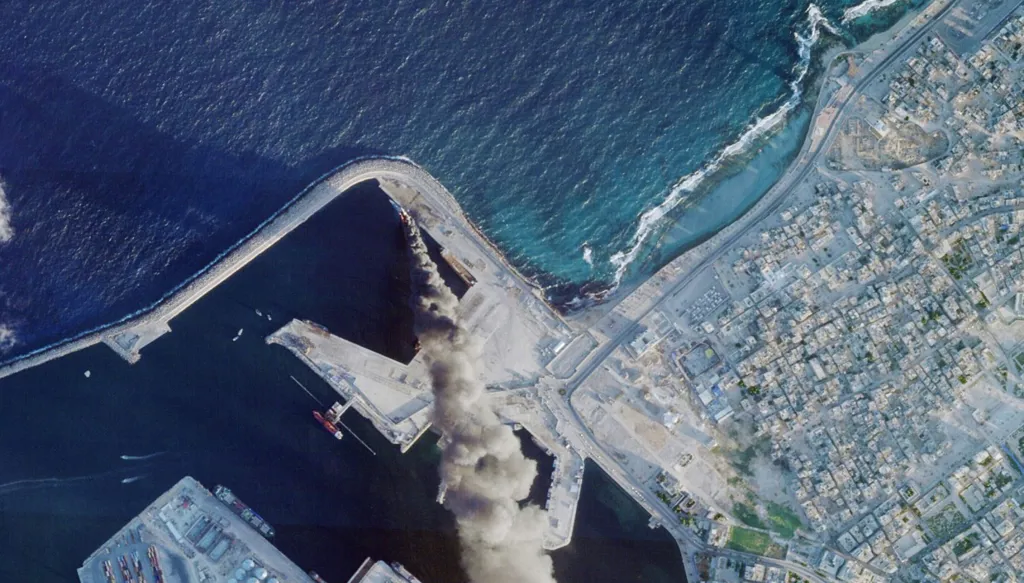
On Sunday, Benghazi witnessed an attack on a Russian ship inside the naval base, followed by drone boat attacks off the city's coast targeting commercial vessels.
Two Libyan military sources told Reuters that a commercial ship flying the Maltese flag was attacked by a drone boat and that naval forces rescued its crew members.
The sources added that the naval and air forces intercepted more than 20 drones during the evening hours.
Two medical sources reported on the day of the attack that 10 people, including Russians and Libyans, were lightly injured in the explosion of the Russian ship, before the two Libyan fatalities were announced later.
The government appointed by parliament, led by Osama Hamad, stated that the Russian ship had stopped in Benghazi to refuel and resupply on its return to Russia under marine cooperation agreements between the two countries.
It confirmed the safety of the port, naval base facilities and warehouses, and the resumption of normal operations after the fire was extinguished and the site secured. It added that directives had been issued to coordinate with Russian authorities on a joint investigation.
The government described the attack as a violation of Libyan sovereignty and a threat to maritime safety, stressing that Libya is not a party to the Russian-Ukrainian war and will not allow its lands and ports to become arenas for international conflicts.